AfD's Landmark State Win Puts Germany's Political Firewall to Test
AfD's historic state election win in Saxony-Anhalt challenges Germany's post-Nazi political consensus and weakens Chancellor Merz.
Germany's political landscape is bracing for a period of intense uncertainty after the far-right Alternative for Germany (AfD) secured a landmark victory in the eastern state of Saxony-Anhalt. The result, which saw the AfD nearly double its support to 43.8%, has delivered a crushing blow to Chancellor Friedrich Merz's Christian Democrats (CDU), whose vote share was halved to 17.2%.
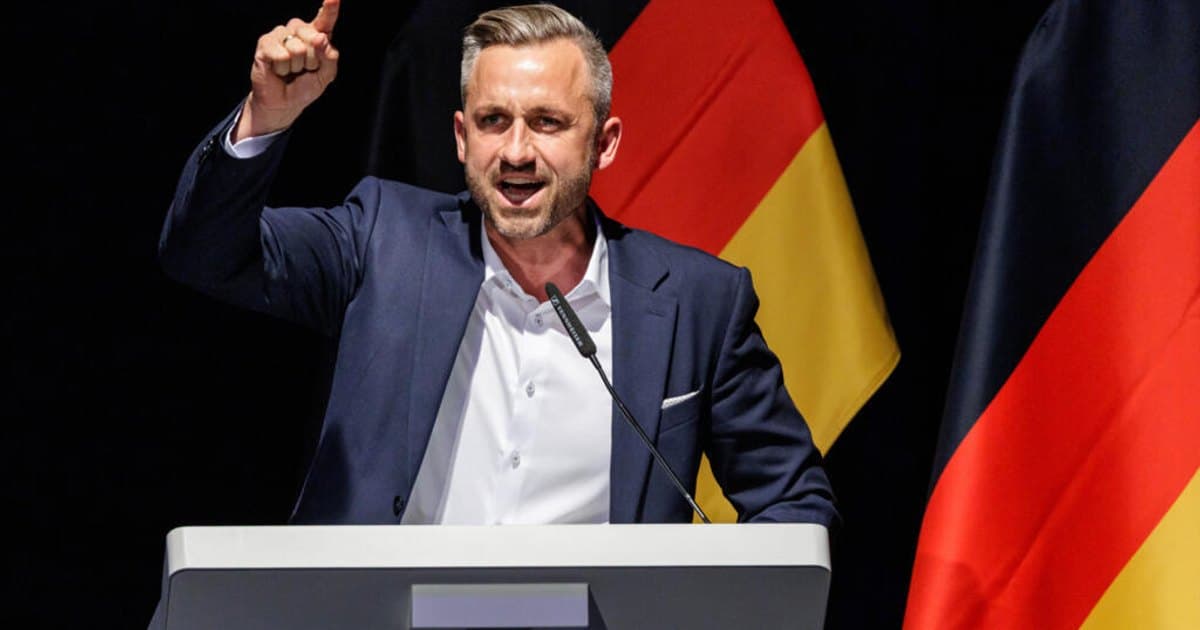
The outcome marks the strongest showing yet for a party classified as an extremist group by Germany's domestic intelligence agency. While the AfD fell short of an outright majority, its candidate for governor, Ulrich Siegmund, has made clear his intention to lead the state government, a prospect that would be unprecedented in modern Germany.
"Very clearly, we want voters finally to get after the election what they voted for," Siegmund told public broadcaster ZDF. "Over 44% voted for political change ... and that must be implemented after the election."
The vote is a significant setback for Chancellor Merz, whose party had governed the state for 24 years. The result is likely to intensify pressure on his leadership and could energize the AfD in other state elections scheduled for later this month.
Attention now turns to the complex coalition negotiations ahead. The AfD could potentially seek a governing arrangement with the hard-left BSW party, with which it shares a Russia-friendly stance and opposition to immigration. Alternatively, forming a government that excludes the AfD would require an unprecedented and unwieldy coalition of five other parties: the CDU, Social Democrats, Greens, Left Party, and BSW.
A further complication arises from the possibility that newly elected lawmakers from other parties could defect to the AfD, which would need only three defections to secure a governing majority. Analysts expect negotiations to be protracted and difficult.
The election in Saxony-Anhalt, a state of 2.1 million people, has drawn outsized international attention. Modern Germany has never had a far-right party lead a government at any level, a legacy of the country's Nazi past. The result has also elicited reactions from abroad, with billionaire Elon Musk congratulating the AfD on his platform X, while Polish Prime Minister Donald Tusk warned that only "idiots or traitors" would celebrate the outcome.
With turnout at a high 77.8%, the AfD appears to have successfully mobilized many previous non-voters. The party's success underscores widespread discontent with the national government's handling of the economy and migration, setting the stage for a volatile period in German politics.