AfD's Landmark Saxony-Anhalt Win Opens New Political Faultlines in Germany
Germany's AfD wins big in Saxony-Anhalt but falls short of a majority, appealing to conservatives while neighbours express alarm.
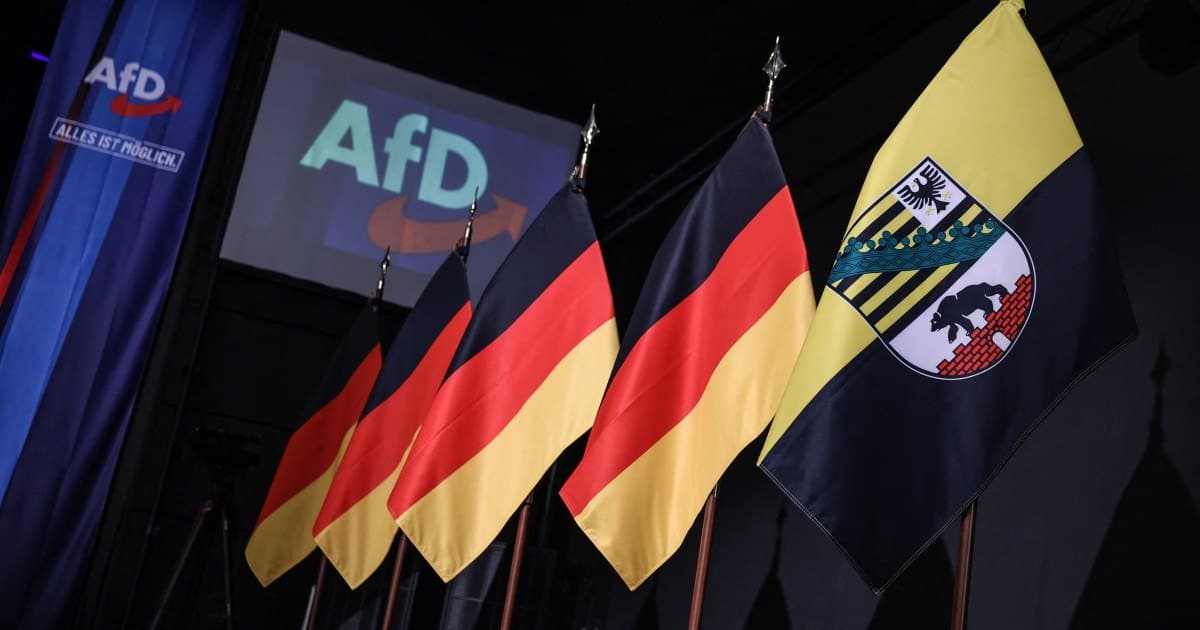
The far-right Alternative for Germany (AfD) has moved to consolidate its historic election victory in the eastern state of Saxony-Anhalt, appealing directly to conservative lawmakers to help it form a government. Official results confirmed the party secured 43.8% of the vote, more than doubling its 2021 share, though it fell short of an absolute majority with 39 of 83 seats in the state legislature.
National co-leader Tino Chrupalla publicly urged members of Chancellor Friedrich Merz's Christian Democrats (CDU) to consider a "centre-right conservative majority," framing the result as a mandate for change. He argued that the longstanding refusal of mainstream parties to cooperate with the AfD—a policy known as the "firewall"—is undemocratic and should be abandoned. The party's state lead candidate, Ulrich Siegmund, expressed hope of becoming state premier if a stable majority can be assembled.
The CDU suffered a sharp reversal, its support nearly halving to 17.2%, with an estimated 83,000 former conservative voters switching to the AfD. State candidate Sven Schulze linked the poor performance to the deeply unpopular national coalition led by Merz, who is struggling with sluggish economic growth.
The result has also drawn international concern. French Finance Minister Roland Lescure called it a "very, very worrying signal," highlighting a global populist wave. Polish Foreign Minister Radoslaw Sikorski echoed the sentiment, describing the outcome as a worrying sign for the region.
The AfD's platform—which includes deporting immigrants, halting support for Ukraine, and abandoning the euro—has placed it under surveillance by German intelligence, which labels the party "extremist," a designation the AfD rejects. Analysts warn the surge in far-right support across Europe could pose long-term risks to the stability of the common currency, even as markets showed little immediate reaction.