AI Capex Slowdown Could Shift Balance-of-Payments Stress to US
A slowdown in AI capital spending could reverse Asian savings flows, shifting balance-of-payments pressure to the US and weakening the dollar.
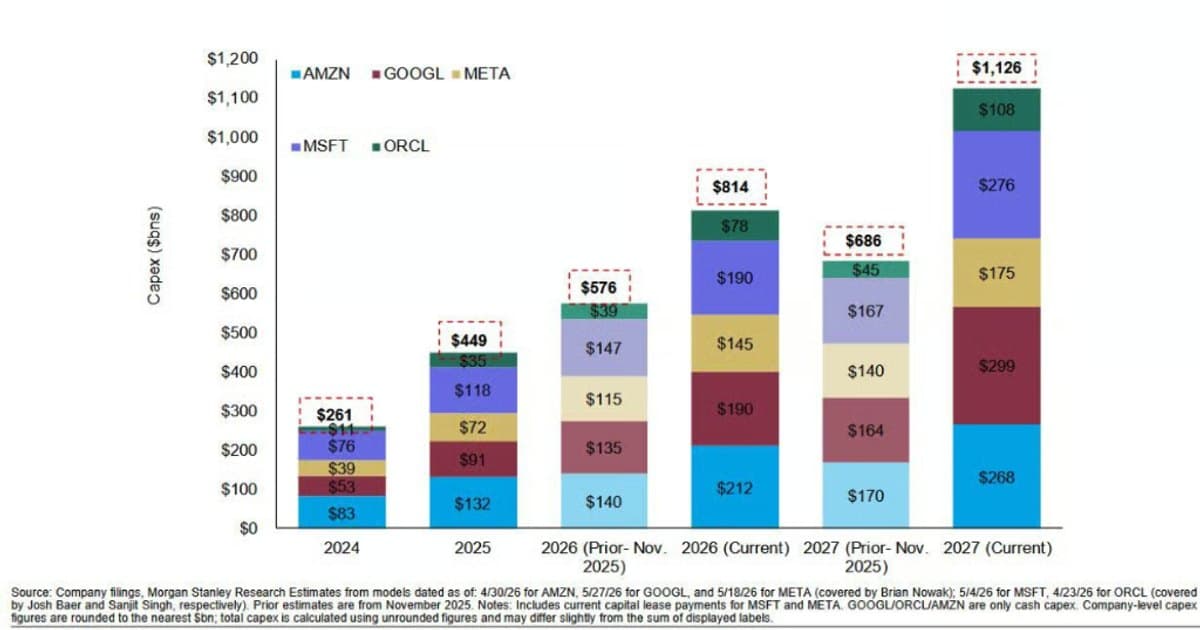
A potential slowdown in the global artificial intelligence capital expenditure boom could trigger a reversal of capital flows, with Asian savings returning home and balance-of-payments pressures shifting toward the United States, according to a Nuvama research report.
The report notes that the US current account deficit and the dollar's strength have been partly supported by the recycling of Asian private savings into US equities, particularly through the AI-led investment boom. If the AI capex cycle falters, Asian exports could weaken while capital currently invested in US assets could flow back to the region.
Such a shift would narrow both the US deficit and Asian trade surpluses, but the change in capital flows could leave the US facing greater balance-of-payments pressure. This could result in a weaker US dollar and sticky or even higher Treasury yields despite a downturn in growth.
The brokerage also highlighted that the global economy is already showing signs of a two-speed recovery. While chip-producing economies such as South Korea, Taiwan, and China have benefited from the AI investment cycle, traditional sectors remain weak. Retail sales in the US, Europe, and China have either slowed or remained subdued, while real estate activity across major economies remains close to post-global financial crisis lows.
Nuvama noted that US real GDP growth excluding technology capex is particularly weak, suggesting that the AI boom has not yet generated broad-based spillovers across the wider economy. This divergence is also reflected in global trade, with Asian technology exporters performing significantly better than the rest of the world.
The brokerage argued that a weaker dollar may also have a different impact than in previous cycles. During the 2000s, dollar weakness helped stimulate global trade, commodities, and emerging-market growth as US imports expanded and Asian surpluses were recycled into Treasuries. Under the emerging "market-dominated" regime, however, dollar weakness could instead become disinflationary by narrowing US external imbalances and reducing global demand.
Nuvama also sees structural factors limiting the US current account deficit, including a shift from household- and real-estate-led growth towards business investment, rising US oil surpluses, and tariffs aimed at reshoring production.
The brokerage cautioned that if the AI capex boom falters, the global adjustment may increasingly be reflected through a weaker dollar, higher US bond yields, and slower global growth rather than the traditional US-led reflationary cycle.