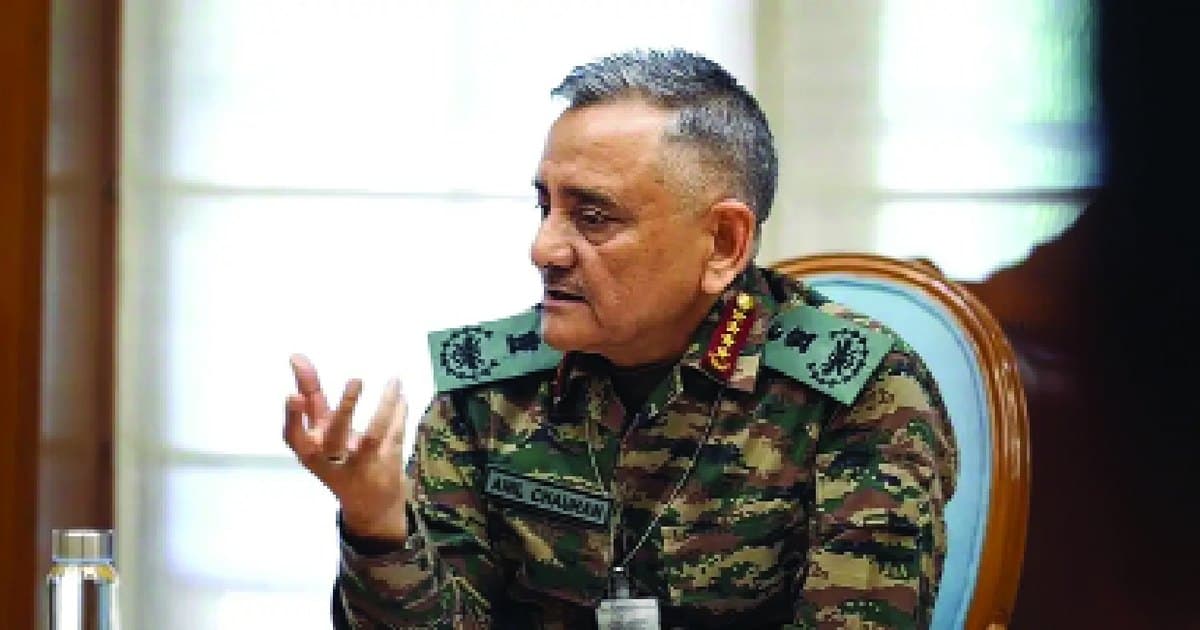
Pakistan remains major security threat, says former CDS Anil Chauhan
Former CDS Anil Chauhan says Pakistan will remain a key security threat, citing risks from defence pacts and proxy war, while urging India-China ties beyond border issues.
New Delhi: Pakistan will remain a significant security concern and a potential threat for the foreseeable future, said former Chief of Defence Staff General Anil Chauhan (retd) on Saturday. Speaking at the GB Pant memorial lecture on 'Threats and Challenges to India's Security', he cautioned that recent defence agreements signed by Pakistan with other nations could foster overconfidence and lead to miscalculations.
Chauhan was referring to the 'Makkah Joint Defence Agreement' among Pakistan, Saudi Arabia, and Turkiye, under which an attack on one is considered an attack on all. He said such pacts might induce a sense of overconfidence in Islamabad, prompting it to repeat past mistakes.
The former CDS also highlighted the stability-instability paradox created by nuclear weapons. While nuclear deterrence has brought static stability at the top level, it has encouraged instability at lower levels, he explained. Pakistan, he noted, has tried to shrink the space for conventional operations while expanding sub-conventional activities like terrorism and proxy war, which rely on non-state actors for deniability and lower costs.
Chauhan stressed that terrorism and proxy war will remain major challenges for India. He argued that credible deterrence is the only effective counter, citing India's cross-border operations at Uri, Balakot, and Operation Sindoor as examples. "India must be able to raise the cost of proxy war and terrorism for Pakistan, so that it stops using this as an instrument of state policy," he said.
On the eastern border, Chauhan welcomed the scheduled Corps Commander-level talks and additional hotlines with China, but asserted that India-China relations cannot be held hostage to boundary issues alone. He noted that both nations are major Asian powers and civilisational states that cooperate in some areas and compete in others. The future of Asia, he said, will depend on how they manage their simultaneous rise.
He acknowledged that the LAC issue remains unsettled, with differing perceptions and infrastructure build-up creating friction. Vigilance, credible capabilities, and clear agreements are essential, he added.