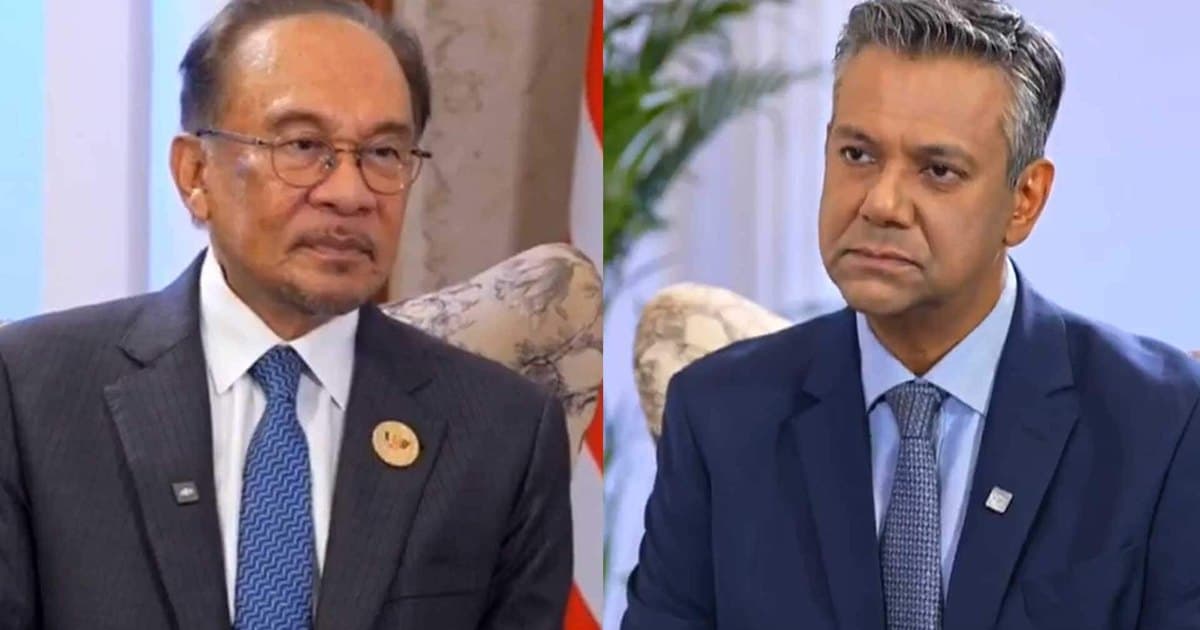
Anwar Ibrahim Says US-Iran Talks Must Start With 'Initial Aggression'
Malaysia's PM Anwar Ibrahim called for an end to US-Iran violence at the BRICS summit, saying any resolution must address the conflict's origins.
Malaysian Prime Minister Anwar Ibrahim has urged an immediate halt to hostilities between the United States and Iran, while arguing that any effort to resolve the conflict must begin by acknowledging what he described as the initial use of force.
Speaking in New Delhi on the sidelines of a two-day BRICS summit, Ibrahim said many countries were reluctant to state plainly how the confrontation began. He maintained that condemning attacks by Iran was not inconsistent with identifying the act that set the latest round of fighting in motion.
"The latest so-called conflict with Iran is due to the initial aggression of the United States, of course initially with Israel," he said, adding that countries should be willing to state the facts and halt continued aggression.
Asked whether both Washington and Tehran had adopted maximalist positions that could complicate a settlement, the Malaysian leader agreed a peaceful resolution was essential. He said ending the violence was the priority, but that justice and an examination of the causes of the conflict also mattered.
"How do you resolve it? Stop the violence," he said, referring to actions by the United States, Israel and Iran alike. He added that there was no contradiction in calling for a cessation of hostilities while also asking what caused the conflict, which he characterised as unwarranted aggression against one country.
The remarks came as Iran struck an American military base in Jordan in retaliation for US bombing of Iranian oil tankers, and continued to target ships in the Strait of Hormuz while the US pressed its attacks on Iran.
Ibrahim, 79, also rejected the idea that the situation in Gaza and the wider Israeli-Palestinian question could be understood solely through the actions of Hamas. He noted that the conflict long predates the group, saying it has persisted for seven decades.
The Malaysian premier was among several leaders in the Indian capital for the summit, hosted by Prime Minister Narendra Modi. Russian President Vladimir Putin and Chinese President Xi Jinping were among those welcomed, along with Iranian President Masoud Pezeshkian, South African President Cyril Ramaphosa, Indonesian President Prabowo Subianto, Abu Dhabi Crown Prince Mohamed bin Zayed Al Nahyan, Ethiopian Prime Minister Abiy Ahmed Ali, Egyptian President Abdel Fattah El-Sisi and Vietnamese President Le Minh Hung.
UN Secretary General Antonio Guterres also attended, as did WTO Director General Ngozi Okonjo-Iweala, WHO chief Tedros Adhanom Ghebreyesus, New Development Bank President Dilma Rousseff and Asian Infrastructure Investment Bank chief Zou Jiayi.