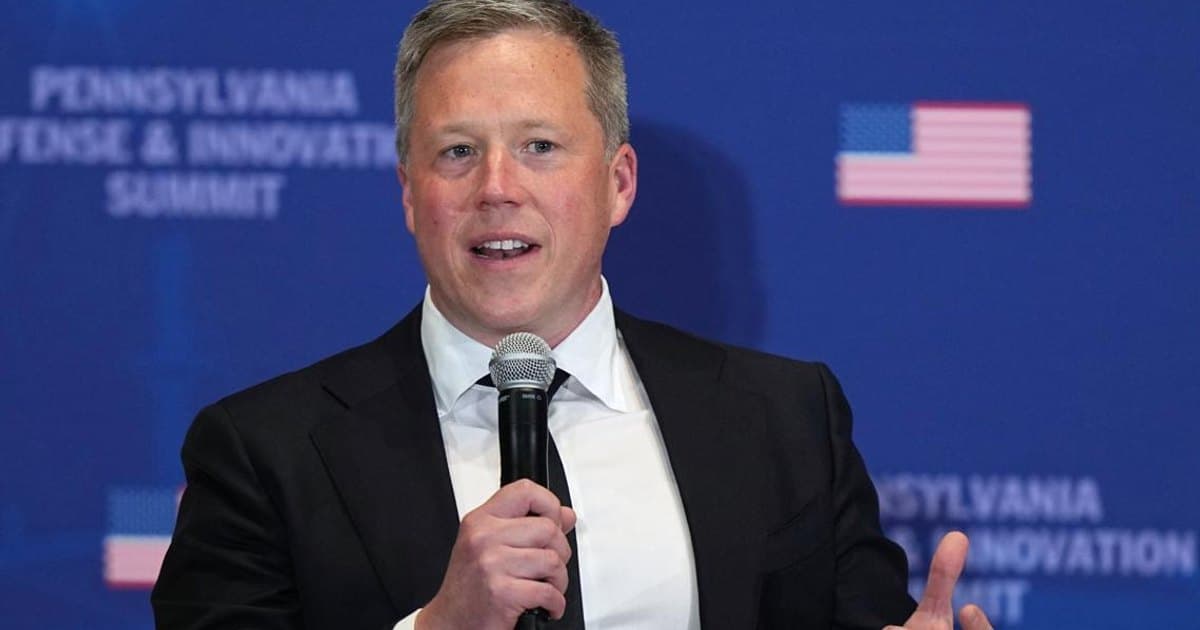
Army Secretary Dan Driscoll Resigns After 18 Months in Role
Army Secretary Dan Driscoll is leaving his post after 18 months, the White House confirmed Monday, marking another high-profile military leadership change.
Army Secretary Dan Driscoll is stepping down after 18 months in the role, the White House confirmed on Monday, marking the latest in a series of leadership changes within the U.S. military under the Trump administration.
No official reason was provided for Driscoll's departure. However, tensions between him and Defense Secretary Pete Hegseth have been widely reported. Driscoll, a close associate of Vice President JD Vance, had served as the Army's top civilian leader since his Senate confirmation in February 2025.
In a statement, White House spokeswoman Anna Kelly praised Driscoll's tenure, crediting him with advancing the president's defense agenda, restoring readiness, and contributing to negotiations between Russia and Ukraine. She described the Army as "more powerful than ever" under his leadership.
Driscoll's exit follows a period of significant upheaval within the Army's senior ranks. In April, Hegseth removed Gen. Randy George as the service's top uniformed officer. Gen. Christopher Donahue, the Army's commander in Europe and Africa, also stepped down unexpectedly in June. Gen. Christopher LaNeve, who has risen quickly under Hegseth, has since taken over as acting chief of staff.
Under LaNeve, the Army has reportedly ended a drone modernization program that Driscoll had championed. An Army unit in Europe was also directed to halt its own drone-building efforts and return to a traditional infantry role.
Driscoll, an Iraq war veteran and former tech investor, was a vocal supporter of George, telling Congress in April that he and his family had visited the general after his resignation to offer support. He acknowledged at the time that civilian leadership has the authority to choose its military leaders.
Driscoll was nominated by President Donald Trump in 2024, who described him as a "disruptor and change agent." During his tenure, he played an unusual role as a key negotiator in efforts to end the Russia-Ukraine war and pushed to streamline defense contracting for drone and counter-drone technologies.
His departure comes after Hegseth also ousted several other generals and admirals, including Navy Secretary John Phelan, who was the first service secretary to leave during Trump's second term.