Asian Stocks Slide as Brent Tops $100, US Yields Near 2023 Peak
Asian equities fell as Brent held above $100 on widening Middle East conflict, US 10-year yields stayed near a 2023 high, and traders awaited US inflation data and central bank meetings.
Asian equity markets retreated on Thursday, weighed down by oil holding above the $100-a-barrel mark and US bond yields hovering near their highest level since 2023, as investors positioned themselves ahead of key inflation readings and a run of central bank meetings.
Brent crude futures traded around $101.4 a barrel in early Asian hours, having crossed the psychologically important $100 threshold on Wednesday for the first time since July. The move followed the largest wave of attacks on shipping in the widening Middle East conflict, with fighting between Saudi Arabia and the Houthis in Yemen opening a second front that threatens energy supplies from the region.
"I think that Brent pushing through the $100 level will be seen by many in the market as a significant event in the current scheme of things," said Nick Twidale, chief market strategist at ATFX Global, who expects global yields to push higher as the market adjusts to higher inflation in the coming months. "This move now may convince some market participants that may have been holding fire on certain positions, with hopes of a peace deal in the Middle East, to now hit the trigger as the realities of a longer conflict kick in."
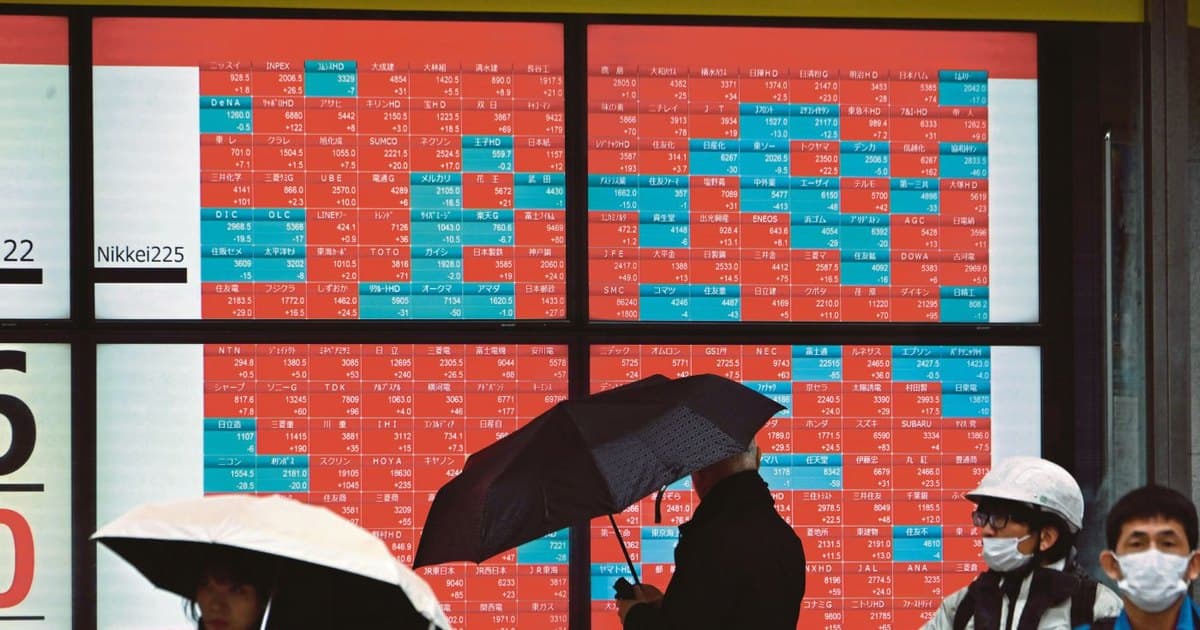
MSCI's broadest index of Asia-Pacific shares outside Japan fell 1%, while Japan's Nikkei and South Korea's KOSPI each dropped more than 1%.
"Markets are facing a cocktail of headwinds in September which has historically not been the best seasonal month for stock markets," said Vasu Menon, managing director of investment strategy at OCBC.
In bond markets, the benchmark 10-year US Treasury yield held steady at 4.8406% after climbing to its highest since 2023 in the previous session. The Treasury Department's announcement of a $6 billion buyback of longer-dated bonds disappointed some investors who had hoped for a larger operation.
"The bond market is under pressure as oil prices reignite inflation fears. But it's not just oil we should be watching," said Prashant Newnaha, senior rates strategist at TD Securities. "Agricultural commodities are now breaking out and they are likely to lift food's contribution to CPI in coming months. At a minimum the stage is set for headline CPI remaining elevated until early 2027."
US producer price data is due later on Thursday, followed by consumer price figures on Friday. Analysts say the readings will be pivotal in determining whether the Federal Reserve raises rates at its September 15-16 meeting. Fed funds futures traders are pricing in about 60% odds of a hike next week.
The euro was little changed at $1.16322 ahead of the European Central Bank's policy decision, where a rate increase is expected, with attention likely to focus on policymakers' comments for signals on future moves. The Fed and the Bank of Japan are scheduled to meet next week.
The yen traded at 153.63 per US dollar, having strengthened 4% in September. The rally has been driven by heightened expectations of faster BOJ rate hikes, traders unwinding short positions in the Japanese currency, and early signs of a potential rush of repatriation of Japanese capital.
"Failure to deliver a hike, alongside clearer signals of a faster pace of tightening next week, will likely trigger a sharp renewed weakening of the yen," said Carol Kong, a currency strategist at Commonwealth Bank of Australia, who expects a hike next week and another two in December and April.