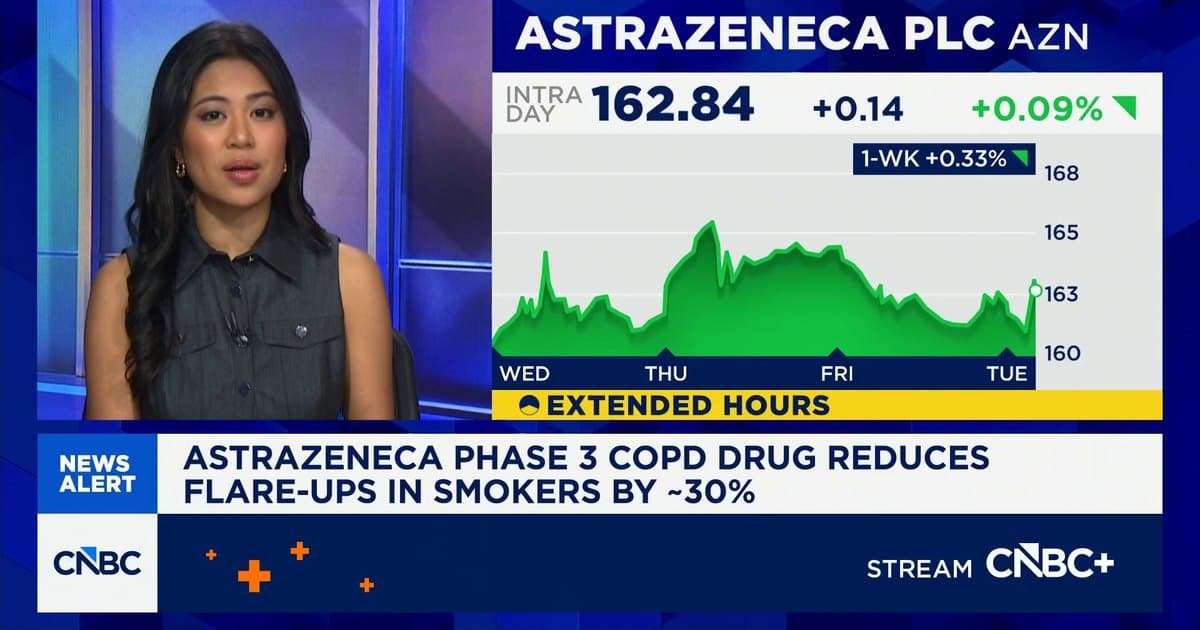
AstraZeneca's experimental COPD drug cuts flare-ups in late-stage trials
AstraZeneca's tozorakimab significantly reduced COPD flare-ups in late-stage trials, with results presented at the European Respiratory Society Congress.
An experimental drug from AstraZeneca has shown significant promise in reducing flare-ups of chronic obstructive pulmonary disease (COPD), according to data from two late-stage trials presented at the European Respiratory Society Congress in Barcelona.
The drug, tozorakimab, is a monoclonal antibody administered via subcutaneous injection every four weeks. It works by targeting interleukin-33, a protein implicated in airway inflammation and mucus production.
In the year-long studies involving 1,750 current or former smokers with a history of COPD flares, patients receiving tozorakimab experienced approximately 29% to 34% fewer moderate-to-severe exacerbations compared to those on a placebo. All participants also received standard therapy.
The trials recorded rates of moderate or severe exacerbations at 1.41 and 1.44 events per patient in the treatment groups, versus 2.00 and 2.03 events in the placebo groups.
Study leader Dr. Frank Sciurba of the University of Pittsburgh noted that reducing exacerbations is a key treatment goal, as flare-ups significantly impact patient health and quality of life. The drug's effectiveness was consistent regardless of smoking status, severity of lung impairment, or eosinophil levels. Safety profiles were generally similar between the groups.
The findings were simultaneously published in The New England Journal of Medicine. Dr. Sciurba confirmed the data is now under review by the U.S. Food and Drug Administration for potential approval.
The congress also featured research on high-dose flu vaccines for older adults with chronic lung disease, showing an 8.8% reduction in hospitalizations for flu or pneumonia compared to standard-dose vaccines. Another study presented findings linking severe type-2 asthma to subtle structural brain changes, suggesting a possible biological connection between asthma-related inflammation and brain health.