Australia Eases Gas Reservation Plan for LNG Exporters, Lets Regulator Set Levels
Australia has relaxed its proposed 20% gas reservation rule, letting the energy regulator set required levels and delaying the scheme's start to 2028.
Australia has revised its proposed gas reservation policy for liquefied natural gas exporters, replacing a fixed 20% requirement with a flexible mechanism under which the country's energy regulator would determine how much gas must be set aside for domestic use.
Energy Minister Chris Bowen said the 20% figure would serve as a ceiling rather than a flat mandate, with the Australian Energy Regulator deciding the actual volume each exporter must reserve. The regulator oversees the nation's electricity and gas markets.
According to Bowen, exporters could make available up to 200 additional petajoules of gas a year, exceeding the shortfalls of as much as 140 petajoules projected by the national energy market operator. He said the policy aims to keep gas affordable and ensure the domestic market is always modestly oversupplied, with a target of 110% oversupply for the east coast market, which has faced shortfalls for nearly a decade.
The minister said the scheme would let domestic buyers draw from a larger pool of gas, lowering the risk of tight conditions triggering price spikes, supporting long-term contracts and insulating customers from global market volatility.
The changes arrive four months after the centre-left Labor government floated a hard 20% reservation scheme for the east coast in May. Under the revised plan, the start date has been pushed back by six months to align with industry contract cycles, meaning LNG exporters would not need to begin meeting supply commitments until January 1, 2028.
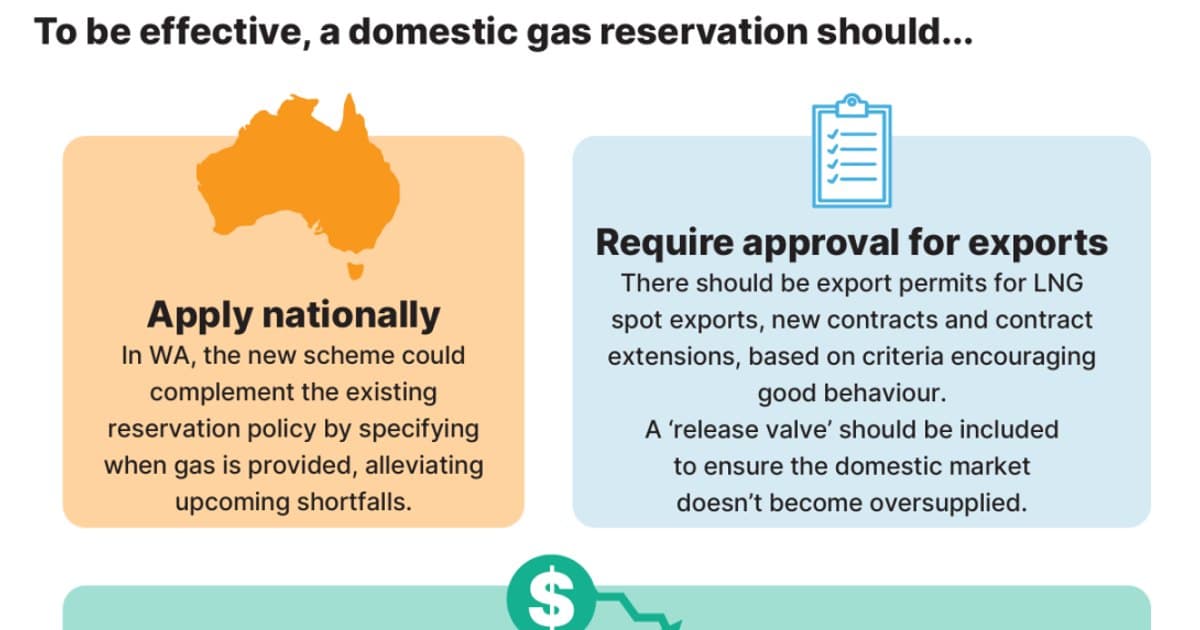
Reservation requirements would vary by region. The plan recognises Western Australia's existing 15% domestic reservation requirement, while the Northern Territory is largely exempt because holding back 20% of its gas would far exceed local demand. Western Australia's gas supply is not connected to the east coast, and the Northern Territory has only one modest-capacity pipeline linking it to the eastern market.
Resources Minister Madeleine King said domestic supply obligations would align with physical domestic markets, noting that obligations would be reduced in markets that are already well supplied.
Three east coast LNG export projects operated by Origin Energy, Shell and Santos would be most affected, though existing contracts would be exempt. Shares in Santos, which runs the Gladstone LNG project in Queensland, and Origin Energy, which leads the Australia Pacific LNG consortium, edged higher in early trade.
Australia is among the world's largest LNG exporters, shipping more gas abroad than it consumes at home.
The government released a draft of the policy and is seeking feedback until September 24, after receiving more than 140 submissions from producers, exporters, retailers, large industrial users and trade partners during preliminary planning.
Australian Energy Producers welcomed the changes but cautioned that oversupply could flood local markets, depress prices and deter investment in new gas supply. The group said a reservation policy that reduces competition and investment would not serve the national interest.
The bill is expected to be introduced to parliament later this year.