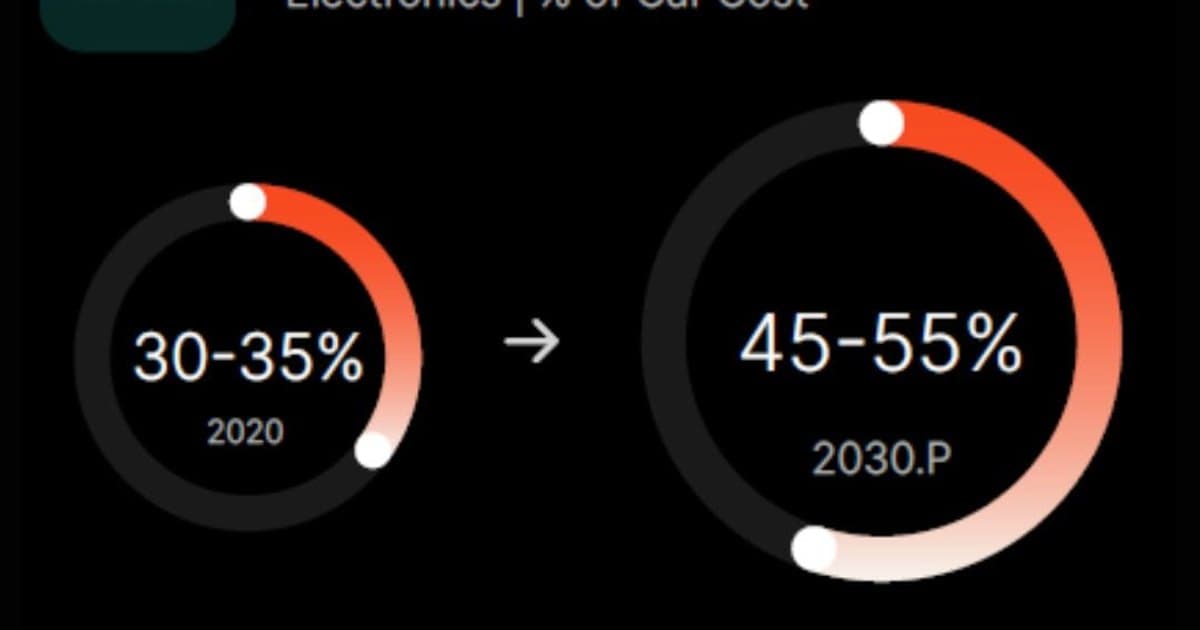
Electronics to Form Over Half of Car Cost by 2030, Says BCG-ACMA Study
A BCG-ACMA report projects electronics to account for 50-55% of car cost by 2030, up from 30-35% in 2020, urging Indian suppliers to build capabilities.
A new joint study by Boston Consulting Group (BCG) and the Automotive Component Manufacturers Association of India (ACMA) projects that electronics will constitute 50-55% of a car's total cost by 2030, up from roughly 30-35% in 2020. The report highlights this shift as a significant opportunity for Indian auto component makers to expand into electronic components.
The study notes that vehicles—whether powered by internal combustion engines or electricity—are becoming increasingly electronic, driven by the growing adoption of advanced driver assistance systems (ADAS), infotainment, sensors, and connectivity features. This trend is one of the structural changes reshaping the auto component industry.
However, India's electricals and electronics segment currently accounts for only about 12% of the component supply in FY25, indicating substantial room for domestic suppliers to build capabilities. The report identifies opportunities across sensors, electronic control units (ECUs), power electronics, ADAS, connectivity, and battery management systems (BMS) as these areas create new component value pools.
The report stresses that this presents a key localisation opportunity for India, allowing suppliers to capture a larger share of the value generated by the move towards more electronic vehicles. It also notes that broader trends such as premiumization, electrification, and stronger safety requirements are creating new component pools, while exports and localisation are widening the market for Indian suppliers.
To capitalise on this shift, component makers will need to invest more in technology, engineering, and research and development, moving beyond traditional manufacturing capabilities. The report concludes that the ability of Indian suppliers to develop and localise these technologies will be crucial for future growth as electronics become a larger part of vehicle value by 2030.