Balkan Truckers Rally Against EU's 90-Day Schengen Limit
Truckers across the Balkans protest EU's 90-day Schengen stay limit, demanding an exemption for professional drivers.
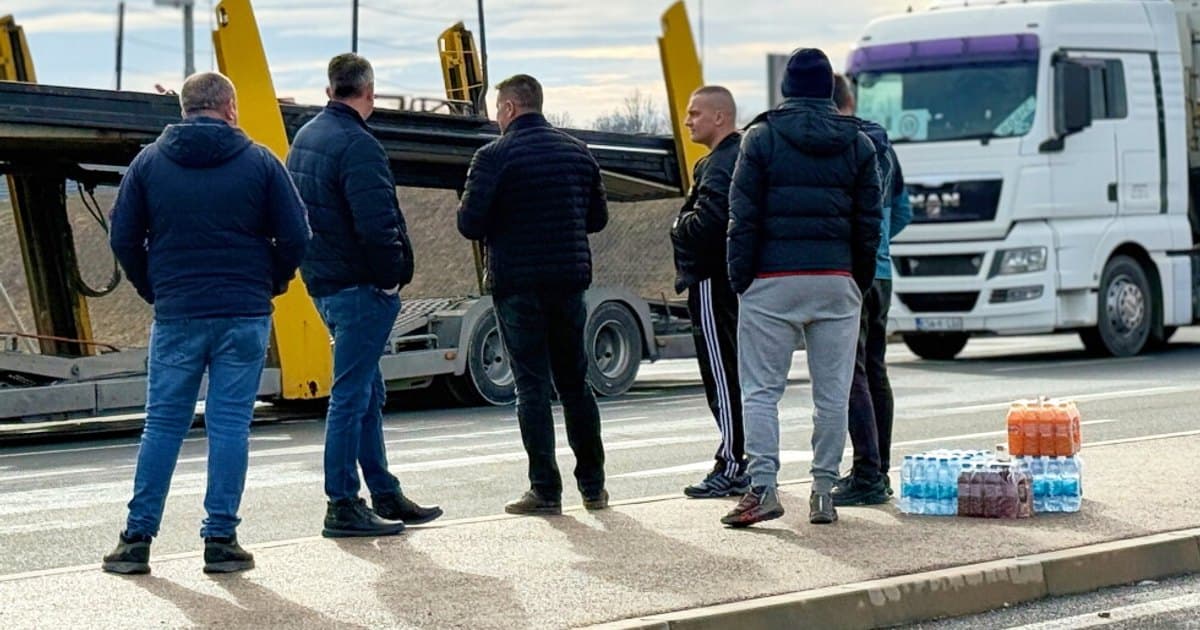
Hundreds of truck drivers from across the Western Balkans staged coordinated protests on Monday outside European Union offices in Sarajevo, Belgrade, Podgorica, and Skopje. The demonstrations targeted the EU's 90-day stay limit within the Schengen zone, a rule drivers say is making their profession untenable.
Protesters argue that the restriction, which allows non-EU citizens to stay in the Schengen Area for only 90 days within any 180-day period, is being enforced more strictly since the launch of a new electronic entry-exit system (EES) last October. For drivers who regularly cross borders for deliveries, the 90 days are consumed quickly, leaving them barred from their usual routes for extended stretches.
"We are here trying to show our discontent and our unity," said Nikola Brkovic, a truck driver at the Sarajevo protest. He noted that similar demonstrations were taking place simultaneously in Belgrade, Skopje, and Podgorica, adding, "We all want to send a strong message that we will not back off from our demands."
Another driver, Eldar Salkic from Zivinice, expressed frustration over the pressure the rule places on his livelihood. "I don't want to leave this country, but they are really making us do that," he said. "They want us to move to the EU and work from there, and we will have to, because of our families and everything."
The truckers are demanding an exemption for professional drivers, pointing out that dozens of their colleagues have already been detained or deported from the free-travel zone for overstaying. The issue is particularly acute given that around 80 percent of the Balkan economies' trade is with the EU, with most of that transport conducted by truck.
In recent days, Balkan truckers have also blocked major highways and border crossings toward EU member states such as Hungary, Croatia, and Greece, intensifying pressure on Brussels to reconsider the rule.