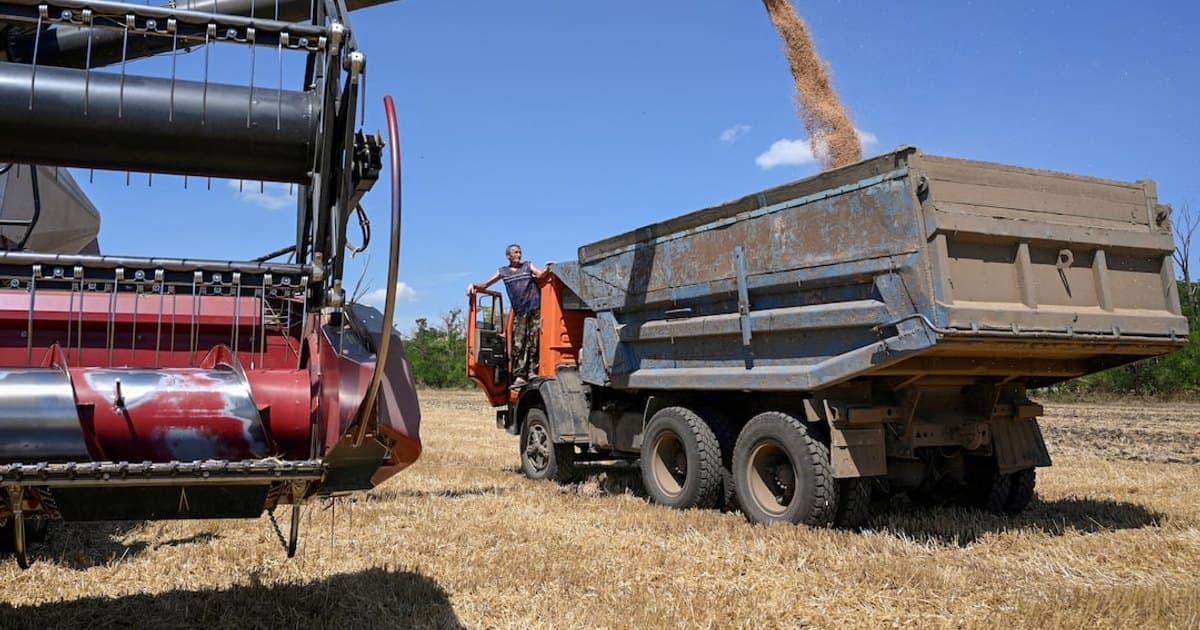
Latvia, Lithuania weigh halt to Russian grain shipments via Baltic ports
Latvia and Lithuania are considering banning Russian grain transits via their ports, citing security concerns and suspected Ukrainian grain theft.
Latvia and Lithuania are weighing restrictions on Russian grain shipments transiting through their Baltic ports, senior officials from both countries have indicated. The move follows reports that Moscow has been diverting grain exports to Baltic routes after Ukrainian drone attacks disrupted its traditional Black Sea and Azov Sea shipping lanes.
The Latvian government is scheduled to meet on Tuesday to discuss a potential full ban on Russian grain exports through its territory, according to a spokesperson for the prime minister. Lithuania has not specified a concrete measure but has stated that allowing Russian grain to move through its infrastructure is no longer acceptable.
"Russian grain exports using Lithuanian infrastructure is against our values," Lithuanian Prime Minister Mindaugas Sinkevicius said. He clarified that transit between mainland Russia and the Kaliningrad exclave would not be affected.
Industry data shows that Russian grain exports via Azov and Black Sea ports reached 46.3 million metric tons in the last exporting season, accounting for roughly 90 percent of total seaborne shipments. Baltic ports handled only about one million tons, with Baltic states shipping a similar volume.
Arkady Zlochevsky, head of the Russian Grain Union, estimated that Russian exports through the Baltics could reach 5 to 6 million tons this season, potentially rising to 10 million tons if Estonian ports also become available.
Both governments have also raised concerns that some grain transiting through their ports may originate from Ukrainian territories occupied by Russia. Latvian Prime Minister Andris Kulbergs said Ukrainian authorities have flagged plans for large-scale exports of illegally obtained grain through the Baltics. He has instructed officials to develop a mechanism to prevent such transits.
Lithuania's state veterinary control agency has taken samples from grain labelled as Russian at Klaipeda port and sent them to a French laboratory for testing to determine whether the shipments may actually be of Ukrainian origin.