Bayeux Tapestry Returns to England After 1,000 Years (2026-09-07)
The Bayeux Tapestry is on display in London for the first time in nearly a millennium, drawing huge crowds.
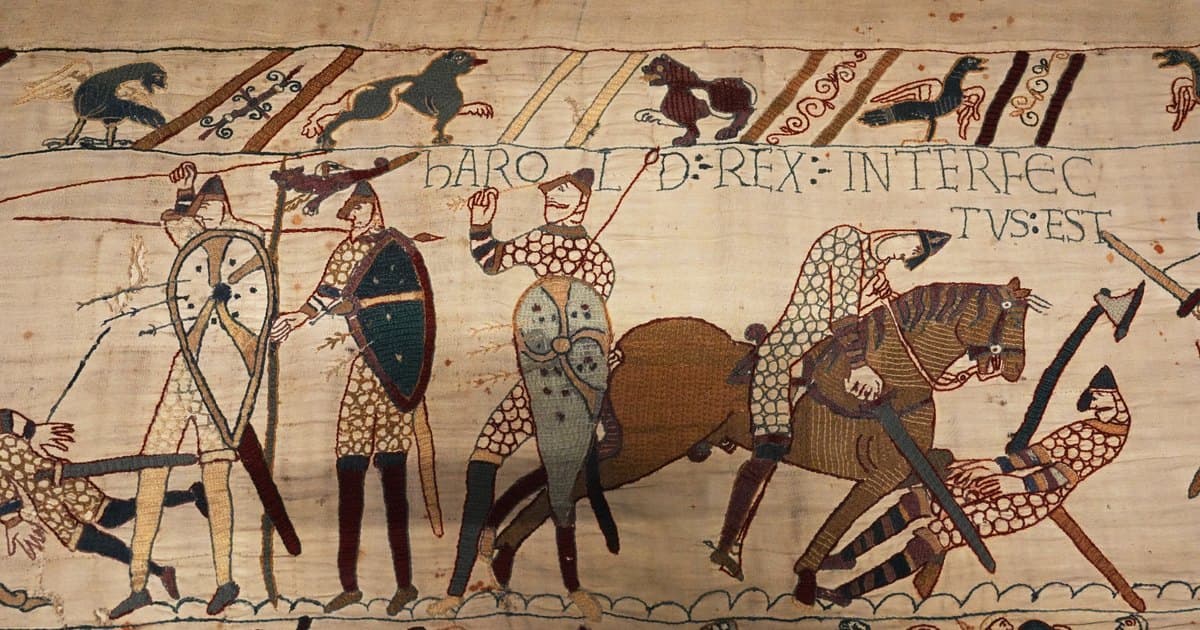
The Bayeux Tapestry, a 230-foot embroidered chronicle of the Norman Conquest, has gone on public display at the British Museum in London — its first time on English soil in nearly 1,000 years. The exhibition has already sold out for months, with the museum anticipating one million visitors before it closes in July 2027.
The tapestry's 58 scenes trace the events leading to the Battle of Hastings in 1066, when William, Duke of Normandy, defeated King Harold's Anglo-Saxon army. The invasion ended Anglo-Saxon rule, brought the Normans to the English throne, and reshaped the nation's history.
Curator Michael Lewis called 1066 "the most important event in English history," noting the tapestry was designed to communicate a shift in power: Harold was king, but William now ruled, and the public needed to accept the new reality.
While the work depicts brutal combat — archers, cavalry charges, and mutilated bodies — it also includes intimate details: soldiers cooking over fires, a woman fleeing a burning home with her child, and margins filled with animals and mythical creatures. Halley's Comet appears in one scene, reflecting its actual appearance in 1066.
Scholars believe the tapestry was commissioned by Bishop Odo of Bayeux, William's half-brother, but was likely stitched by women in southeast England. It has spent nearly a millennium in the French town of Bayeux.
The loan followed years of diplomacy, with an agreement announced in 2018, delayed by COVID-19 and Brexit tensions, and confirmed by French President Emmanuel Macron during a state visit last year. Some cultural figures opposed the move over concerns about the fragile artifact's safety.
Insured for €960 million, the tapestry traveled in climate-controlled, shockproof packaging under police escort. It is displayed flat in a state-of-the-art case, rather than hanging as it did in Bayeux. King Charles III and President Macron have already viewed it privately.