Bihar, Jharkhand End 25-Year Sone River Water Dispute With New Pact
Bihar and Jharkhand signed an MoU to share Sone River water, ending a 25-year-old dispute and boosting irrigation in several districts.
In a significant move for inter-state relations, Bihar and Jharkhand have formally signed a memorandum of understanding (MoU) to allocate water from the Sone River, bringing an end to a dispute that persisted for nearly 25 years.
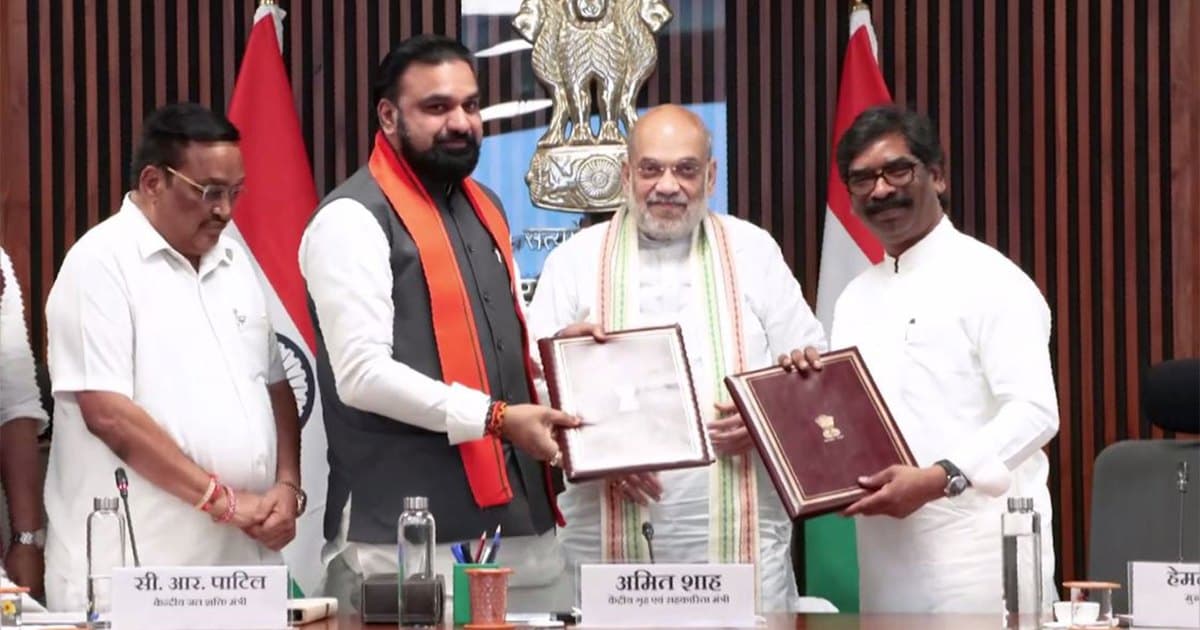
The agreement was signed in the presence of Union Home Minister Amit Shah, who described the development as a model of "cooperative federalism." He noted that the pact would enhance irrigation and water supply capacity for both states, benefiting agriculture and rural development.
The signing ceremony was attended by Union Minister of State for Jal Shakti CR Patil, Bihar Chief Minister Samrat Choudhary, Jharkhand Chief Minister Hemant Soren, Union Home Secretary Govind Mohan, and other officials.
Shah said the agreement aligns with the vision of the Prime Minister, emphasizing that while each state has its own priorities, solutions emerge when governments collaborate for the national good. He added that the accord demonstrates how disputes over water resources can be resolved through consensus.
The MoU is expected to improve irrigation and drinking water supply in Bihar's Bhojpur, Buxar, Rohtas, Kaimur, Aurangabad, Arwal, Gaya, and Patna districts, as well as Palamu and Garhwa in Jharkhand.
This is the fourth such inter-state water accord signed this year. Earlier agreements include a July pact among Maharashtra, Gujarat, Rajasthan, and Madhya Pradesh on the Narmada River dispute, a June compromise between Rajasthan and Haryana on the Yamuna Water Project, and a six-state agreement on the Kishau Multipurpose Project.
The resolution comes as the Centre pushes for dialogue-based settlement of long-standing inter-state disputes, with water security emerging as a critical concern for agriculture and growing urban populations.