Bihar unveils Rs 1.38 lakh crore solar-led energy plan to bridge power gap
Bihar plans Rs 1.38 lakh crore investment, targeting 24 GW renewable energy and 6 GWh storage by 2030.
Bihar has announced a Rs 1.38 lakh crore investment blueprint through 2030, anchored on solar power, to address a widening gap between electricity demand and local generation. The plan aims to add 24 GW of renewable energy capacity and 6 GWh of energy storage systems.
The push comes as the state's average daily demand hovers around 7,300-7,400 MW, peaking at 9,500 MW in summer — against an own-generation capacity of just 550 MW. Demand is projected to cross 11,700 MW by 2030.
Financially, Bihar spends Rs 25,000-35,000 crore annually on power purchases while collecting over Rs 19,000 crore from consumers. It also bears Rs 3,800 crore in costs from providing 125 free units to 1.89 crore of its 2.2 crore consumers.
Under the Renewable Energy Policy 2025, the Bihar State Power Holding Company Limited will invest Rs 82,679 crore in generation assets, including pumped storage, solar installations, and nuclear feasibility studies in Banka and Siwan. Another Rs 24,683 crore is earmarked for transmission, including a 680-circuit-kilometer Green Energy Corridor.
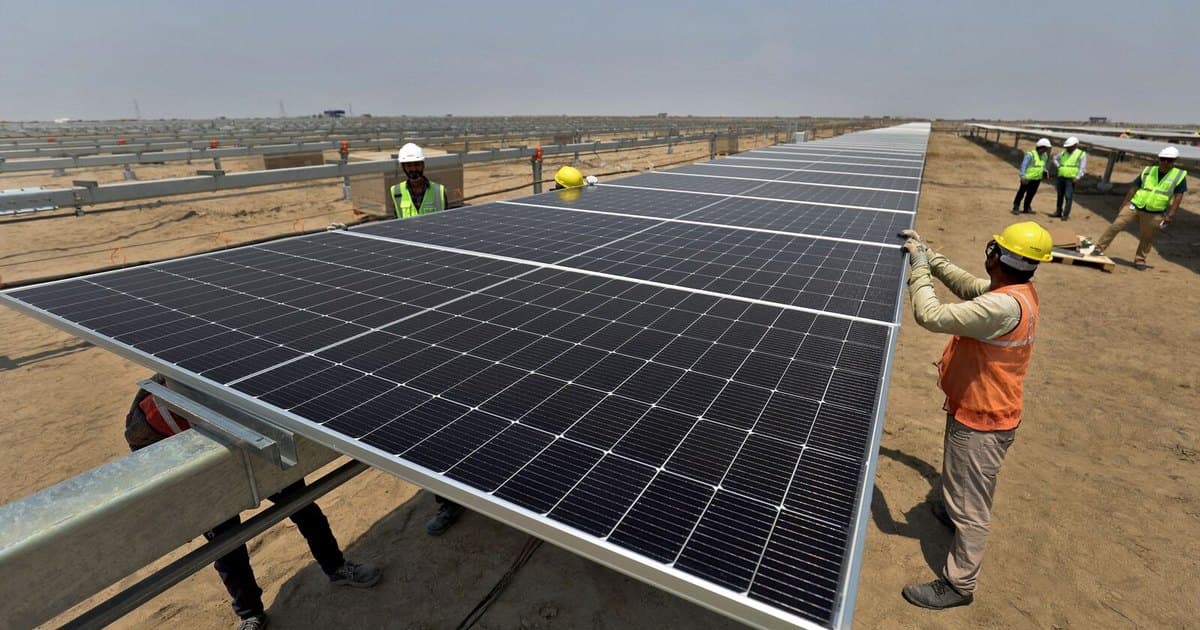
A flagship project is the Rs 2,866 crore Kajra Solar Power Plant in Lakhisarai, combining 301 MW solar capacity with a 523 MWh battery storage system. Work has also begun on a 150 MW solar park in Aurangabad.
Decentralised solar is expanding too: 115 MW has been installed on 12,000 government buildings under the Surya Sankalp scheme, with 500 MW more approved. PM-KUSUM feeder solarisation adds 457 MW, and rooftop installations target 10 lakh consumers under PM Surya Ghar.
Bihar now serves over 2.2 crore consumers, up from 17 lakh two decades ago, with per-capita electricity consumption rising more than fivefold in that period.