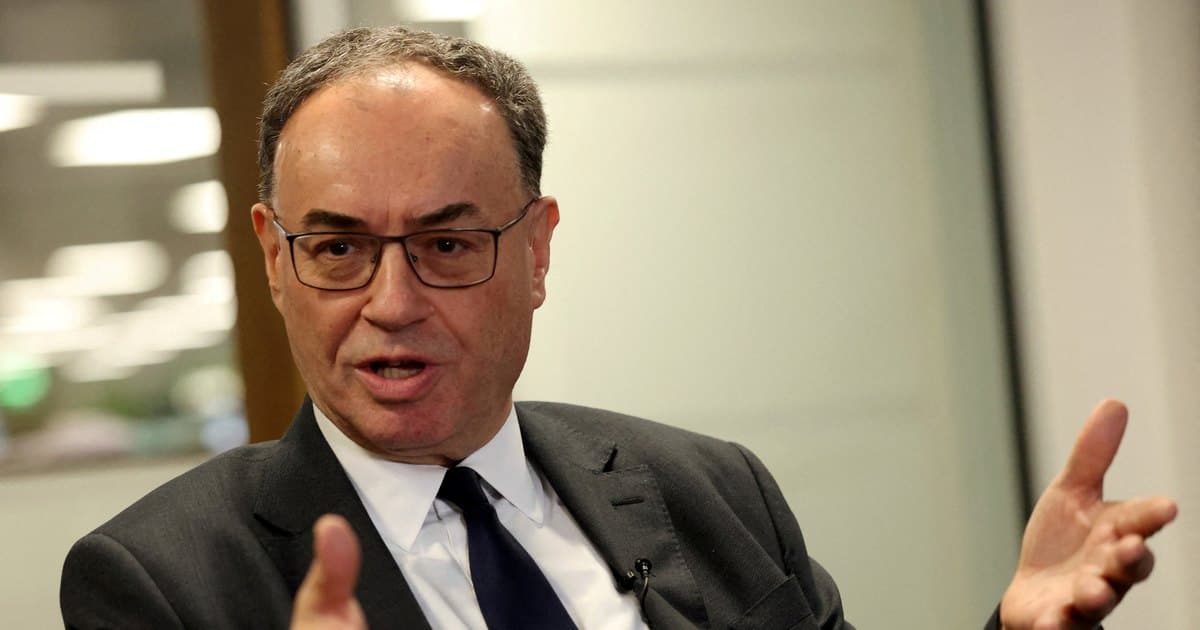
BoE's Bailey Says Rate Hike Not a Foregone Conclusion
Bank of England Governor Andrew Bailey says interest rate hikes are not inevitable, pushing back on market expectations of future increases.
Bank of England (BoE) Governor Andrew Bailey has sought to temper market expectations of an imminent and inevitable series of interest rate hikes, stating that the central bank has no "secret plan" for monetary policy.
Speaking before parliament's Treasury Committee on Tuesday, Bailey argued that the current market pricing for future rate increases includes a "risk premium" that goes beyond what is justified by the most likely path of the UK economy. He suggested this premium reflects genuine market concerns about the potential for further energy price spikes.
"What I want to dispel is the idea that we've really got a secret plan, we know where we're going to go to and it's unconditional," Bailey told lawmakers.
His comments come just ahead of the BoE's next interest rate announcement, scheduled for September 17. The central bank has kept its key rate on hold at 3.75% since the outbreak of the Iran war in late February, a stance that contrasts with the European Central Bank, which has already raised rates and is expected to do so again.
Despite Bailey's remarks, financial markets continue to price in a quarter-percentage-point rate hike by the end of this year, with two more increases anticipated in 2027. Investors, however, see only a slim chance of a move at next week's meeting.
Bailey noted that recent economic data has been slightly stronger than the central bank's July forecasts, describing activity as "reasonably resilient." His views were echoed by other Monetary Policy Committee (MPC) members at the hearing.
Deputy Governor Dave Ramsden described the backdrop for domestically generated inflation pressure as "relatively benign," citing labour market data. External member Alan Taylor suggested that maintaining rates at restrictive levels serves as "insurance" against external risks.
However, MPC member Megan Greene, who voted to raise rates in July, expressed concern that the prolonged nature of the current oil price shock could lead to more persistent inflation expectations.