BOJ Set for Modest Rate Hike as It Balances Inflation and Market Stability
The Bank of Japan is likely to raise rates by 25 basis points this month, prioritizing market stability over aggressive action.
The Bank of Japan (BOJ) is widely expected to deliver a modest 25-basis-point rate hike at its September 17-18 meeting, according to sources familiar with the central bank's thinking. The move would bring the policy rate to 1.25%, reflecting a cautious approach despite mounting inflationary pressures.
People familiar with the BOJ's deliberations indicate there is little appetite for a larger 50-basis-point increase. Near-term price pressures remain contained, and officials are wary of shocking a public accustomed to decades of near-zero borrowing costs. A conventional hike would allow the bank time to assess the cumulative impact of higher rates on corporate and household activity.
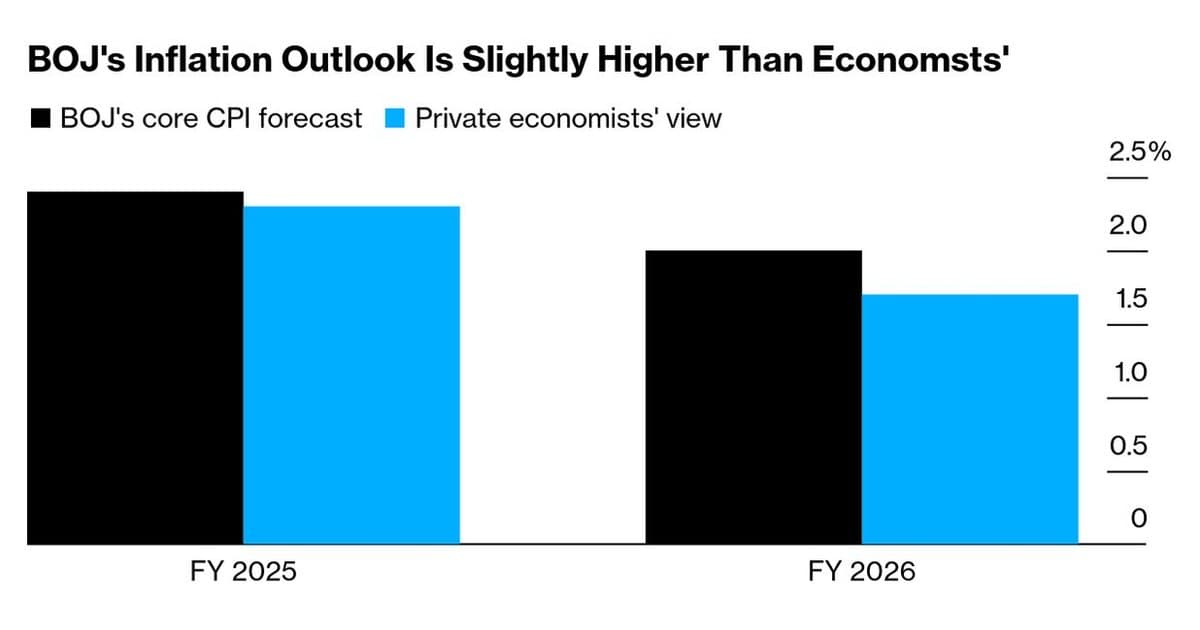
The decision comes amid a complex economic backdrop. The Middle East conflict, a tight domestic job market, and rising import costs from a weak yen have all contributed to inflation. However, recent data does not suggest an alarming spiral of soaring prices and wages, reducing the need for aggressive tightening.
A 50-basis-point move could backfire by stoking fears that the BOJ is behind the curve on inflation, analysts warn. "Doing a 50-point hike could be seen as a sign of the BOJ's desperation," said Nobuyasu Atago, a former BOJ official and current chief economist at Rakuten Securities Economic Research Institute. He anticipates a hike to 1.25% this month, followed by another 25-point increase in December or January.
The yen's recovery to a seven-month high around 153 per dollar has also eased pressure on the BOJ to act aggressively. Meanwhile, Governor Kazuo Ueda has suggested that economic conditions are moving roughly in line with projections, indicating that inflation risks have not heightened enough to justify an outsized move.
Dovish board members may advocate for even greater caution as the policy rate approaches levels deemed neutral to the economy, estimated between 1.1% and 2.5%. The BOJ's tightening cycle, which began in 2024, has so far proceeded in 25-basis-point increments roughly twice a year, a pace officials may maintain to avoid market turmoil.