BRICS Sherpas Race to Bridge West Asia Divide Ahead of Delhi Summit
BRICS negotiators are working to finalize a joint declaration for the Delhi summit, facing a key challenge: bridging differences between Iran and the UAE over the West Asia conflict.
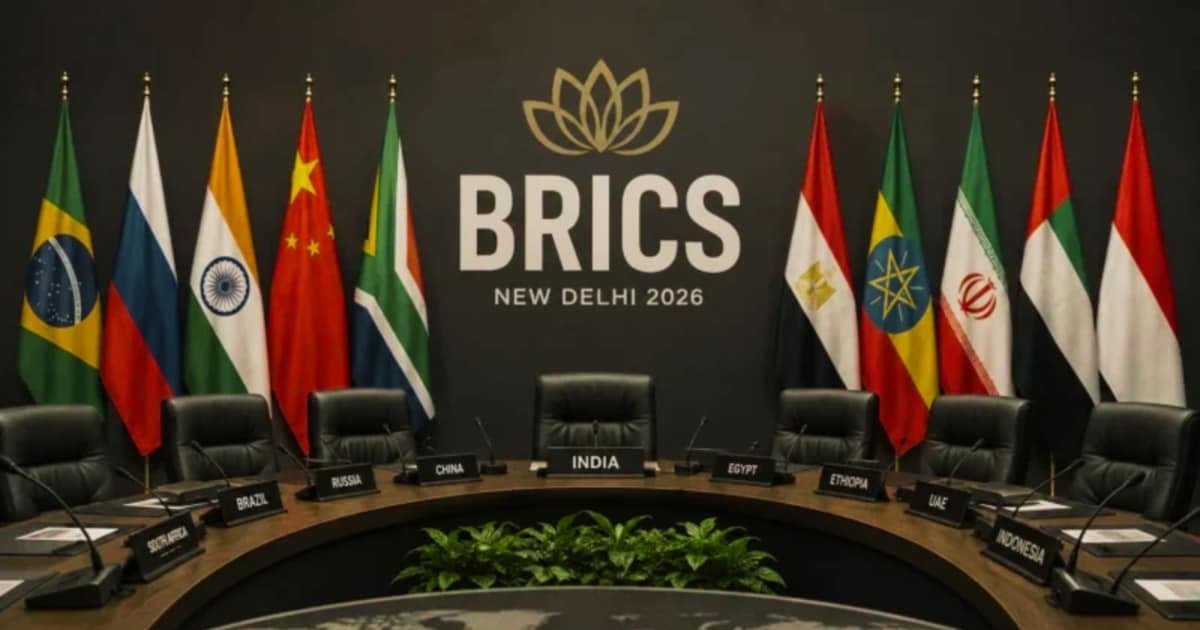
With the conflict in West Asia escalating after recent US-Iranian strikes, senior negotiators from the 11 BRICS member countries are engaged in intense discussions to finalize a joint declaration for the upcoming leaders' summit in New Delhi on September 12-13.
The primary point of contention is the language regarding the West Asia war, a sensitive issue given that Iran, the UAE, and Saudi Arabia are expected at the summit table. Indian officials, alongside their Russian, Brazilian, and Egyptian counterparts, are working to reconcile the positions of the involved parties.
Tensions have been high since February 28, when US and Israeli attacks on Iran prompted Tehran to target US bases in the Gulf, including in the UAE. This has left the Emiratis and Iranians at odds for the past six months. Indian officials are reportedly attempting to hold separate meetings with UAE and Iranian representatives to align their views for the Delhi declaration.
A senior Indian official expressed optimism about achieving a consensus document, stating, "We would like to have a BRICS' Delhi declaration, which is a consensus document, in all the paragraphs. Efforts are underway to achieve that outcome. We are optimistic we can accomplish that."
The challenge is not new. During a Foreign Ministers' meeting in New Delhi in May, Russia's Sergey Lavrov had urged the UAE and Iranian ministers to hold direct talks. India was unable to bridge the diplomatic gap then and had to issue a chair statement that acknowledged the "differing views among some members" and their "respective national positions."
With the crisis affecting the Strait of Hormuz and driving up energy prices, Delhi is keen to reflect a common position in the joint declaration this time. The summit's agenda also covers food security, climate change, energy security, and economic impacts.
Russian President Vladimir Putin's attendance is confirmed, and preparations are underway for Chinese President Xi Jinping, Iranian President Masoud Pezeshkian, South African President Cyril Ramaphosa, and Indonesian President Prabowo Subianto. Brazilian President Luiz Inacio Lula da Silva will not attend, sending a top government representative instead. Prime Minister Narendra Modi's bilateral meetings with Putin and Pezeshkian on Friday have been confirmed.
The summit will begin Saturday with a closed-door session themed 'Inclusive Global Governance and Strengthening Multilateralism'. Leaders will also visit the 'Bharat Innovates Exhibition' and participate in a tree-planting ceremony. The first day concludes with a dinner hosted by Modi. Sunday's open session is titled 'Resilience, Innovation, Cooperation and Sustainability: Shaping the Future for Inclusive Global Growth'.
India's chairship is guided by the theme 'Building for Resilience, Innovation, Cooperation and Sustainability', focusing on areas like health, agriculture, energy, startups, Digital Public Infrastructure, and climate action. Expected outcomes include cooperation on smart grids, energy storage, and an MSME portal.
This is India's first time hosting the expanded BRICS grouping, which now includes Egypt, Ethiopia, Iran, the UAE, and Saudi Arabia, with Indonesia joining in 2025. The bloc represents nearly half the global population and a significant share of world GDP and trade.