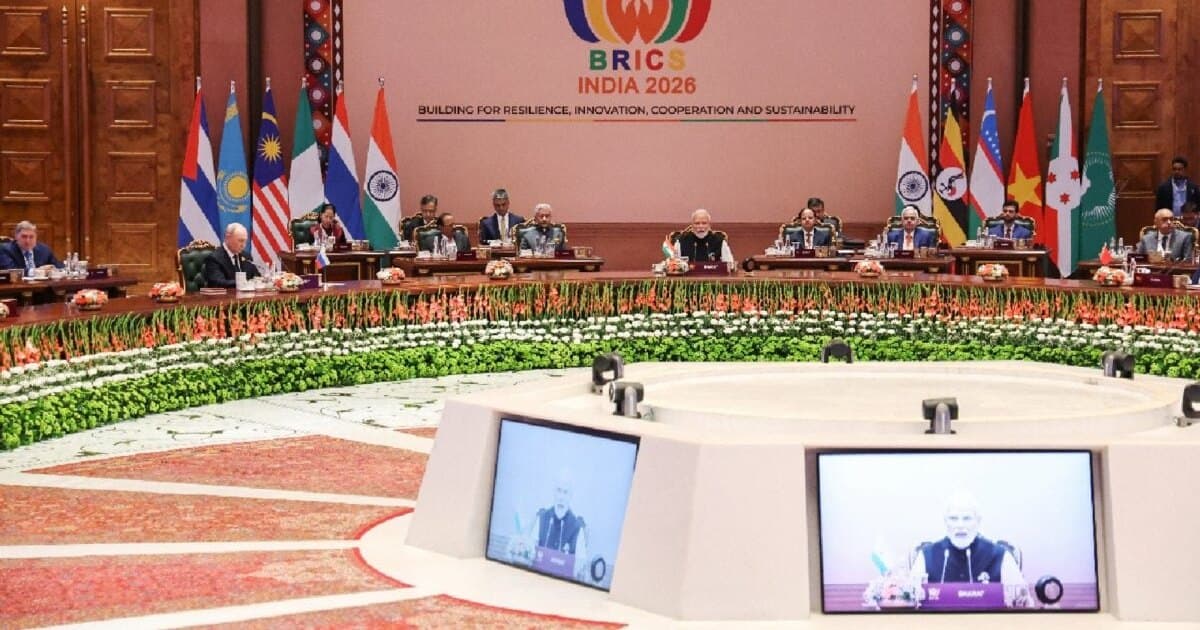
BRICS New Delhi Declaration Names Pahalgam Attack, Backs Zero Tolerance for Terror
The New Delhi Declaration adopted at the 18th BRICS Summit again condemns the April 2025 Pahalgam attack and urges zero tolerance for terrorism.
The 18th BRICS Summit has adopted a declaration that once more condemns the April 2025 Pahalgam terror attack, which killed 26 people, and reiterates the grouping's call for "zero tolerance" towards terrorism, action against terrorist safe havens and accountability for those behind such acts.
The reference appears in the New Delhi Declaration, making it the second successive BRICS summit document to specifically name the Pahalgam attack, after the Rio de Janeiro declaration of July 2025. The timing is notable, coming more than a year after the attack and amid continued India-Pakistan tensions over cross-border terrorism.
For India, the declaration carries added weight because China — Pakistan's long-standing strategic partner, which has often shielded Islamabad at international forums — has again signed on to the condemnation.
The language in New Delhi closely tracks the Rio text. Both documents condemn the April 22, 2025 attack "in the strongest terms", record the death toll of 26, and reaffirm the BRICS commitment to combating terrorism in all its forms, including the cross-border movement of terrorists, terror financing and safe havens.
Both also state that terrorism should not be associated with any religion, nationality, civilisation or ethnic group, and that those involved in terrorist activities and their supporters must be held accountable and brought to justice under national and international law.
The New Delhi Declaration restates the call for "zero tolerance for terrorism" and the rejection of "double standards" in countering it, while urging concerted action against all terrorists and terrorist entities designated by the United Nations.
The repeated BRICS mention of Pahalgam offers India a diplomatic marker: within a grouping that includes China and Russia and has expanded to take in countries with close ties to Pakistan, the attack has remained difficult to contest as an act of terrorism. The declaration, however, does not attribute the attack to Pakistan or explicitly endorse India's subsequent military response.
Beijing had condemned the Pahalgam attack soon after it occurred. At a Chinese Foreign Ministry press conference on April 23, 2025, spokesperson Guo Jiakun, asked specifically about the attack, said China strongly condemned it and firmly opposed all forms of terrorism, while offering condolences to the families of the dead and sympathies to the injured.
China's diplomatic line shifted after India launched Operation Sindoor on May 7. While reiterating its opposition to terrorism, Beijing's Foreign Ministry said it regretted India's military action and called on both countries to exercise restraint and avoid steps that could further complicate the situation.
That distinction broadly mirrored the wider international response. The Pahalgam attack drew unusually broad condemnation across geopolitical alignments, with the UN, G7, European Union and governments in the US, Europe, the Gulf, Asia and elsewhere expressing solidarity with India. Once India responded militarily, many of those same governments shifted towards calls for restraint, de-escalation and dialogue. The G7, for instance, condemned the attack while urging "maximum restraint" from both India and Pakistan and warning that further escalation threatened regional stability.
India has maintained that its military response was a calibrated exercise of the right to self-defence after Pakistan failed to take demonstrable action against the infrastructure behind the attack. Announcing Operation Sindoor, Foreign Secretary Vikram Misri described the strikes as "measured, non-escalatory, proportionate, and responsible", aimed at terrorist infrastructure rather than Pakistani military targets.