At BRICS 20, India Proposes Continuity Mechanism and Reform Roadmap
India's BRICS Chairship proposes a continuity mechanism and a ten-point reform roadmap at the 18th Summit.
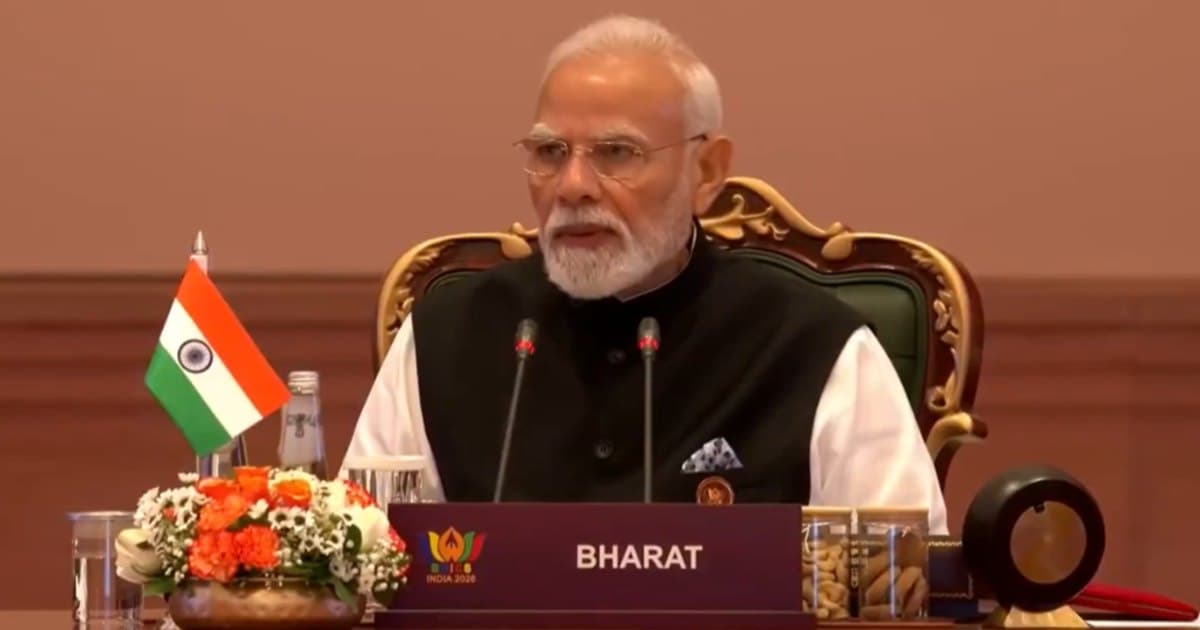
India's BRICS Chairship has been guided by a people-centric and humanity-first approach, with resilience, innovation, cooperation and sustainability as its key priorities, the Prime Minister said in his opening remarks at the 18th BRICS Summit session on inclusive global governance and strengthening.
Welcoming delegates to India, he said the chairship had placed special emphasis on connecting BRICS cooperation more closely with the lives of ordinary people. More than 350 meetings were organised, with teams welcomed in nearly 30 cities across the country. He thanked all members for their contribution to making the chairship a success.
Describing this year's summit as a historic milestone, he noted that BRICS is marking its 20th anniversary. He compared the age of twenty in human life to the beginning of a phase of maturity and responsibility, saying the grouping now stands at a similar "coming of age" moment. Over two decades, he said, BRICS has built a distinct global identity, respecting each other's perspectives, moving forward through consensus, and pursuing an approach that is not against anyone but seeks to take everyone along.
He said it is time to translate the unity and consensus within BRICS into concrete outcomes on the global stage, and to work on a new and ambitious agenda for the next twenty years, beginning with stronger internal working systems. Noting that the chairship rotates annually, he proposed a BRICS Continuity and Implementation Mechanism to ensure that institutional momentum is not interrupted. Through the Troika, the mechanism would provide systematic follow-up on all initiatives and outcomes, supported by a secure digital repository recording the nodal point, timeline and implementation status for every decision.
Turning to global reform, the Prime Minister said the current structure of global governance resembles a pyramid, with power and decision-making concentrated at the top while countries affected by those decisions have little say in shaping them. The Global South, he said, stands in the front row of global crises but in the back row of decision-making. He called for transforming this "pyramid of privilege" into a "platform of partnership", where every country has a voice, every member has a stake, and the advancement of humanity remains central.
With that objective, he proposed that members work together on ten proposals for global governance reform, to be developed into a BRICS Reform Roadmap by the next summit. Three aspects, he said, must guide the roadmap: representation, responsiveness and rule-making.
On representation, he said reform of the UN Security Council can no longer be delayed, and that text-based negotiations must be linked to a clearly defined timeline and concrete outcomes. In financial institutions, voting power, leadership positions and policy priorities should reflect today's economic realities, with countries that drive global economic growth having an appropriate role in shaping global economic governance.
On responsiveness, he said global institutions will earn humanity's trust only when they deliver effective solutions, with attention to the speed, scale and last-mile impact of collective responses. Highlighting the contribution of seafarers to global trade and the inadequate support they often receive in difficult times, he proposed a Seafarers Emergency Support Network linking the maritime authorities and missions of concerned countries, to facilitate distress alerts, medical assistance, communication with families and evacuation support.
On rule-making, he said equal participation in shaping the global rules of the future is of utmost importance, noting that AI, cyberspace, outer space, biotechnology and critical technologies are shaping both future opportunities and the rules that will govern them. The Global South must move from being rule-takers to rule-shapers, he said, proposing that BRICS offer young diplomats and policymakers from Global South countries negotiation skills, practical training and legal expertise. He observed that the decision coincides with the United Nations Day for South-South Cooperation, calling it especially significant, and said India is ready to take the lead on the issue.
The message of the summit hosted by India, he said, should be clear: if the future is shared, the right to shape it must also be shared — from voice to impact, and from privilege to partnership. This, he said, should be the resolve of BRICS at 20.