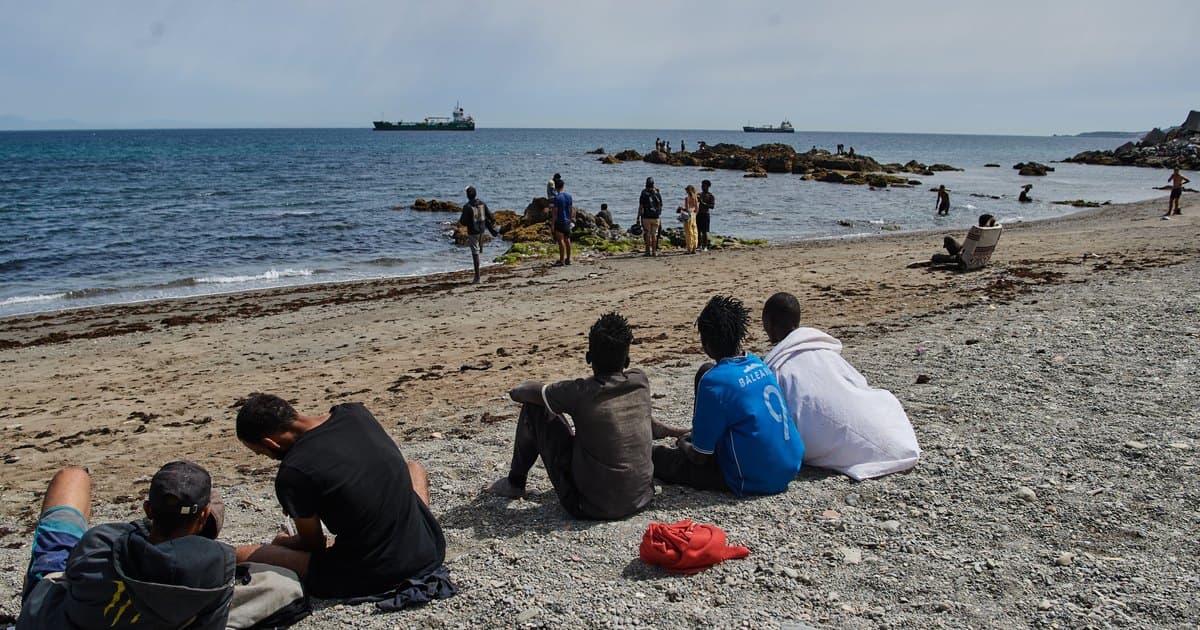
Migrants stranded on Ceuta beach demand passage to Europe
Hundreds of migrants, mostly Moroccans, remain in a makeshift beach camp in Ceuta, demanding passage to Europe or an immediate solution.
Hundreds of migrants, mostly young Moroccan men but also including families and children, remain camped on El Trampolín beach in the Spanish enclave of Ceuta, a month after a mass crossing from Morocco. They are living in makeshift tents and receiving only one meal a day from the Red Cross, according to those on the ground.
Nebil Tazi, a 32-year-old migrant from Tangier, described the group's desperation. "We're suffering and we want to get to Europe or find a solution right now," he said, adding that they have been waiting for a month. He also highlighted the lack of medical care, noting that one person in the camp needs a doctor but cannot find one.
Another migrant, 21-year-old Hamza Mohamed, also from Tangier, explained his motivation for leaving Morocco. "I have family in Spain and in Morocco, we need jobs, we need money, we need to help my family and here in Spain we can do it," he said.
The beach encampment has become a focal point for tension in the city. The migrants have refused to move to official reception centres following the Spanish government's announcement that it intends to identify and deport those who arrived at the end of July. The situation has sparked protests from local residents who accuse the national government of negligence and are demanding a return to normality.
On 2 September, which coincided with Ceuta's public holiday, protests were organised against the migrants' presence. The event also drew attention from more than 260 Spanish municipalities expressing support for Ceuta, placing the humanitarian crisis and border management with Morocco at the centre of national debate.