China Stays Silent on Xi's Attendance at BRICS Summit in Delhi
China has declined to confirm President Xi Jinping's participation in the BRICS Summit India is hosting in New Delhi on September 12-13.
China has declined to confirm whether President Xi Jinping will travel to India for the BRICS Summit that New Delhi is hosting on September 12-13, leaving one of the most anticipated diplomatic events of the year without an official answer from Beijing.
Asked about the visit, Chinese Foreign Ministry spokesperson Guo Jiakun said on Thursday that he had no information to provide at present. His remarks were carried by Chinese state media.
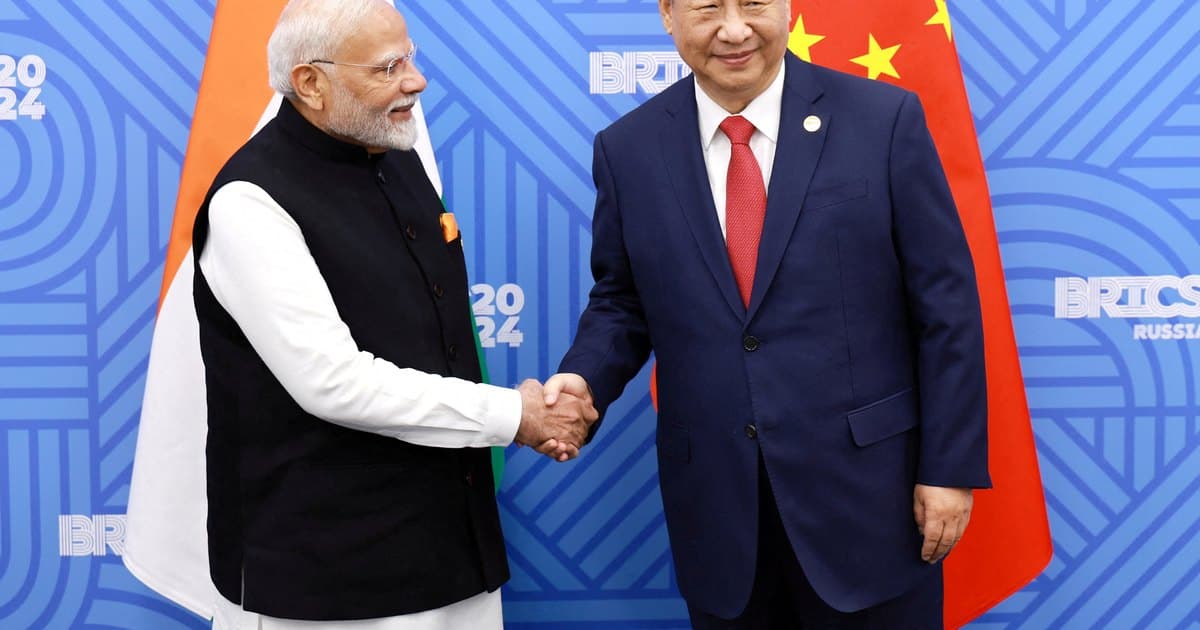
The non-committal response comes amid widespread expectations that Xi would be in the Indian capital for the annual gathering of the bloc. There has also been no word on whether he would hold talks with Prime Minister Narendra Modi on the sidelines.
Such a meeting would carry significance for the trajectory of India-China relations, which the two sides have been trying to steady after the tensions that followed the 2020 clashes in the Galwan Valley. If Xi does attend, it would mark his first visit to India since ties deteriorated in the aftermath of the Ladakh confrontation.
Former BRICS Sherpa and Indian diplomat Sanjay Bhattacharyya noted that China has not formally confirmed Xi's presence. He said multilateral gatherings of this kind also create openings for bilateral engagement.
Describing India and China as two major civilisational powers and emerging economies, Bhattacharyya said he expected the two countries to arrive at an understanding that allows cooperation on a range of issues, particularly regional and multilateral ones. He added that economic competition between them is likely to persist, but so is cooperation, given the scale of the opportunities available to both sides.
India and China fought a brief war in 1962, and their relationship has remained cautious since. Ties worsened sharply after the 2020 border skirmish, in which 20 Indian and four Chinese soldiers were killed.
Diplomacy and successive rounds of border talks have since helped the relationship improve, a trend that gained momentum after Modi's visit to China last year, as both countries navigate volatile ties with the United States.
In March, India relaxed some of the restrictions on Chinese investment imposed after the 2020 clashes, with a focus on electronics, capital goods and solar cells. New Delhi is also weighing faster approvals for joint ventures between Indian and Chinese companies in certain sectors. The two countries have decided to resume direct air services, and India has eased visa procedures for Chinese business professionals.
China's foreign ministry has said Xi and Modi, who met briefly at a regional forum in Kyrgyzstan, regard the two countries as partners rather than competitors, and as opportunities rather than threats to each other's development.
On the anticipated visit, Lin Minwang, a South Asia expert at Shanghai's Fudan University and a former diplomat at the Chinese Embassy in New Delhi, said dramatic progress was unlikely. He said China wants to improve ties but is waiting to see how far India is willing to go.
Harsh Pant, vice president at the Observer Research Foundation in New Delhi, said the trust deficit between the two countries remains high. He noted that China's economic weight gives it an opportunity to present itself as a reliable partner, particularly at a time when both nations are affected by American trade policies.