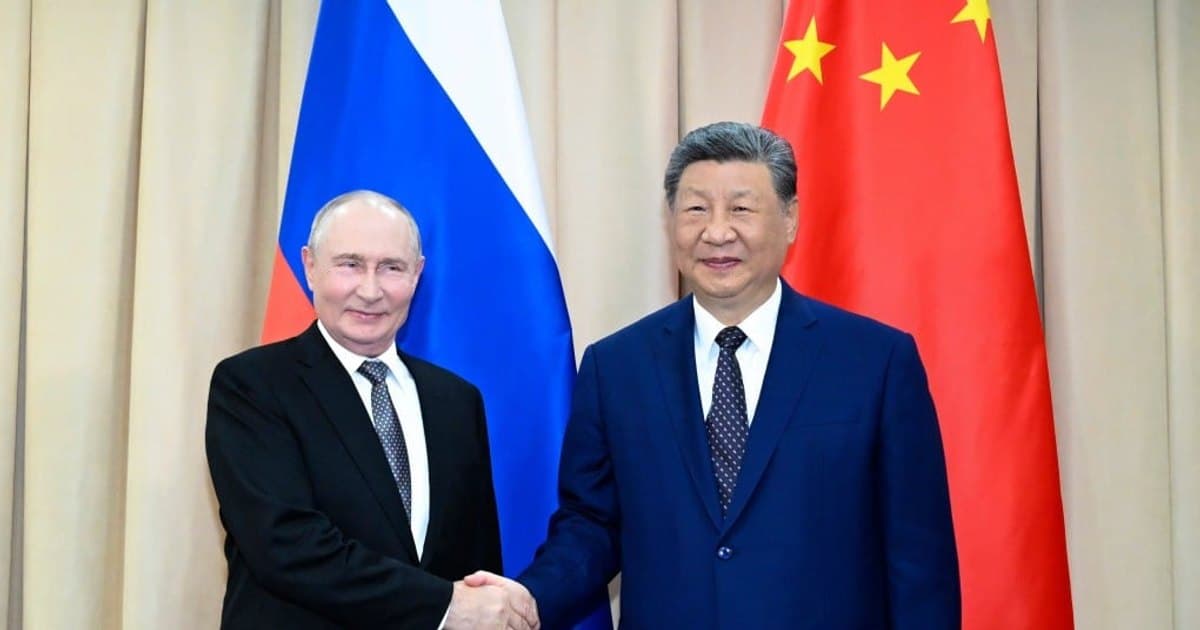
China Uses SCO Summit to Expand Economic and Strategic Reach
China is leveraging the SCO to expand trade, infrastructure, and tech influence, reshaping regional dynamics before Xi's Washington trip.
The recent Shanghai Cooperation Organisation (SCO) summit in Bishkek has drawn unusual global attention, largely because Chinese President Xi Jinping is scheduled to visit Washington later this month. His engagements in India and Egypt before that meeting are expected to shape the tone of US-China discussions.
Beijing's position within the SCO is now unmistakable. The grouping includes Russia, India, Pakistan, Iran, and several Central Asian states, along with newer partners such as Saudi Arabia, Turkey, and the UAE. For most of these nations, China is both a neighbour and the largest trading partner. Many also rely on Chinese military hardware, with Uzbekistan recently choosing Chinese J-10CE fighter jets over ageing Soviet-era equipment.
The summit's formal documents, including the Bishkek Declaration, emphasise connectivity, counter-terrorism, and drug control. China has also proposed new initiatives for ports, logistics hubs, and regional data centres. These projects are widely seen as tools to extend Chinese supply chains and digital infrastructure across the region.
At the same time, Beijing has signalled it wants SCO members to buy more Chinese goods, but trade barriers and warnings about fraudulent export schemes suggest the relationship is not entirely open. China's stance on ongoing conflicts also appears calculated. It has maintained ties with Russia and continued energy purchases from Iran, while avoiding direct involvement in either war. Analysts note that Chinese-made components and continued oil flows have helped sustain Iranian defence production despite sanctions.
China's broader ambitions are also visible in new aid to Afghanistan and a stronger presence near the Suez Canal. With Xi's upcoming trip to Washington, the SCO summit is being read as a stage for Beijing to project itself as a stable, less disruptive power — even as it deepens its economic and strategic footprint across Asia and beyond.