China's August Soybean Imports Slip, Full-Year Outlook Flat
China's August soybean imports fell 1.1% year-on-year but rose 5.7% from July. Full-year arrivals seen flat or slightly below 2025's record.
China's soybean imports eased in August compared with the same month last year, though volumes remained robust on a monthly basis, according to customs data released on Tuesday.
The world's largest buyer of the oilseed brought in 12.14 million metric tons last month, a 1.1% decline from 12.28 million tons in August 2024. However, this represented a 5.7% increase from July's intake.
Cumulative imports for the first eight months of the year reached 74.11 million tons, up 1.1% from 73.33 million tons during the same period in 2024.
Analysts attribute the steady flow to Brazil's abundant 2025/26 harvest and efficient port operations. "Domestic livestock and poultry herds also remained at a certain scale, supporting underlying crushing demand for soybean meal," said Liu Jinlu, an agricultural researcher at Guoyuan Futures.
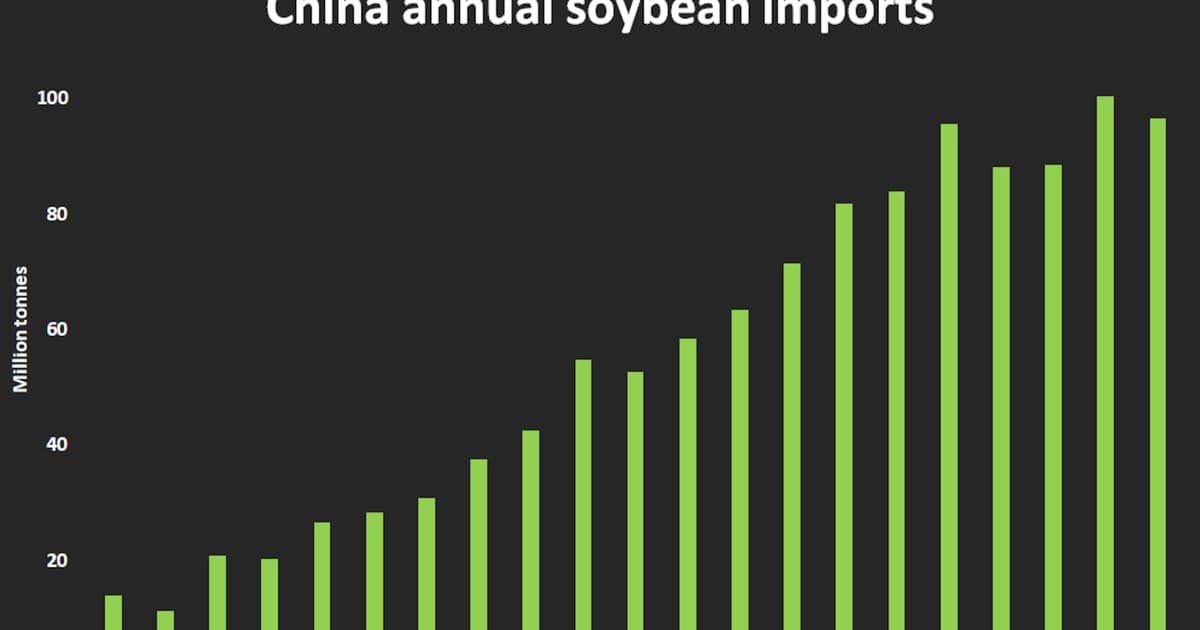
Looking ahead, three analysts project full-year imports will be broadly unchanged or slightly lower than last year's record of 111.83 million tons. A gradual reduction in China's breeding sow herd is expected to cap pig feed demand growth in the fourth quarter, potentially weighing on soybean consumption.
Rosa Wang of Shanghai JC Intelligence Co. estimates arrivals will total roughly 35 million metric tons from August through November, with fourth-quarter volumes declining month by month in line with seasonal trends.
Market attention is now focused on President Xi Jinping's expected visit to the United States later this month. Private crushers are grappling with high import costs and thin margins, and traders hope for tariff relief that could broaden sourcing options as South American supplies wind down.
State-owned buyers are believed to have purchased over 11 million metric tons of U.S. soybeans following a May meeting between the two countries' leaders, which reaffirmed a commitment to buy 25 million tons annually through 2028.