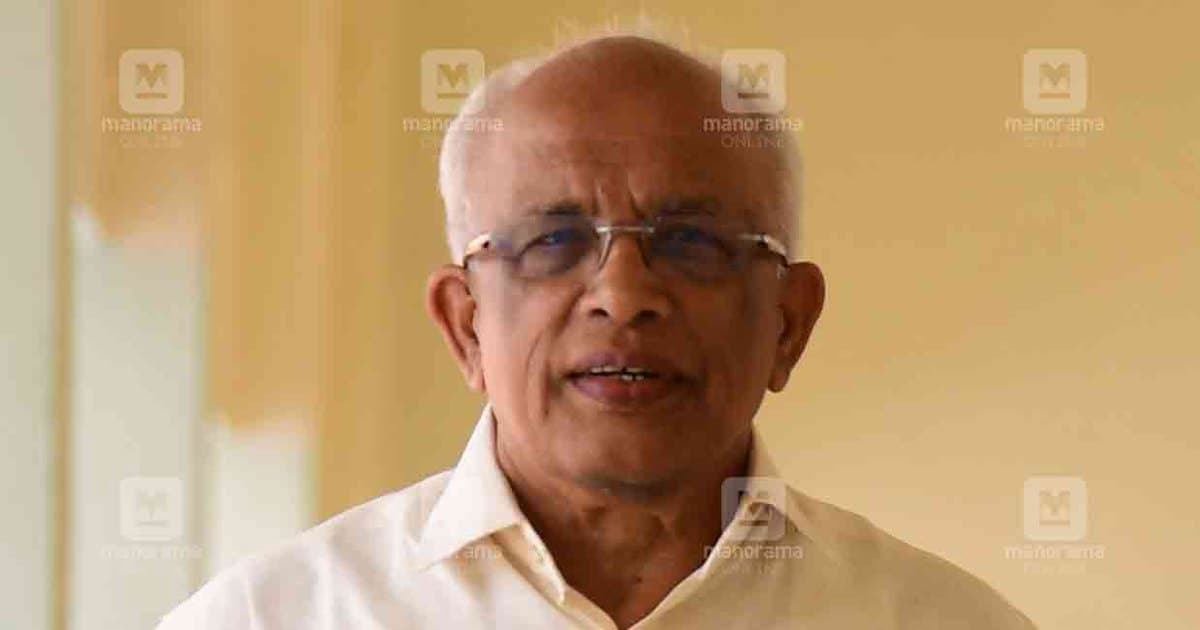
Krishnankutty flags Chittur paddy crisis over shortfall in Parambikulam-Aliyar water
K. Krishnankutty alleges Tamil Nadu is releasing only 100 of the 400 cubic feet of water due to Kerala, hitting paddy cultivation in Chittur.
Paddy cultivation in the Chittur region is in crisis because Tamil Nadu is not releasing Kerala's agreed share of water under the Parambikulam-Aliyar project, former Power Minister K. Krishnankutty has said.
Speaking to the media on Saturday, Mr. Krishnankutty said Kerala was entitled to 400 cubic feet of water during the current 15-day period, but only 100 cubic feet was being let into the Chittur river. The shortfall, he said, has pushed farmers to give up cultivation on roughly 50,000 acres, with losses estimated at ₹150 crore. Fields already under paddy are also at risk of drying up at a critical stage of the first crop, he added.
According to Mr. Krishnankutty, the project's reservoirs hold adequate water, including about 3.7 tmc in the Parambikulam components. He said Tamil Nadu was withholding even the 400 cubic feet due to Kerala, which he described as a breach of the agreement. As much as 2,150 cubic feet could be routed to the Chittur river from the Parambikulam region through various channels, he said, and alleged that insufficient efforts were being made to ensure the required inflow into the Aliyar reservoir.
The former Minister recalled that on earlier occasions of scarcity, Kerala had secured its share through intervention at the government level, with meetings held with the Tamil Nadu government and, when needed, water released directly into Aliyar through the canal.
He criticised the State government for not stepping in this time and urged it to take the matter up at the Chief Minister's level to secure Kerala's full share. He also called for water supply to be restored without delay to protect the first paddy crop and limit further losses to farmers.