How a student protest forced a change at the helm of India's education ministry
The CJP's Jantar Mantar protest, sparked by a leaked exam paper and a judge's remark, led to Dharmendra Pradhan's replacement.
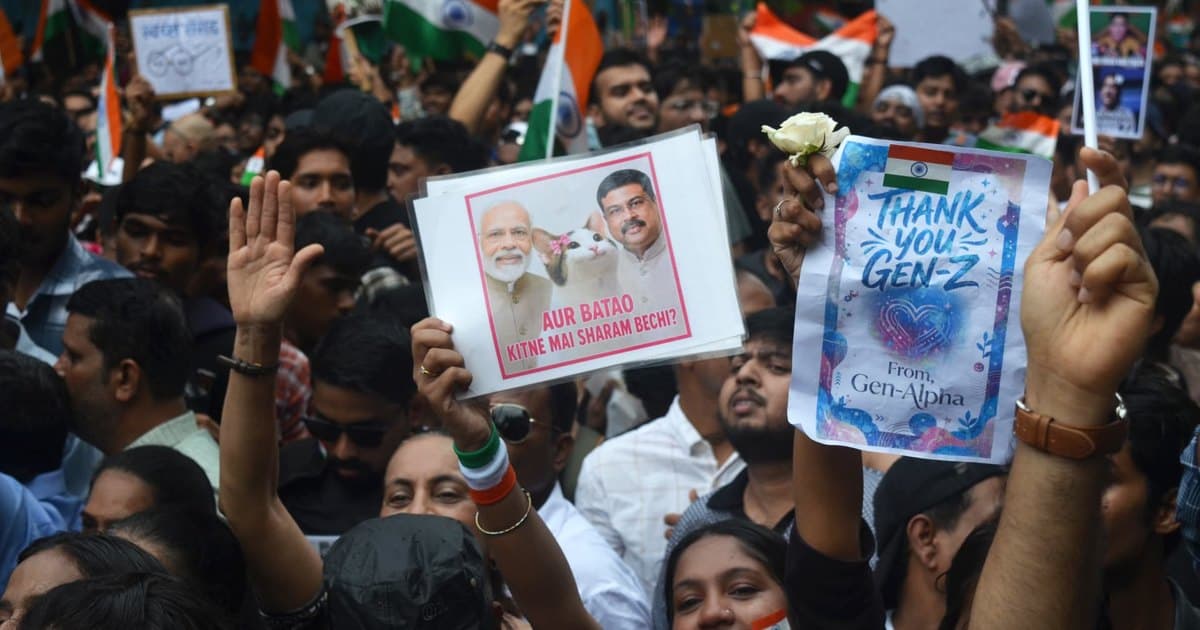
A student-led movement, which began as a reaction to a leaked exam paper and a judge's remark, has achieved what no opposition party has managed so far: forcing the ruling BJP to replace a Union minister on its own terms.
The Cockroach Janta Party (CJP), named after a comment by Chief Justice Surya Kant about 'youngsters like cockroaches', led a 37-day sit-in at Delhi's Jantar Mantar in June-July. The protest was fuelled by the leak of the NEET-UG 2026 paper and broader anger over corruption in education.
In an interview, CJP spokesperson Ashutosh Ranka dismissed suggestions that the Centre accepted their demands because the group is the BJP's 'B-team'. He stressed the struggle involved in organising the protest, including a month of relentless discussions with the government that went unnoticed.
Ranka noted that for 37 days, the government did not engage in dialogue until July 20. During that period, he said, protesters were labelled 'viruses' and 'terrorists' and faced violence. The protest, initially peaceful, turned violent after a Delhi Police crackdown involving lathi charges and tear gas.
The protest was called off on July 25 after the government assured that Dharmendra Pradhan would be replaced as Union Education Minister and that police cases against student-protesters without a criminal past would be dropped. Pradhan was subsequently replaced by Pralhad Joshi.
However, the dropping of cases was slow. The CJP called for a second march on September 5, but on September 2, the Supreme Court intervened, using its special powers under Article 142 to drop all cases. The CJP then called off the march.
Ranka said the group felt the government was delaying the matter, prompting the second march call. He expressed hope that the government would honour its assurances, which are now a matter of judicial record. On the Delhi Police's claim that 2,800 'hardcore criminals' participated in the protests, Ranka said trust must be earned, but the group hopes the Delhi government and police will follow through on their statements made in court.