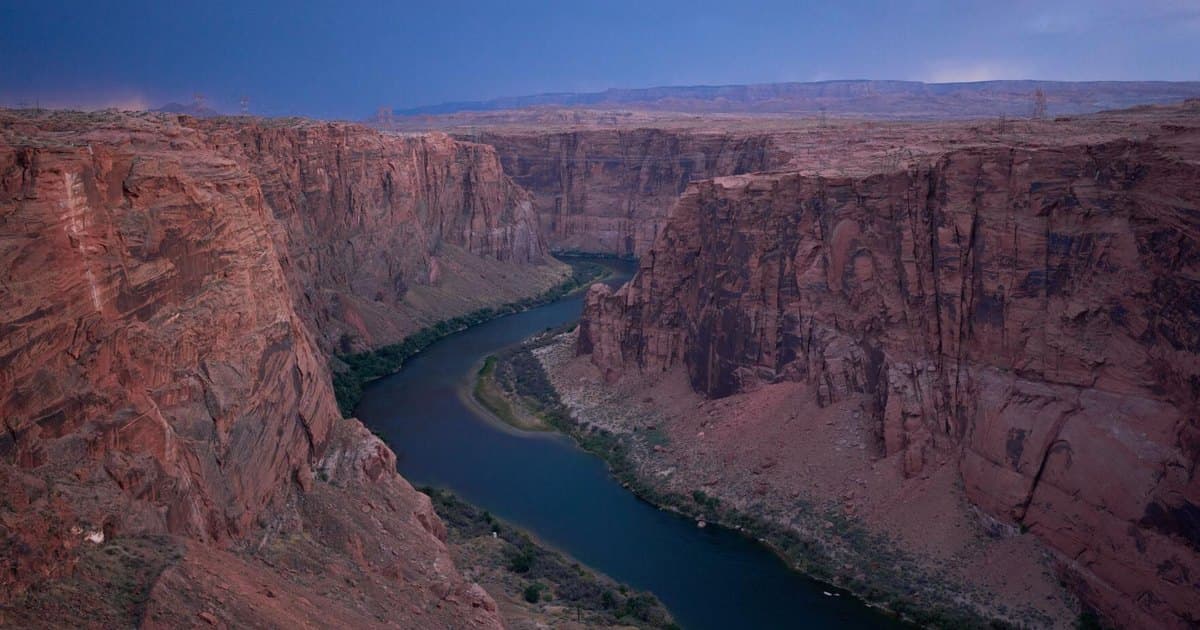
Colorado River water cuts deepen uncertainty across the US West
Federal cuts to Colorado River water use bring uncertainty to cities, farmers, and tribes across the US West as drought persists.
A small Arizona town that depends almost entirely on the Colorado River has already capped growth, reactivated old wells, and negotiated water deals. Yet Cave Creek Mayor Robert Morris fears these steps may not be enough to secure the desert community's future, especially after the federal government announced a new plan to address the river's deepening crisis.
Cave Creek, home to about 5,000 people, gets nearly all its water from the river, which supplies 40 million people across the West. The river has been shrinking due to climate change, high demand, and overuse. The town was forced to make cuts this year and could lose more under the federal plan. Morris compared the situation to preparing for a meteor strike: "You can see it coming, but you can't get out of the way and you don't know what the damage is going to be."
The uncertainty spans seven US states, tribal nations, and Mexico. Farmers are weighing which crops are worth planting, Phoenix may face its first-ever municipal and industrial water losses, and residents could see higher water bills. Nevada has sued the Interior Department and the Bureau of Reclamation, arguing that Las Vegas's basic needs would go unmet if it must absorb reductions of up to 70% of its Colorado River water over the next decade. The Bureau declined to comment on the lawsuit.
Water in the West is stored mainly in reservoirs, aquifers, and snowpacks, but a record snow drought has left far less water to replenish them. Lake Mead and Lake Powell, the nation's two largest reservoirs, hit record lows this month. Eight other Bureau-operated reservoirs also recorded their lowest levels in at least 30 years, including Elephant Butte Lake in New Mexico, which irrigates crops in southern New Mexico, Texas, and Mexico; Green Mountain Reservoir in Colorado; and Guernsey Reservoir in Wyoming.
Under the federal plan, California, Nevada, and Arizona will collectively cut water use by 1.25 million acre-feet annually for the next two years—enough to fill over 600,000 Olympic-sized swimming pools—with possible larger cuts later. The upper-basin states of Colorado, Utah, Wyoming, and New Mexico are not required to cut yet but may do so voluntarily.
Even if El Niño brings heavy moisture to parts of the West, it won't erase decades of drought. "Drought is a slow-moving phenomena," said David Mocko, a senior research scientist who helped produce a recent US Drought Monitor map.
In Yuma, Arizona, which grows about 90% of the leafy greens consumed in North America during winter, farmer John Boelts says high-priority water rights may shield him from cuts for now, but the short reprieve doesn't allow for long-term planning. Farmers are reluctant to plant new acreage, and orchard crops like citrus and dates take years to become productive. "There's no food that we grow in a hurry," Boelts said.
Ray Martinez, who grows alfalfa on the Colorado River Indian Tribes reservation, holds some of the river's oldest water rights. But an aging irrigation system and lack of infrastructure keep much of that water out of reach. He worries about finishing this growing season and has left some fields unplanted to help prop up Lake Mead. If the reservoir keeps dropping, surface water for him and neighboring farms will shrink further. "Unfortunately, Mother Nature has its own way of doing things, and we have no control of that," he said.