Congo Ebola Outbreak: Five Gaps Undermining Containment Efforts
Africa CDC warns Congo's Ebola outbreak has not peaked. A new report outlines five critical gaps in the response.
Authorities in eastern Congo are adopting a village-centered strategy to combat an Ebola outbreak that continues to spread faster than containment efforts, according to Africa's top public health agency. The Africa Centers for Disease Control and Prevention (Africa CDC) stated on Thursday that the outbreak, declared in mid-May, has likely not yet peaked.
Official data shows the virus has expanded from three health zones to 60, resulting in 6,250 cases and 3,039 deaths. The current crisis has recorded six times as many confirmed cases and five times as many deaths as the 2014-2016 West Africa epidemic, the deadliest on record.
A report from the U.S. Centers for Disease Control and Prevention highlights five critical areas where the response is falling short.
1. Weak Community Surveillance
A major gap is the limited community-based surveillance needed to quickly investigate alerts. Delays in detection and reluctance to report cases are contributing to preventable deaths. At least 63% of deaths in the past week occurred outside Ebola treatment centers.
2. Distrust and Insecurity
Authorities are now working with community leaders to build trust, but the task is complicated by rebel conflict in Ituri province, the outbreak's epicenter. "Building that trust in the middle of an outbreak is quite complex," said Yap Boum, head of emergency preparedness at Africa CDC.
3. Contact Tracing Shortfalls
Identifying and tracing contacts remains a challenge across six affected provinces. While 81% of listed contacts have been followed up, this figure excludes those yet to be traced. Africa CDC estimates that cases in the last three weeks should have generated 97,600 contacts, but only 19% have been traced.
4. Treatment Capacity Strain
Treatment centers have expanded to over 1,300 beds, with an occupancy rate of 67%. However, experts call for more facilities in affected zones to prepare for undetected cases. The World Health Organization noted that centers in Ituri are "saturated," and North Kivu lacks sufficient referral options. Health workers are also exhausted. "Ebola is tiring us all the more because we don't know when this scourge will end," said Jeannot Krikeija, who works at a center in Bunia.
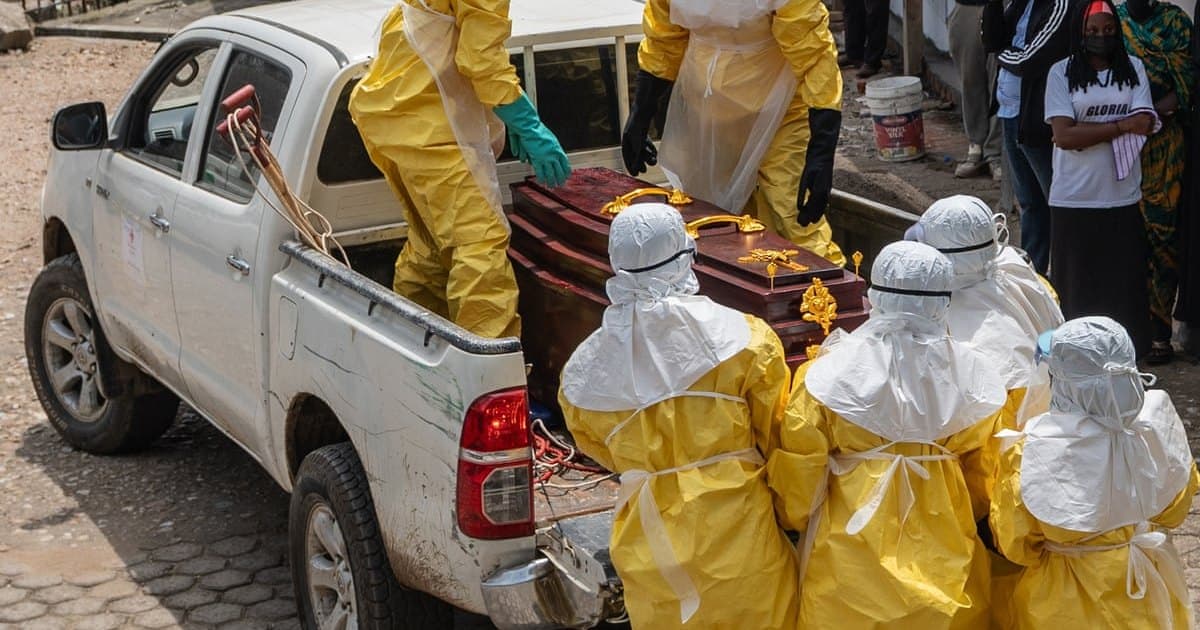
5. Unsafe Burial Practices
Gaps remain in safe burial procedures. Bodies of victims carry large amounts of active virus, but burial teams have been attacked by families. It is common to see people surrounding graves of Ebola victims, sometimes within a few meters of coffins.