Consumer trust in generative AI falls below 40%, yet shoppers rely on it
McKinsey research reveals consumer trust in generative AI is below 40%, yet shoppers increasingly use it for product discovery, creating challenges for brands.
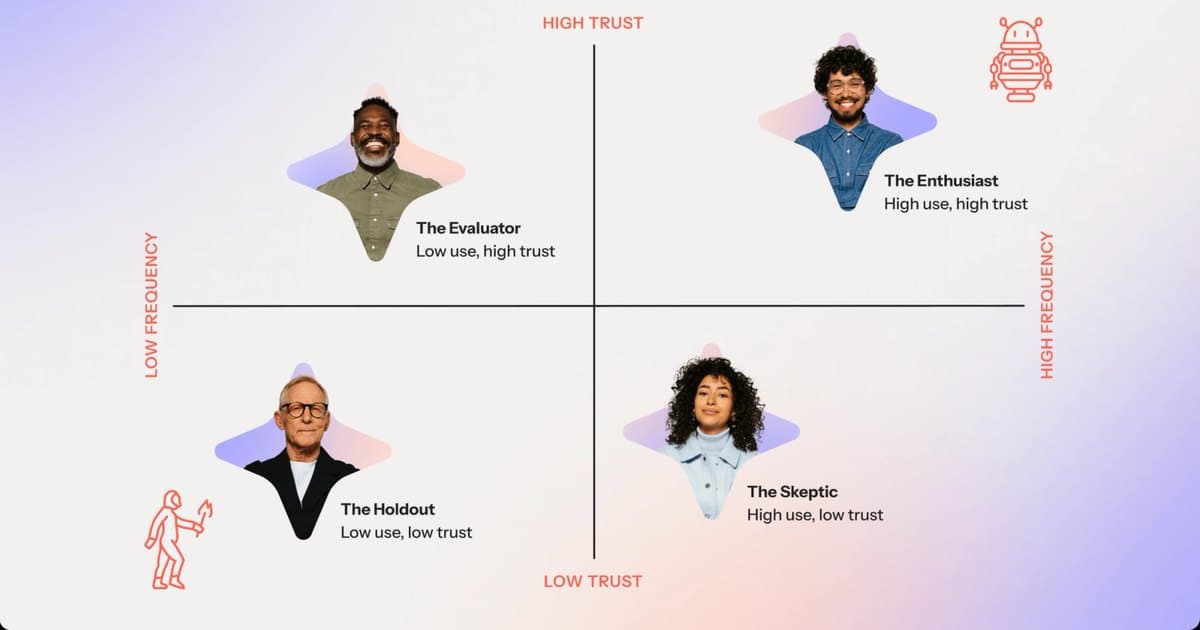
A new McKinsey study has uncovered a striking contradiction in consumer behavior: while trust in generative AI has fallen below 40 percent, shoppers are increasingly turning to these tools for product discovery and purchase decisions.
Danielle Bozarth, global leader of McKinsey's Retail and Consumer Packaged Goods Practices, said the research found significant skepticism toward algorithm-driven channels, particularly generative AI. This distrust extends beyond digital platforms, with recommendations from family and friends also scoring poorly among younger demographics.
"While these consumers are bringing more sources of information into their consideration set, they trust those sources significantly less," Bozarth noted, adding that this creates a real challenge for brands and influencers trying to shape consumer decisions.
The research also found that brand-owned websites receive minimal direct citations in AI responses, forcing companies to adopt generative engine optimization strategies. This involves helping algorithms interpret structured specifications, product details, and frequently asked questions.
McKinsey identified four central trends redefining consumer behavior: a technology-led path to purchase, a broader health revolution, an expanding experience economy, and the rise of the resourceful consumer.
Senior Partner Clarisse Magnin said consumers now evaluate products beyond upfront prices, focusing on practical utility, durability, repairability, and resale value. "For executives, that means value needs to be designed into the offering from the beginning, not simply added later through promotions," she said.
Adoption of generative AI tools remains strongest in high-consideration purchases such as travel, beauty, and fashion, putting pressure on businesses to rapidly adjust their operational and marketing strategies.