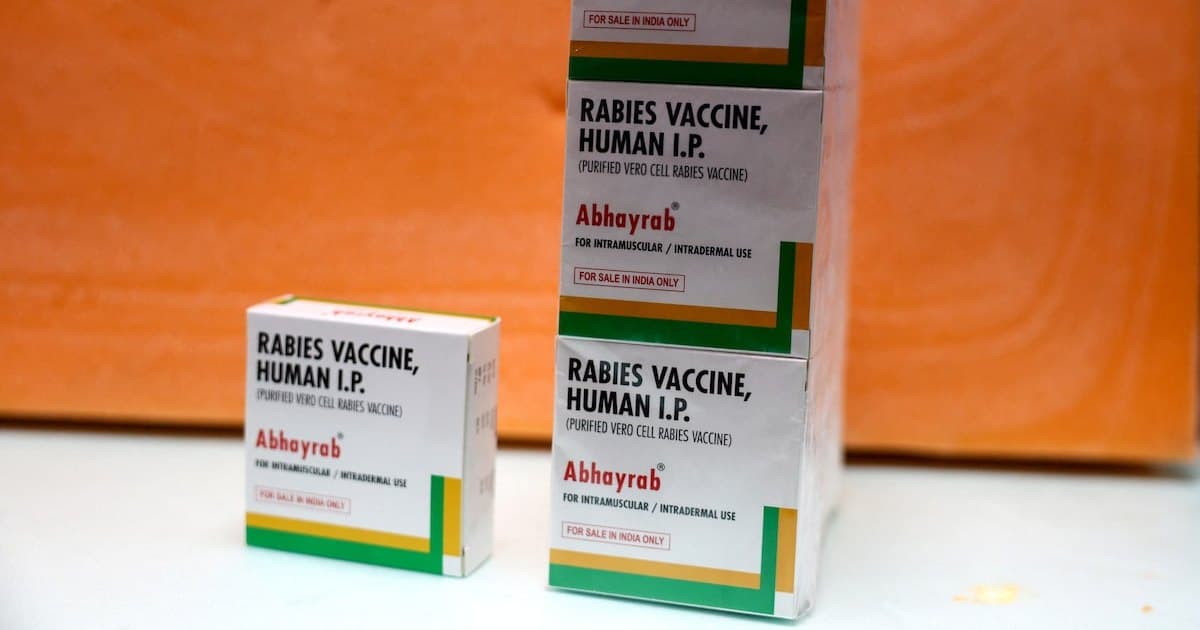
Counterfeit Rabies Vaccine Suspected as Drug Regulator Flags Misbranded Batch
A probe is underway after a seized batch of the rabies vaccine Abhayrab was found to be misbranded and of substandard quality.
An investigation has been launched into the possible circulation of counterfeit rabies vaccines after a drug laboratory flagged a specific batch as misbranded and not of standard quality. The Central Drugs Laboratory (CDL) in Kasauli, Himachal Pradesh, raised the alarm following a failed potency test on samples of the Abhayrab vaccine, which is used for post-exposure prophylaxis against rabies.
The suspect vials, bearing batch number KE25012, were seized on April 22 during a joint operation by the Delhi Police and the city's Drugs Control Department. The action took place at an unlicensed residential premises. Officials noted that the seized vials differed from genuine samples in several key aspects, including packaging, labelling, artwork, QR-code verification, cap colour, and licence details.
The Central Drugs Standard Control Organisation (CDSCO) confirmed that four individuals have been arrested in connection with the case. The investigation is now focused on identifying the actual manufacturer of the suspect vials and determining whether any patients received doses from this batch. While it has not yet been confirmed that the misbranded vaccines entered the domestic supply chain, the CDSCO has stated that no part of the batch was exported.
In a communication dated August 27, the Drugs Controller General of India (DCGI) has directed all State Drugs Controllers to maintain strict vigilance over the movement and distribution of batch KE25012. The regulator has assured that coordinated surveillance is being maintained to disrupt unauthorised drug supply networks.
Indian Immunologicals Ltd (IIL), the manufacturer of Abhayrab through its Human Biologicals Institute, has denied producing the seized vials. The company stated that its genuine KE25012 batch, comprising 83,370 vials, was released on November 7, 2025, after passing all required tests. IIL highlighted that the CDL identified 17 differences between the questioned vials and the company's own retention samples, suggesting that a legitimate batch number was used on counterfeit material.
This is not the first such incident involving Abhayrab. A previous counterfeit episode involving batch KA24014 was reported in 2025, leading to health warnings in some countries. The latest case is considered critical because rabies is almost invariably fatal once symptoms develop, making the efficacy of the vaccine paramount. IIL has submitted its manufacturing and distribution records to the CDSCO and has requested authorities to trace the source of the suspect vials.