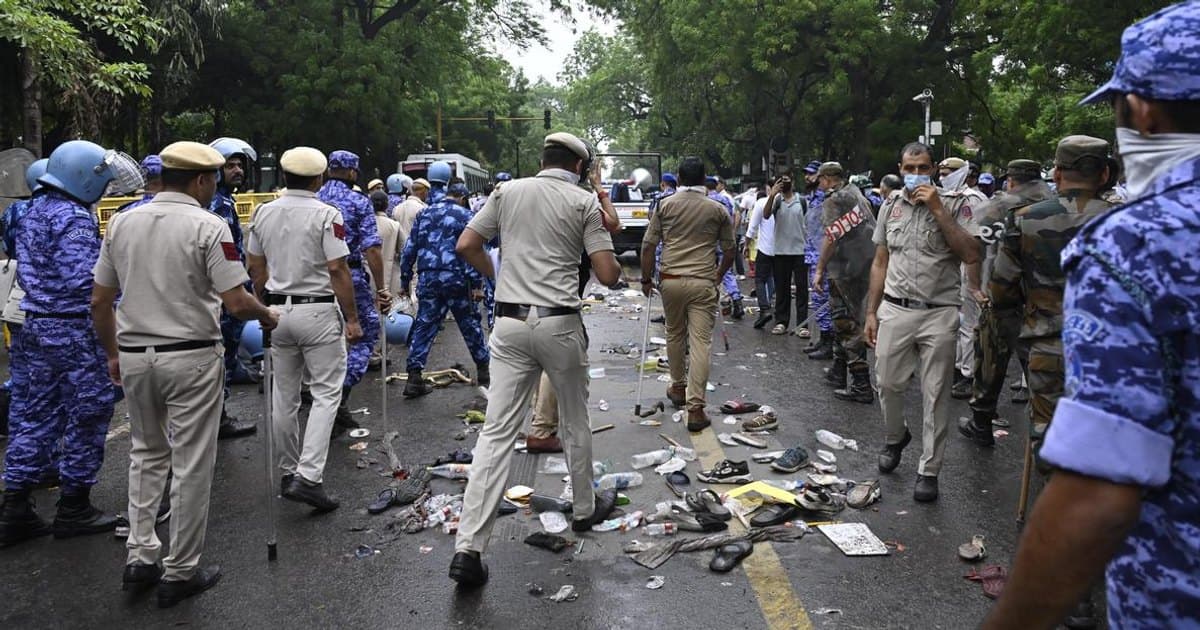
CRPF tells RTI applicant pellet gun use in Delhi protest not a human rights violation
CRPF has refused RTI details on pellet gun use during Delhi protests, saying it is not a human rights violation. TMC's Saket Gokhale plans to approach the Supreme Court.
The Central Reserve Police Force (CRPF) has told Trinamool Congress leader Saket Gokhale that the use of pellet guns against protesters in Delhi does not constitute a human rights violation, prompting the former Rajya Sabha member to say he will approach the Supreme Court.
Mr. Gokhale, who filed a Right to Information (RTI) application with the Rapid Action Force — a CRPF unit — seeking details about the firing of pellet ammunition on July 20, shared the force's response on social media on Monday. The date marks the day students marched to Parliament at the call of the Cockroach Janata Party (CJP).
In his RTI plea, Mr. Gokhale had sought information on the use of pellet guns against unarmed protesters at the Jantar Mantar protests. While the RTI Act exempts the CRPF from disclosure, the law makes an exception for cases involving corruption or human rights violations. The CRPF, however, rejected the application, stating that the allegations did not attract the human rights exception.
Mr. Gokhale said the appellate authority also denied information on the same grounds after he appealed the initial refusal. He accused the central government of first denying that pellets were used, then refusing to disclose the number of victims, and now arguing that the use of pellet guns on unarmed youth in the national capital is not a human rights violation.
He described the argument as shocking in any civilized democracy and said he would submit the CRPF's reply to the Supreme Court to seek its view on the matter.
Earlier, records obtained by Mr. Gokhale through RTI applications showed that Lady Hardinge Hospital and Safdarjung Hospital treated nine and one persons respectively for pellet gun injuries on July 20. The All India Institute of Medical Sciences (AIIMS) declined to share similar details, citing provisions that protect personal information.