Dolly Parton’s Feminist Legacy: Actions and Lyrics Over Labels
Dolly Parton avoided the feminist label, yet her lyrics, choices, and business acumen made her a feminist icon to many.
Dolly Parton, the beloved country superstar who died this week at 80, never called herself a feminist. When asked, she eschewed the label, just as she avoided political ones. Yet for generations of admirers, her life and work made the label unnecessary.
In January 1987, Parton appeared on the cover of Ms. magazine as one of its 12 Women of the Year, alongside a U.S. senator, a novelist, and a former nun. Gloria Steinem, the magazine’s co-founder, wrote in that issue that Parton had “used her business sense to bring other women and poor people along with her” and that her flamboyant style had “turned all the devalued symbols of women to her own ends.”
Parton’s songs tackled issues that were ahead of their time. “9 to 5,” from her 1980 film, addressed workplace inequality and women uniting against male supervisors. “Down from Dover” dealt with teen pregnancy when such topics were taboo on the radio. “The Bargain Store,” shunned by country radio for its perceived subject matter, carried a message about a woman’s value beyond a relationship.
At the 2019 Newport Folk Festival, Parton drew cheers from women when she sang “Just Because I’m a Woman,” a song about double standards. She told the crowd that when men marry, they often expect purity, adding, “sometimes we’re not!”
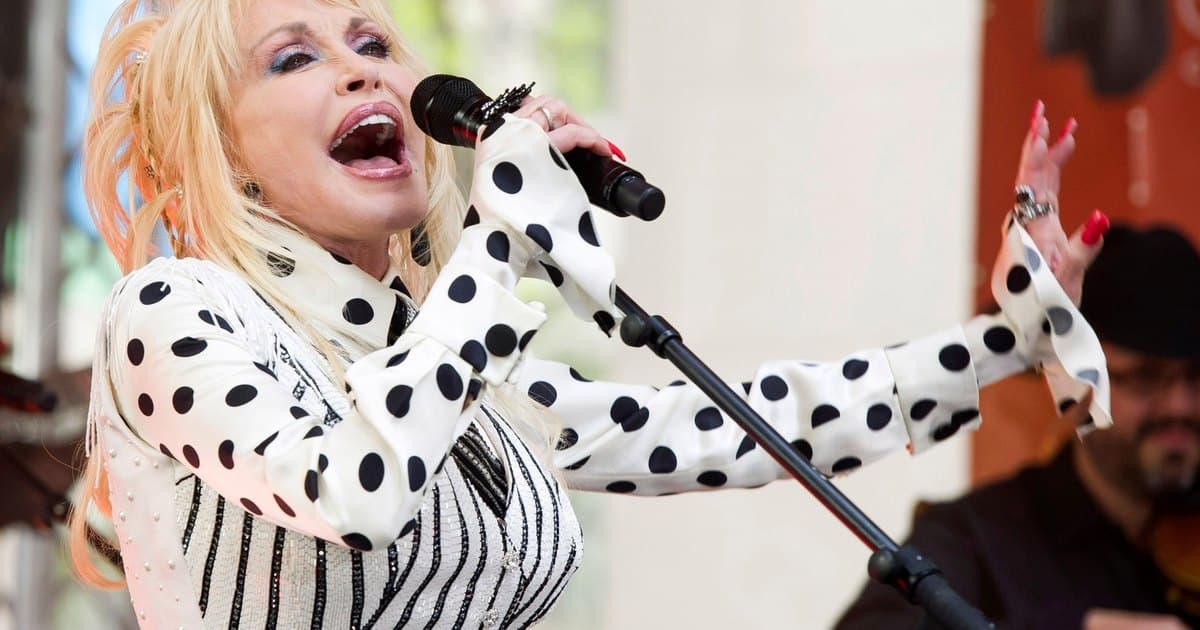
Music writer Caryn Rose noted that Parton knew her looks could work against her, so she made them work for her. Evelyn McDonnell, editor of “Women Who Rock,” described Parton’s appearance as a “magic cloak” that let her express progressive views while appearing safe.
In a 1977 interview with Barbara Walters, Parton was asked to stand and display her body, and whether her breasts were real. She complied politely but asserted her confidence: “I know exactly what I am doing and I can change it at any time. I am sure of myself as a person and I am sure of my talent.”
Author Lynn Melnick, who wrote a book about Parton’s impact on her life, said Parton “showed us” she was a feminist through actions and lyrics. “She lived her life completely on her own terms,” Melnick said. For many, that was the point.