Dolly Parton's Lifelong Devotion to the Smokies Transformed Her Hometown
Dolly Parton's love for the Great Smoky Mountains fueled a tourism boom, education initiatives, and wildfire recovery that reshaped her Tennessee hometown.
Dolly Parton's music was steeped in the misty hills of East Tennessee, but her influence reached far beyond song. For decades, she worked to lift the region she called home, turning a quiet mountain county into a destination that drew millions and transformed local lives.
Her death has hit Sevier County hard. James Gambrell, a former chef at Dollywood, said the news left him shaken. "If it don't affect you, then something's wrong," he said, recalling how Parton's family embraced him like a nephew.
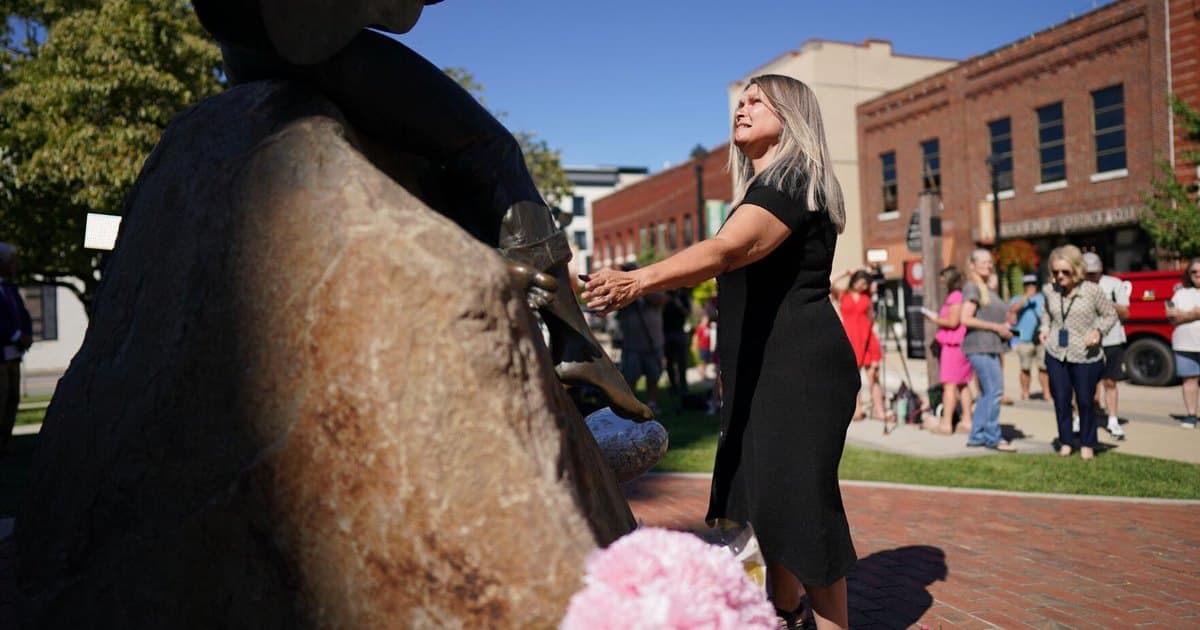
Mourners gathered Tuesday night around a bronze statue of Parton in Sevierville, leaving flowers and drawings. By Wednesday morning, Dollywood was open again, with the scent of cinnamon bread in the air and long lines at a theater playing biographical stories narrated by Parton. Carla Potts, who flew in from Seattle, said Parton "consistently spread joy and hope and light."
Parton grew up one of 12 children in a two-room cabin without electricity or running water. She left for Nashville after high school, but she once joked she was the only person who left the Smoky Mountains and took them with her. In 1986, she became co-owner of an amusement park in Pigeon Forge and renamed it Dollywood. It soon became Tennessee's most visited attraction, generating $1.8 billion a year and serving as the county's largest employer.
Amanda Marr of the Sevierville Chamber of Commerce said the national park and Gatlinburg had long drawn visitors, but Dollywood helped the county take the next step. Parton also tackled education. In the early 1990s, her foundation launched the Buddy Program, which promised $500 for college to students who finished high school with their matched buddy. David Wear, a former Pigeon Forge mayor, said he personally benefited. The dropout rate in Sevier County fell from about 30% to 6%.
Her Imagination Library, which began locally, has since mailed more than 330 million books to children across several countries. After a deadly 2016 wildfire killed 14 people and caused $2 billion in damage, Parton directed her foundation to help displaced families and fund scholarships. Wear said her generosity "changed the trajectory of our recovery."
Ted Olson, a professor of Appalachian studies at East Tennessee State University, said Parton defied negative stereotypes about the region with grace, encouraging people to visit and see for themselves. Her legacy, like the mountains she loved, remains a constant presence in the lives of those she touched.