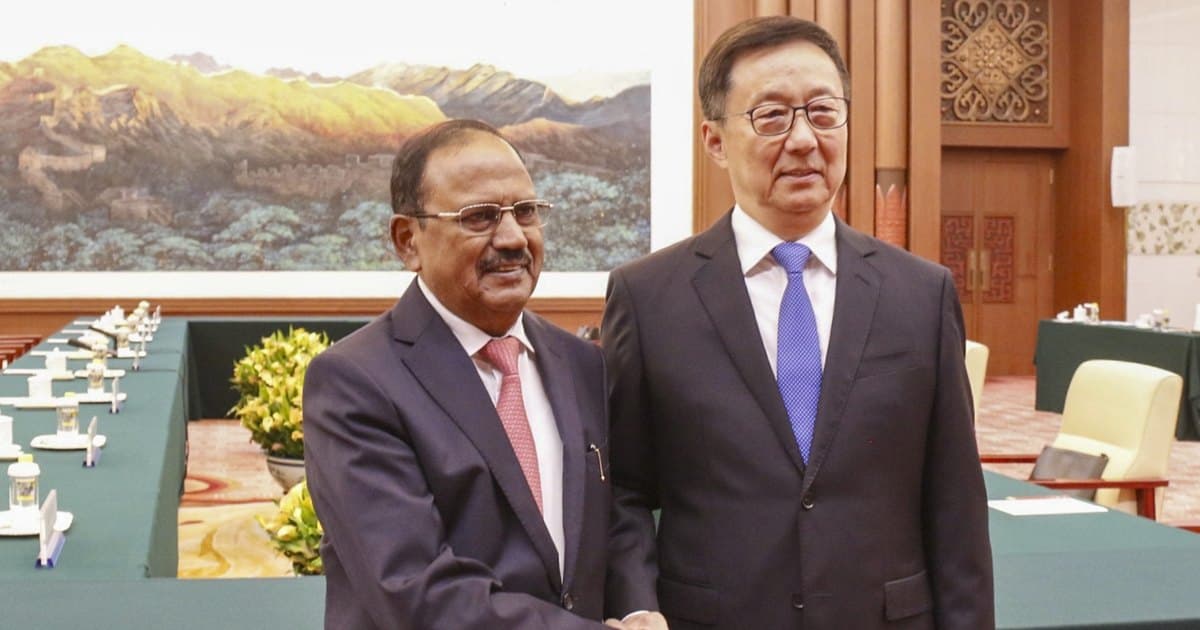
NSA Doval Meets Chinese VP in Beijing; China Calls for Strategic, Long-Term View
NSA Ajit Doval met Chinese Vice President Han Zheng in Beijing, with China urging a strategic, long-term approach and proper management of differences.
National Security Advisor Ajit Doval held talks in Beijing on Tuesday with Chinese Vice President Han Zheng, as both sides sought to consolidate a recent thaw in bilateral relations. The meeting comes amid preparations for a possible visit by Chinese President Xi Jinping to India for the BRICS leaders' summit scheduled for September 12-13.
Beijing's readout of the meeting emphasised the need for India and China to view their relationship from a "strategic and long-term perspective" and to "properly manage differences." China's Ambassador to India, Xu Feihong, conveyed that Han Zheng noted the two meetings between President Xi and Prime Minister Narendra Modi over the past two years — in Kazan and Tianjin — had helped guide the relationship back onto a track of recovery.
The Indian embassy in Beijing, however, highlighted that Doval and Han discussed ways to strengthen peace and tranquillity in border areas and further improve bilateral relations across economic, political, and multilateral forums, in line with the consensus reached by the leaders of both countries.
Ahead of the talks, Doval had told Chinese Foreign Minister Wang Yi that the relationship had been "steadily returning to normalcy" over the past year, attributing this to both sides maintaining peace and tranquillity in the border areas. Doval and Wang serve as the special representatives of their countries on the boundary issue.
Han Zheng, who served as Communist Party secretary of Shanghai from 2012 to 2017, is considered a member of the influential Shanghai Clique. His meeting with Doval follows Wang Yi's visit to India last week for the BRICS NSA meeting, during which he stressed the importance of respecting each other's core interests and implementing the consensus reached by the leadership.