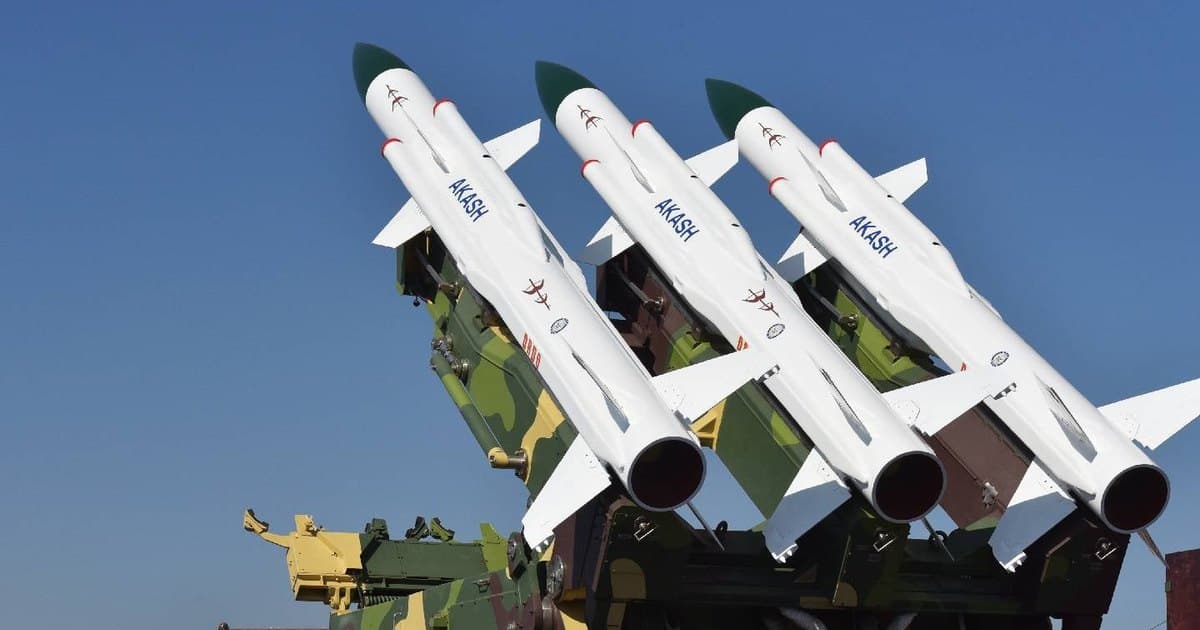
Centre clears transfer of conventional missile tech to private industry
India approves transfer of DRDO's conventional missile technology to the domestic defence industry to boost manufacturing and reduce imports.
In a move aimed at strengthening India's conventional missile capabilities, Defence Minister Rajnath Singh has approved the transfer of technology for all conventional missile systems developed by the Defence Research and Development Organisation (DRDO) to the Indian defence industry. The decision is expected to enable private players to undertake domestic production of these systems.
Previously, production was largely limited to the defence public sector undertaking Bharat Dynamics Limited and DRDO's in-house facilities, with the BrahMos cruise missile being manufactured through a joint venture with Russia. The new initiative is likely to begin with systems such as the ASTRA beyond-visual-range air-to-air missile, the RUDRAM anti-radiation missile, VSHORADS, the NAG anti-tank guided missile, and the Naval Anti-Ship Missile.
The broader objective, according to officials, is to eventually allow the domestic industry to produce all conventional missile systems. However, strategic missiles like the Agni and K-series will be excluded from the technology transfer.
The Ministry of Defence stated that the transfer marks a significant milestone in promoting greater participation of domestic industries in the defence ecosystem. It will enable indigenous production as per applicable qualifications, certifications, and regulatory requirements. The ministry added that the move will help transition missile system development to industrial production and create opportunities for Indian MSMEs and technology partners in the supply chain.
The initiative is intended to enhance operational capability, reduce import dependence, and increase domestic value addition. DRDO has reiterated its commitment to working closely with Indian industry to facilitate the transfer and absorption of advanced defence technologies.
The decision comes amid growing recognition of the role of conventional missiles in modern conflicts, as seen in recent engagements in West Asia. Defence Secretary Rajesh Kumar Singh had earlier indicated that the paradigm for missile use has shifted beyond strategic purposes, and India is adjusting its approach accordingly. He noted that supply orders to industry would be placed in parallel with institutional efforts to raise a dedicated conventional missile force.