Centre Unveils Roadmap for Drug-Free India by 2029, Says Amit Shah
Amit Shah announced a roadmap to make India drug-free by 2029, focusing on enforcement, rehabilitation, and international coordination.
Union Home Minister Amit Shah announced on Sunday that the central government has prepared a comprehensive roadmap to make India drug-free by 2029. He stated that a drug-free youth population is essential for achieving the vision of a developed India (Viksit Bharat) by 2047.
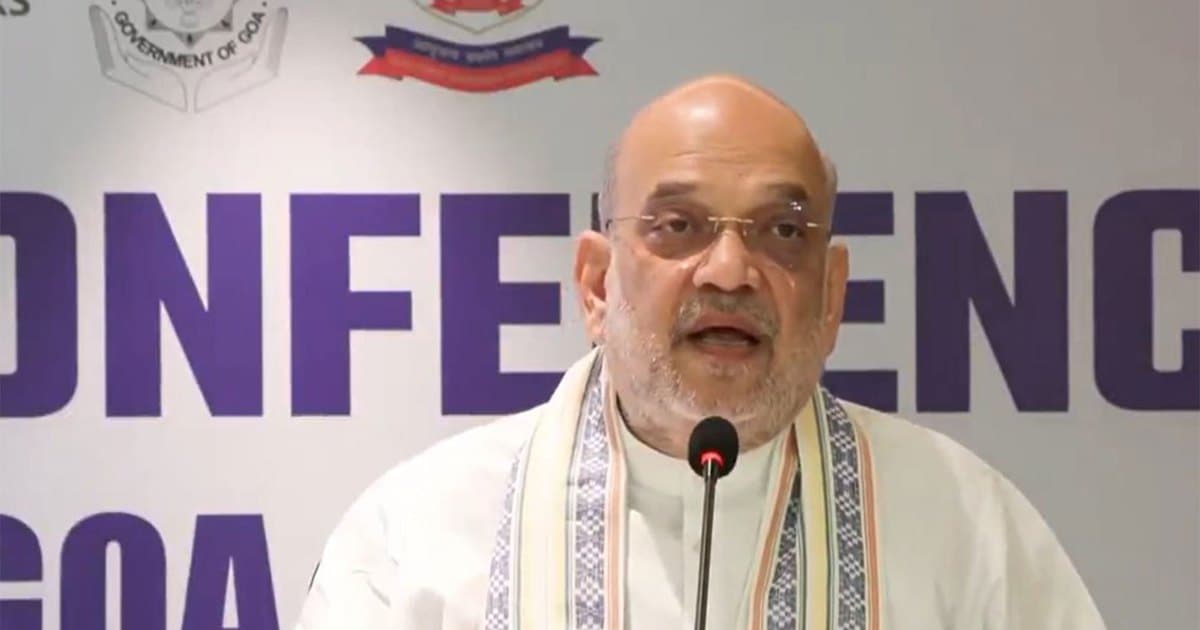
Speaking at a press conference after chairing a high-level meeting on narcotics in Goa, Shah said the strategy involves a coordinated national effort to dismantle the entire narcotics ecosystem, from trafficking networks to financial backing, while also prioritising rehabilitation.
Shah criticised the approach to tackling drugs before 2014, noting that operations were often fragmented and focused on small-time offenders. He said the current government has elevated the fight against narcotics to a national security priority.
The government's three-year roadmap is built on a four-pillared approach. These pillars include intelligence-based enforcement, control of synthetic drugs, demand and harm reduction, and building capacity and coordination.
Specific targets include dismantling 100 national and international drug networks by March 2029 and bringing back 100 fugitives. The government also aims to achieve end-to-end visibility of the narcotics supply chain by March 2027 and destroy at least 75 secret laboratories in 2026.
Shah highlighted the strengthening of the Narcotics Control Bureau (NCB) and the creation of the National Coordination Committee for Countering Drug Trafficking (NCORD) mechanism in 2019. Anti-Narcotics Task Forces have been set up in all states and union territories.
Beyond enforcement, the government has linked awareness, treatment, counselling, and rehabilitation with the anti-narcotics campaign. The MANAS helpline (1933) has been introduced to support individuals with drug addiction.
Shah also linked the anti-drug drive to broader internal security successes, including the decline of terrorism in Jammu and Kashmir, insurgency in the Northeast, and left-wing extremism. He noted that 14 major peace agreements have been signed in the Northeast since 2019, with thousands of armed youths joining the mainstream.
The Home Minister added that the government's cybercrime prevention system has helped save over ₹11,158 crore across 32.8 lakh complaints as of June 30, 2026.