Scientists Use Dutch Elm Disease Itself to Breed Hardier Trees
U.S. Forest Service and Nature Conservancy scientists are breeding disease-resistant elms by testing 6,000 saplings against Dutch elm disease.
In a counterintuitive approach to conservation, researchers in Vermont are deliberately exposing young elm trees to the very fungus that has devastated their species for nearly a century. The goal is to identify individuals with natural resistance and use them to rebuild a genetically diverse, disease-tolerant population.
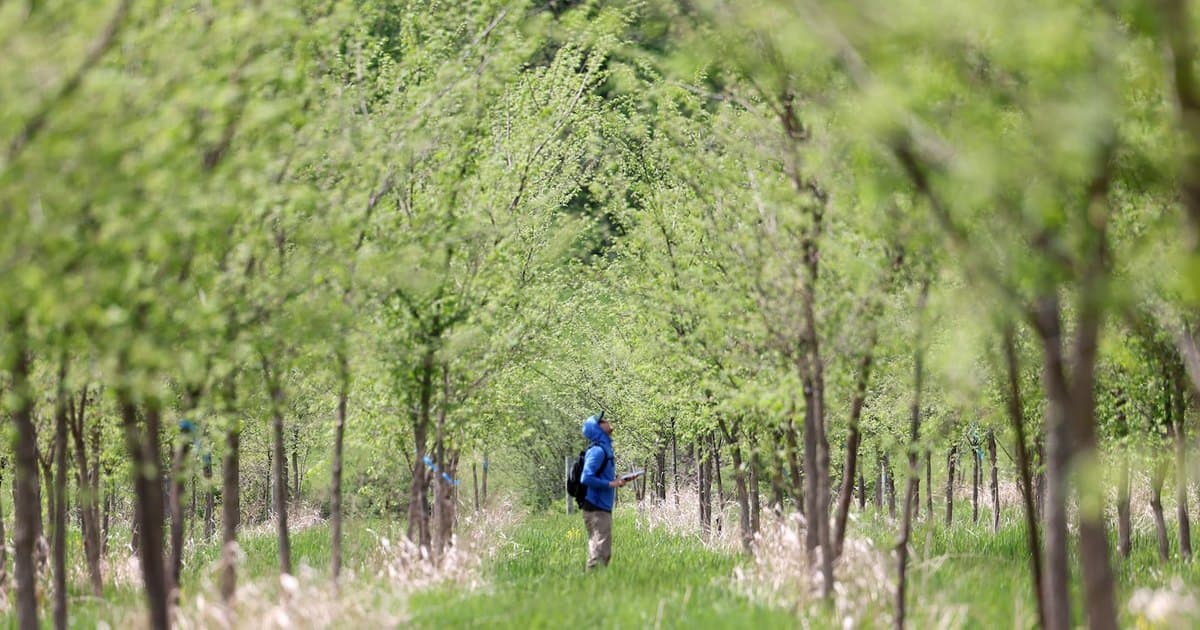
Leila Wilson, a research ecologist with the U.S. Forest Service, is part of a team that spent the summer injecting 6,000 saplings with Dutch elm disease spores. The fungus, spread by bark beetles, blocks a tree's ability to take up water, effectively starving it. Since arriving in the U.S. roughly a century ago, it has killed tens of millions of elms.
The trees being tested were bred from a few dozen survivors found across the Northeast. Those that withstand the inoculation will enter a breeding program. "We will put those newly propagated trees into a seed orchard, basically just a big fenced area, will grow and love those trees for about 15 or so years, at which point they should produce seeds, and that seed can be used for restoration," Wilson said.
Restoring elms matters beyond aesthetics. Kathleen Knight, a Forest Service research ecologist in Ohio, notes the trees play a critical role in wet forest ecosystems. They tolerate flooding, survive harsh northern winters, and act like sponges after heavy rain, helping prevent catastrophic river flooding. "These invasive pests and pathogens have been having a huge impact on these tree species. And we're just trying to get those species back to the role they previously played in these systems," she said.
The elm also holds deep cultural significance in New England, where towering specimens once lined town streets and schoolyards. "What's missing is the big trees," said Gus Goodwin of The Nature Conservancy. "There's this kind of gravitational pull toward the elm and its loss."
Similar battles are underway for other species. The emerald ash borer, an invasive beetle, has killed millions of ash trees since the early 2000s. The Appalachian Trail Conservancy has treated about 1,400 ash trees with insecticide along the trail in North Carolina, Tennessee, Georgia, and Massachusetts since 2016.
In Montpelier, Vermont, arborist Joseph Ferris points to a giant elm that has stood since the late 1800s as proof of what is possible. "It's a ray of hope that is hard to feel when we're walking through a forest and seeing all these infestations and damage," he said. "I would love to see American elm resistant, available not for just our urban plantings but restoring plantings along our streets and along our riverbanks."