Europe's Drought and Heat Push Fisheries to the Brink
A severe summer drought and extreme heat across Central and Eastern Europe are causing major economic damage to fisheries and threatening aquatic life.
A relentless summer of extreme heat and a prolonged drought are taking a heavy toll on fisheries and water ecosystems across Central and Eastern Europe, causing economic damage that is already running into millions of euros. The crisis is visible from trout ponds in Bosnia to the dried-up branches of the Danube in Serbia and fish farms in the Czech Republic.
In Bosnia, trout farmers are struggling to keep their cold-water fish alive. Veljko Budjen, who owns a farm near Trebinje, says the rising temperatures are a direct consequence of global warming. "Trout is a cold-water fish, which requires cold water with a lot of oxygen," he explained. To cope, farmers are reducing feed to slow the fish's growth and lower their oxygen consumption, a strategy that helps them survive the summer but cuts productivity.
Serbia is witnessing the dramatic effects of the drought on the Danube River. A side branch near Petrovaradin has receded so much that boats now sit on cracked, dry ground, leaving only shrinking ponds for fish. Dusan Jovanovic, a local fisherman, said, "None of us remembers such low water levels, not even the older generations." The local fishing association has appealed to state authorities to intervene and save the trapped fish.
Hydrologists are concerned by the pattern of recurring extremes. Jelena Jerinic, the chief hydrologist at the Serbian Hydrometeorological Institute, noted that the country has swung between historic floods and severe droughts in recent years, with this year's big drought now hitting the Danube.
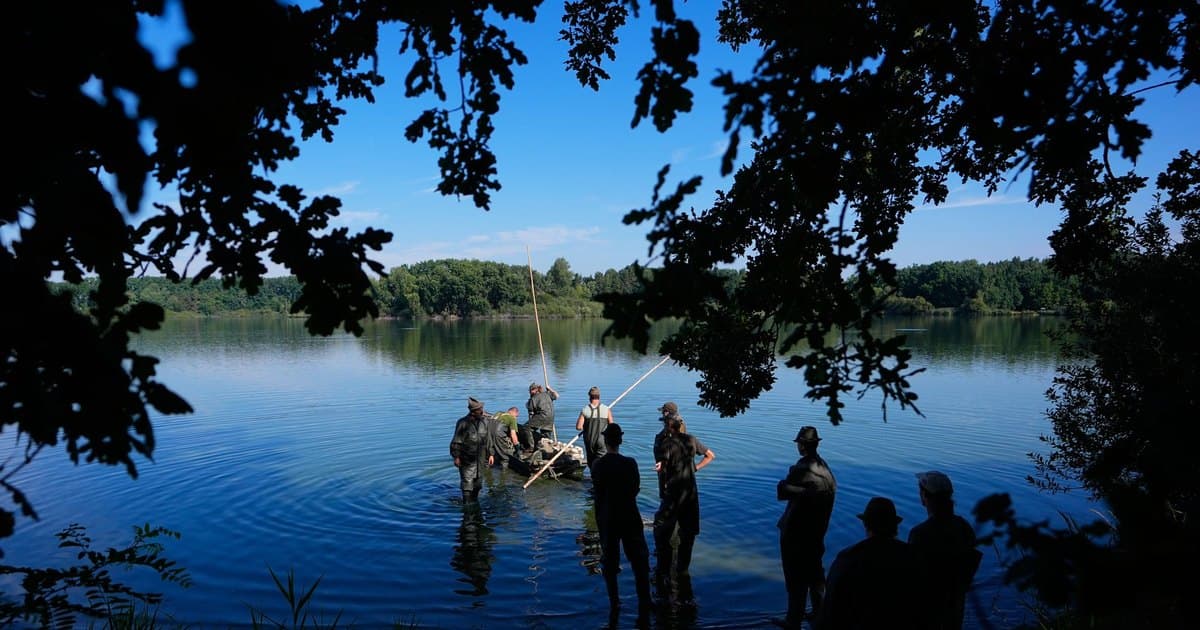
In the Czech Republic, fish farmers are taking emergency measures, including aerating ponds and conducting hauls earlier than usual to prevent mass die-offs. Jan Sokolik, a technician at the Rybarstvi Trebon fishery, said that some smaller ponds have already been fished out due to the water shortage, and plans are now being made for the larger ones.
The full extent of the losses is still being calculated as countries in the region look for ways to mitigate the impact of future extreme weather events, which scientists link to human-induced climate change.