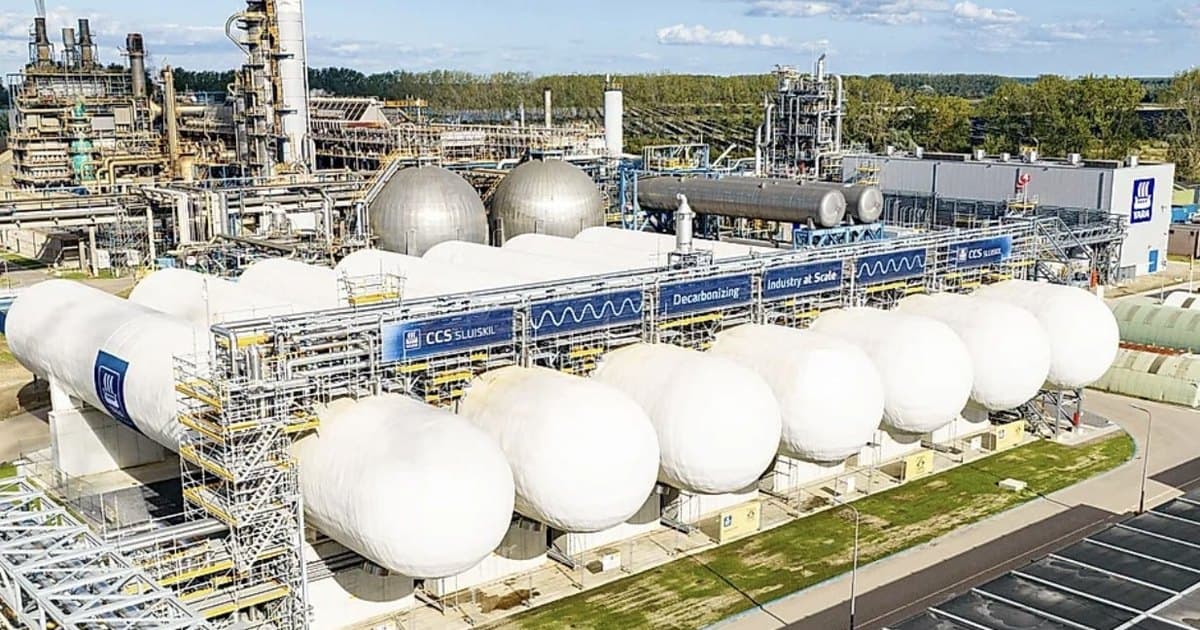
Europe's largest carbon capture plant begins operations in Netherlands
Yara opens Europe's biggest CCS plant in the Netherlands, aiming to store 800,000 tonnes of CO2 yearly under the seabed.
Norwegian fertiliser maker Yara International has switched on Europe's largest carbon capture and storage (CCS) facility at its production site in Sluiskil, a town in the southern Dutch province of Zeeland. The project, which began operations on Monday, is designed to trap carbon dioxide emissions from one of the continent's biggest fertiliser plants.
From 2026, the facility will capture and liquefy up to 800,000 metric tons of CO2 each year. The liquefied gas will be shipped to Norway and injected 2.6 kilometres beneath the seabed of the Norwegian continental shelf, with transport and storage handled by the Northern Lights consortium. Over a 15-year period, Yara expects the site to remove roughly 12 million tons of CO2 from the atmosphere.
Norwegian Prime Minister Jonas Gahr Stoere, speaking at the opening, described the project as a scientifically advanced and commercially viable answer to industrial emissions. He noted that industry combines labour, capital and technology, and that energy-rich nations like the Netherlands are well placed to lead such efforts.
The European Union sees carbon capture as a key tool for meeting its 2050 net-zero target, particularly for sectors like chemicals where low-carbon alternatives are not yet mature. However, CCS has faced decades of scepticism in Europe over its cost and viability, with critics arguing it lets fossil-fuel producers keep operating while deferring real emission cuts.