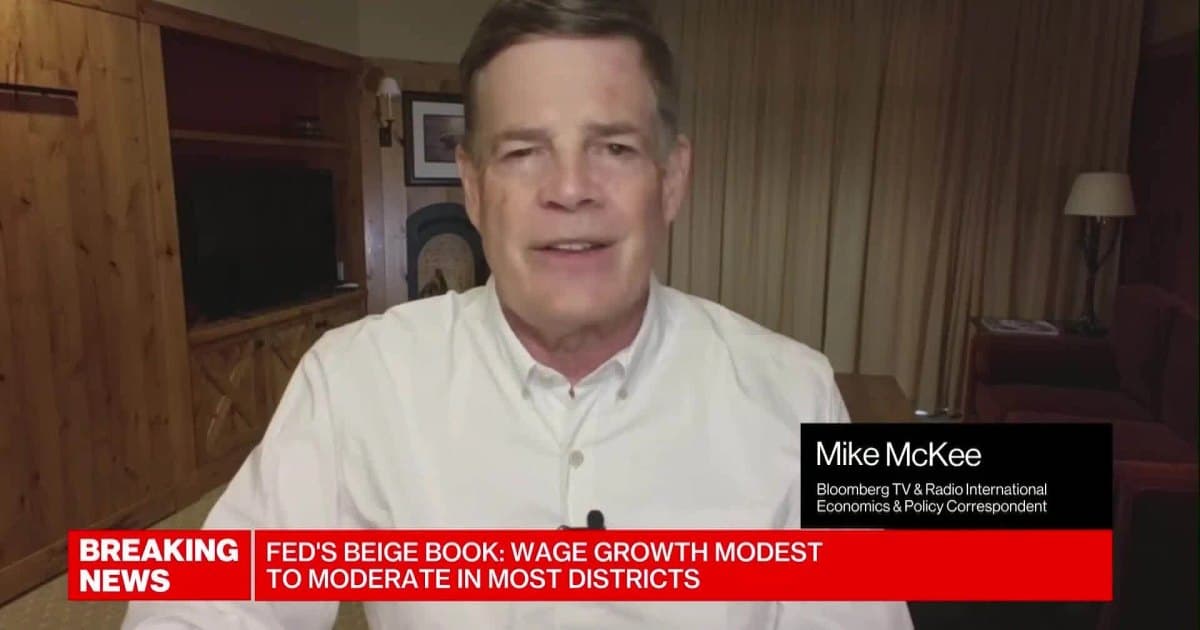
Fed's Beige Book Shows Modest US Growth, Moderate Price Rises
The Federal Reserve's Beige Book reports modest economic growth, slight employment gains, and moderate price increases, with inflation concerns persisting ahead of the September meeting.
The Federal Reserve's latest Beige Book, a qualitative survey of economic conditions across its 12 districts, indicates that US economic activity increased modestly in recent weeks. The report, based on data collected on or before August 24, also noted slight employment gains and a moderate pace of price increases.
The findings will be a key input for policymakers when they convene on September 15-16 to decide on interest rates. The central bank has kept its benchmark rate in the 3.50%-3.75% range since December.
While the overall outlook for the coming months was described as positive, the report highlighted a sense of mixed sentiment across different sectors. Businesses expressed heightened uncertainty regarding the effects of higher energy prices, policy shifts, and international conflicts.
On the inflation front, the pace of price increases was unchanged in eight districts, slowed in three, and accelerated in one. The report noted that consumer-facing businesses in several areas found their ability to pass on higher input costs limited by increased price sensitivity among customers. Input price pressures were notably elevated in manufacturing and construction, with widespread reports of increases in energy, transportation, and raw material costs.
Several districts also reported continued impacts from tariffs and significant pressures from healthcare and insurance costs. The Boston Fed reported that contacts expressed heightened uncertainty and upside risks to inflation from elevated energy prices and potential new tariffs, with concerns that high energy costs could strain consumer budgets further during the home heating season.
The housing market showed signs of weakness across several regions. A window retailer noted a slowdown in sales as consumers hesitated to invest in their homes, while a contact in Western Tennessee described the market as transitioning from stable to slow, with rising inventories and longer selling times.
Employment gains were slight to modest in seven districts and flat in five. There was little indication that wage growth was a major driver of inflation, though some districts reported pockets of pressure in specific sectors like construction and manufacturing. The report also noted that artificial intelligence is having both positive and negative effects on labor demand, and that demand for orders tied to data centers and defense spending has increased.