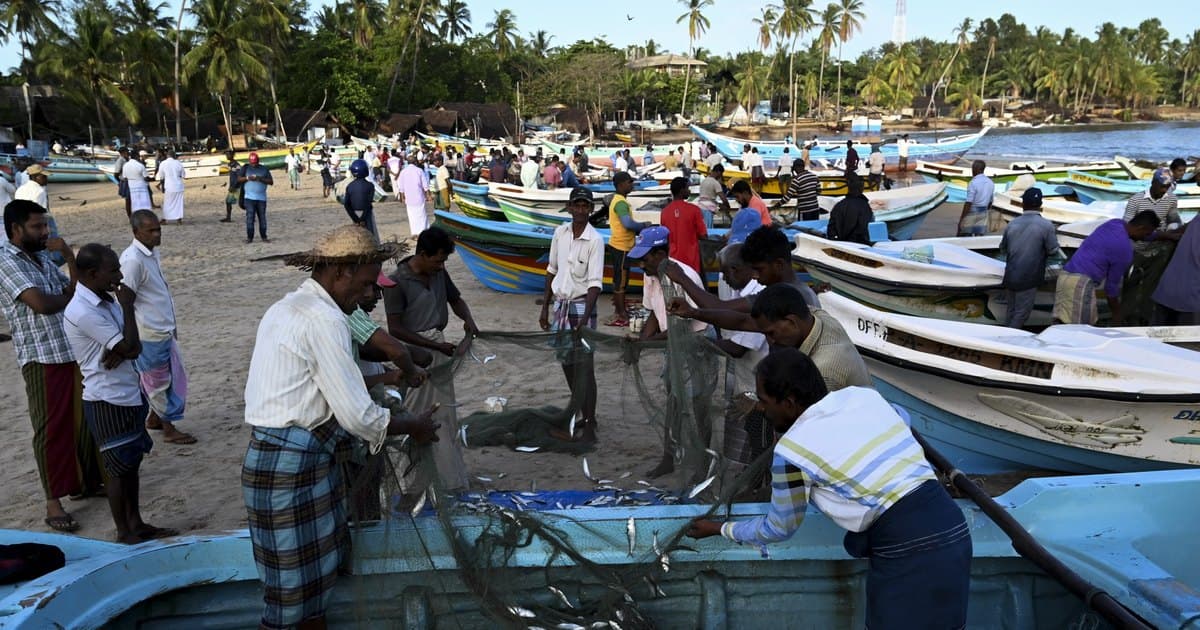
Fish workers to protest in Delhi, seek land rights and social security
All India Fish Workers Federation will protest in New Delhi on August 31, demanding land rights, insurance, education reservation, and withdrawal of blue economy policy.
The All India Fish Workers Federation is set to hold a protest near Jantar Mantar in New Delhi on Monday, August 31, 2026, pressing the Union government to address the livelihood concerns of the fishing community. As part of the demonstration, a memorandum listing their demands will be submitted to Union Fisheries Minister Rajiv Ranjan Singh.
The federation has called for the withdrawal of the Union government's 'blue economy policy', which it claims prioritises the interests of multinational companies over the traditional rights of coastal communities. The leaders, including R. Prasad and Lok Sabha MP V. Selvaraj, have also demanded that fishing families be provided with land and housing.
Among the key demands are reservation and grants for the children of fish workers in higher education, as well as job reservation in the Indian Navy and the Coast Guard. The federation has also urged the Centre to take steps to prevent the alleged harassment of Indian fish workers by foreign authorities on the pretext of maritime boundary violations.
The protestors are demanding health and accident insurance coverage for all fishermen. They have also called for an end to subsidies and licences for large fishing companies, arguing that support should be directed exclusively towards traditional fishermen.
Highlighting the sector's importance, the federation noted that India is the second-largest fish-producing country in the world, with fish workers contributing significantly to employment, foreign exchange earnings through exports, and food security. Despite their hard work, the federation said, most workers lack proper housing, land titles, social security, and stable income. It attributed the current crisis facing fish workers to what it termed unscientific economic policies, which have led to loss of livelihood and displacement from traditional habitats due to sand mining and climate change.