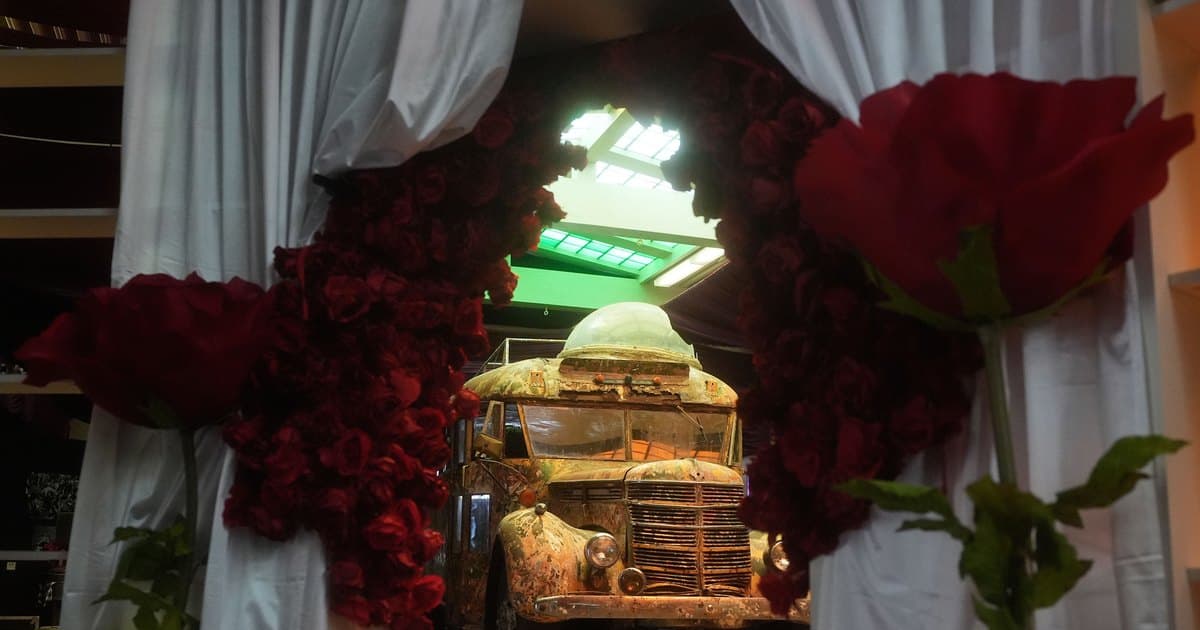
Kesey's Psychedelic 'Furthur' Bus Returns to San Francisco for Grateful Dead Exhibit
Ken Kesey's 'Furthur' bus is back in San Francisco as the centerpiece of a new Grateful Dead exhibition exploring 1960s counterculture.
Ken Kesey's legendary school bus, 'Furthur,' has returned to San Francisco after six decades. The brightly painted vehicle, once central to a cross-country psychedelic journey, now serves as the centerpiece of a new exhibition honoring the Grateful Dead and the city's 1960s counterculture movement.
The exhibition, titled 'Forever Grateful/Golden Gate Park,' opens Saturday at the Haight Street Art Center. Alongside the bus, it features Jerry Garcia's BMW, a mint-condition vehicle that has never been publicly displayed before. Together, these artifacts anchor an immersive experience showcasing the colors, sounds, and spirit of the era.
Kesey, author of 'One Flew Over the Cuckoo's Nest,' purchased the bus with his book proceeds. In 1964, he and his Merry Band of Pranksters drove it from coast to coast, a trip fueled by art, music, and mind-altering substances. That journey, later chronicled in Tom Wolfe's 'The Electric Kool-Aid Acid Test,' helped introduce the psychedelic scene to mainstream America.
Upon returning to California, Kesey hosted gatherings known as 'acid tests' near Stanford University. A local band called The Warlocks, which later became the Grateful Dead, performed at these events. The bus became a defining symbol of those parties as they moved around the Bay Area.
Kelly Harris, executive director of the Haight Street Art Center, described the bus as a portal for connection. 'This invites people to communicate and connect around art, music, and activism,' she said. 'In this day and age, when we need something to bridge community, we know that this space allows for that to happen and Furthur is the portal.'
The exhibition arrives as San Francisco navigates economic disparities driven by the tech boom and as the nation faces political divisions. Organizers see the show as a way to celebrate the city's history of activism and community building.
Visitors can expect an interactive experience. Actors from Third Rail Projects will guide attendees through a mirrored tunnel into booths designed for conversation. Small groups will then experience a liquid light show, a 1960s art form projecting colorful psychedelic patterns that create the sensation of being inside a giant lava lamp.
'You might go with the people that you came with, or you might get packaged with a couple other folks that you didn't know, and you'll then unpack the experience with each other,' said Edward Rice of Third Rail Projects.
The exhibit also includes photographs from the band's Golden Gate Park concerts and a screen-printing station for visitors to create their own art. It runs through October 25.
A key goal is launching efforts to restore the now-dilapidated bus, which has been kept on the Kesey family farm in Oregon. The vehicle last appeared publicly at Woodstock in 1969. Renee de Cossio, director of exhibitions, noted the layered story the show tells about the band's influence on society and communities.
'The focal point is the Furthur bus,' Harris added. 'And Furthur is a call to action. Never stop creating, never stop exploring, keep going further.'