Gaza fishermen row out at their own risk as blockade empties the sea
Fishermen in Gaza City describe rowing out under the threat of arrest or gunfire, with the sea closed and catches reduced to a few kilograms.
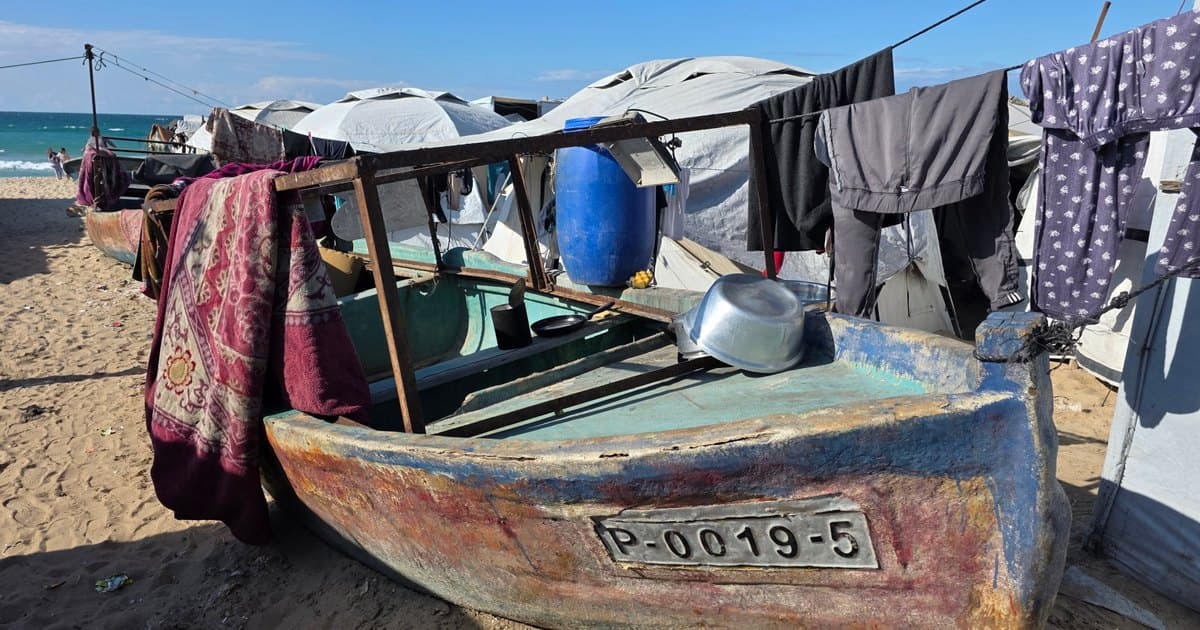
In the harbour basin of Gaza City, dented fishing boats lie moored among tents housing displaced Palestinians, as fishermen set out with whatever gear remains to them.
Before the war that began on October 7, 2023, the territory's fishermen worked from motorised boats with a full range of equipment. Aid groups and the United Nations estimate the industry once supported more than 6,000 Palestinians.
That fleet is gone. Fisherman Nidal al-Daour now rows out in a non-motorised boat, a task he describes as physically punishing. "By the time you reach the harbour entrance, you are exhausted," he said, adding that fishermen also face the risk of arrest and gunfire. He was wounded during the war while fishing.
Al-Daour said the tools of the trade have disappeared. Motorised boats, large vessels and nets were once available, he said; today only rowboats remain. The cost of a boat that once sold for 1,000 shekels has risen to 40,000 shekels, he added.
He described the fishing profession in Gaza as "completely wiped out", saying fish are now scarce. A crate of crabs that once cost ten shekels now sees a single kilogram priced at 25 to 30 shekels, if it can be found at all. Asked why, al-Daour pointed to the closure of the sea, saying access is effectively zero metres and that fishermen who go out do so at their own risk, trapped when the Israeli army shuts the waters.
Another fisherman, Mahmoud al-Hissi, said all fishing activity has come to a standstill since October 7. There are no boats, large or small, no motors and no fishing gear, he said, and the storage rooms where equipment and nets were kept have been burned down. "As fishermen, fishing is the only work we know," he said.
Al-Hissi said each trip carries the danger of returning "as martyrs, wounded, or prisoners", and that families wait on the shore praying for their sons' safe return. Before October 7, a single day's fishing could bring in anywhere from one or two tonnes to as much as ten tonnes, he said. Now, a boat may return with only three, four or five kilograms, which he attributed to the sea being completely closed off.
Despite the shortages, fishermen continue to sort their modest hauls of fish and crabs along the shore, pulling nets from the water and rowing back into the port.