German Police Arrest Suspect in Power Grid Sabotage Attacks
German police arrested a 48-year-old man near the Weisweiler power plant in connection with a series of attacks on the country's power distribution systems.
Police in Germany have arrested a 48-year-old man in connection with a string of attacks on power distribution systems that triggered a days-long nationwide search.
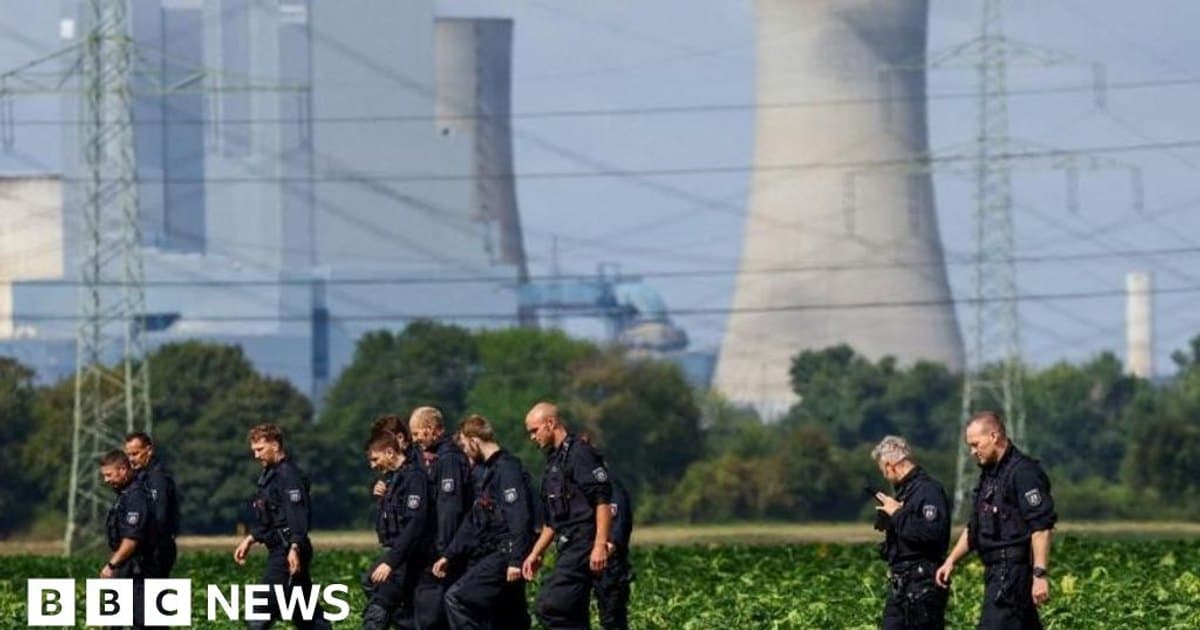
The suspect was taken into custody near a power plant in Weisweiler, in the western state of North Rhine-Westphalia. Cologne police said he was found in possession of explosives and did not resist arrest. His name and nationality were withheld in line with German privacy rules, though local media have widely identified him as Daniel V.
The arrest followed a sequence of sabotage incidents that began early last week at a substation near the Jänschwalde coal-fired power plant in Brandenburg, in northeastern Germany. Hours later, a short circuit knocked power lines out of service at the Bergheim substation near Cologne. Top security officials in both states raised alarms and said they could not rule out the involvement of foreign powers.
On Monday, police discovered several launch devices on a high-voltage power line near the Weisweiler plant — very close to the location where the suspect was ultimately detained. Investigators also found a letter at the site claiming responsibility, in addition to several other letters recovered earlier at other locations. In those letters, the man justified the attacks on the power grid as part of the fight against fossil fuels.
Lignite is still mined and used for electricity generation in all three states where the man is alleged to have carried out or attempted attacks on power plants.
Police said that near the arrest site they also found a tent set up in the underbrush, along with additional explosive charges. Cologne's chief of police, Frank Wißbaum, described how two young police inspectors on patrol noticed trampled grass on a dirt road and followed the trail, a clue that led them to the suspect.
"And then you found the suspect 200 meters away, hidden in the bushes under or on a forest clearing in front of his tent, where he had obviously spent the night days before, and then arrested him," Wißbaum said.