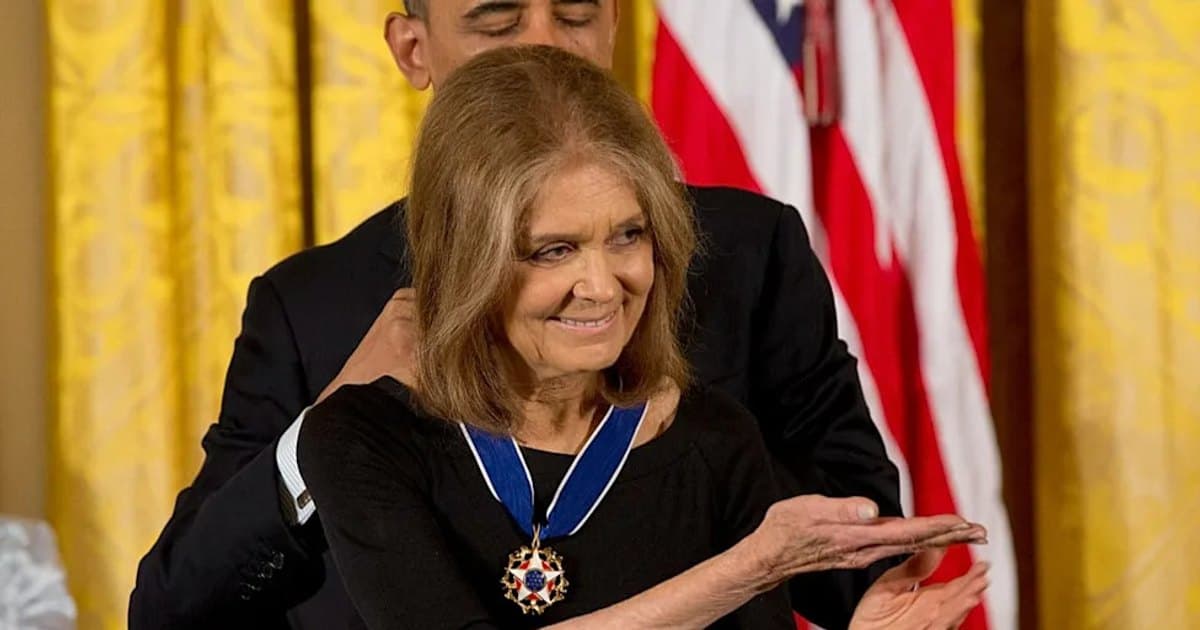
Gloria Steinem, feminist organiser with deep India ties, remembered
A look at Gloria Steinem's legacy as a feminist organiser, her India-inspired Talking Circles, and her lasting impact on activists.
Gloria Steinem, who described herself as a "feminist organizer," is being remembered not just for her iconic status but for her lifelong commitment to grassroots movement building. Until the end of her life, she hosted Talking Circles at her New York home, gatherings designed for both the demanding work of activism and the quieter task of fostering community.
This practice of ensuring every voice was heard in a group setting had roots in India, where Steinem spent two years after graduating from Smith College in 1956. She returned to the country frequently, forging a close bond with Ruchira Gupta, founder of Apne Aap Women Worldwide, an organisation dedicated to ending sex trafficking. Steinem chaired the group's advisory board, with Gupta describing her as a "third parent."
Gupta recalls taking Steinem in an autorickshaw to the slums of Delhi in the 1990s to meet women she was organising. As rain began to fall, Steinem spoke to the women about her own abortion in her youth. Though she spoke in English and Gupta translated, the women connected deeply with her story, sharing their own experiences. Steinem later offered Gupta a piece of advice she would always remember: "Honour your sister with the truth."
Steinem's influence extended to Indian journalists as well. Ammu Joseph, an independent journalist in Bengaluru, spent time in the offices of Ms. magazine in 1976, four years after its founding. She noted that despite Steinem's fame, she remained approachable and unaffected, challenging the stereotype of feminists as humourless. Joseph credits Steinem with giving her the confidence to push for change, such as removing a sexist column in a publication she worked for.
In 2007, when Steinem was invited to speak at the Network of Women in Media, India, she went beyond delivering a keynote. The next day, she attended a session with community media women, engaging with them with genuine interest.
Steinem's work, including her founding of Ms. magazine and her books like Outrageous Acts and Everyday Rebellions, helped reframe abortion as "reproductive freedom." Sujata Sriram, a professor at TISS, Mumbai, noted that while Steinem's direct influence on the Indian feminist movement may not be widespread, her ideas spurred international research on how the world is designed by men, for men, from bus steps to broader structures.
Gupta remembers a moment before Steinem's passing, when Steinem joked she would live to 105, partly to see Donald Trump out of office. Gupta now jokes she would like to take that matter up with her, underscoring the humour that was a pillar of Steinem's feminism.