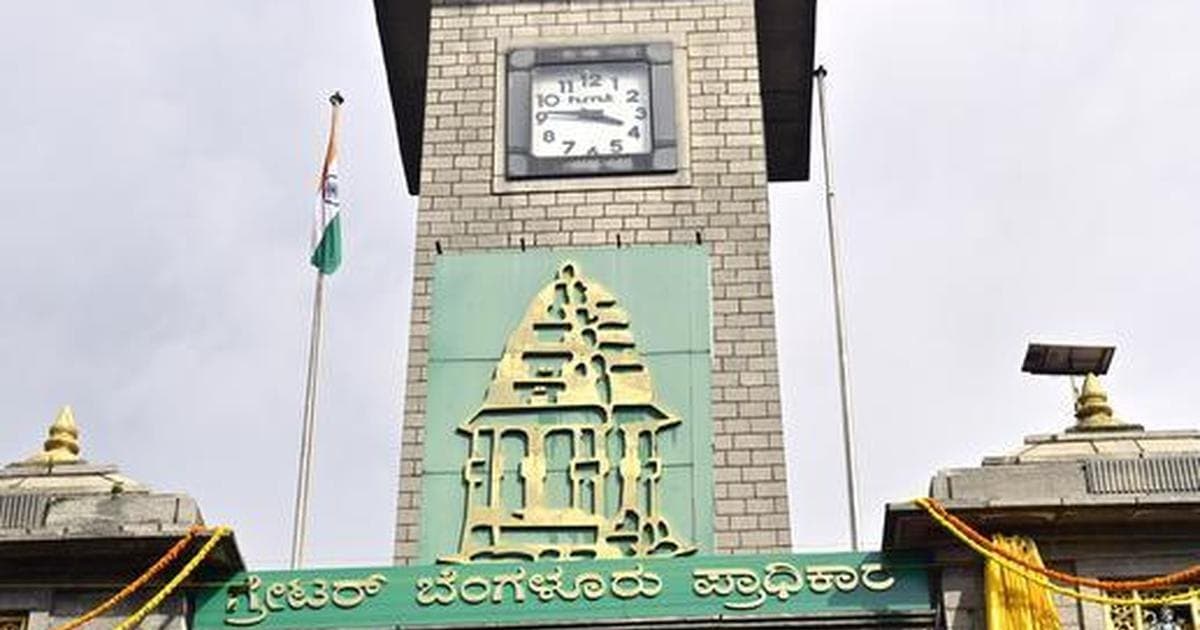
Greater Bengaluru Authority completes year, but civic gaps remain
One year on, Bengaluru's new five-corporation system has expanded wards but struggles with vacancies, revenue, and local service delivery.
It has been a year since the Greater Bengaluru Authority (GBA) replaced the Bruhat Bengaluru Mahanagara Palike (BBMP), splitting the city's civic administration into five corporations. While the restructuring expanded the number of wards from 198 to 369, the ground-level benefits of decentralisation are yet to fully materialise.
Residents continue to face issues in solid waste management, road maintenance, and citizen services. Although the number of wards has grown by 171, facilities such as primary health centres, Indira Canteens, and ward offices have not expanded correspondingly. These ward offices were expected to be the local touchpoints bringing civic services closer to people.
The administrative machinery is also stretched. City corporations are largely operating with a workforce sized for the old 198-ward structure, and vacancy rates stand at around 40 per cent. With elections pending and councillors and ward committees not yet in place, local accountability mechanisms remain weak.
On the positive side, GBA sources indicate that top-level coordination and frequent meetings have helped expedite several long-delayed infrastructure projects. However, daily civic problems such as garbage blackspots, waste collection, and potholes persist.
Financially, the new corporations had pinned hopes on advertisement revenue, premium Floor Area Ratio (FAR), and conversion of B-Khata properties to A-Khata. These revenue streams have largely remained unchanged, leaving the corporations to enter another year with limited fiscal capacity. Key institutions meant to drive planning and development, including the Economic Development Agency and the Bengaluru Metropolitan Planning Committee, are also yet to become operational.