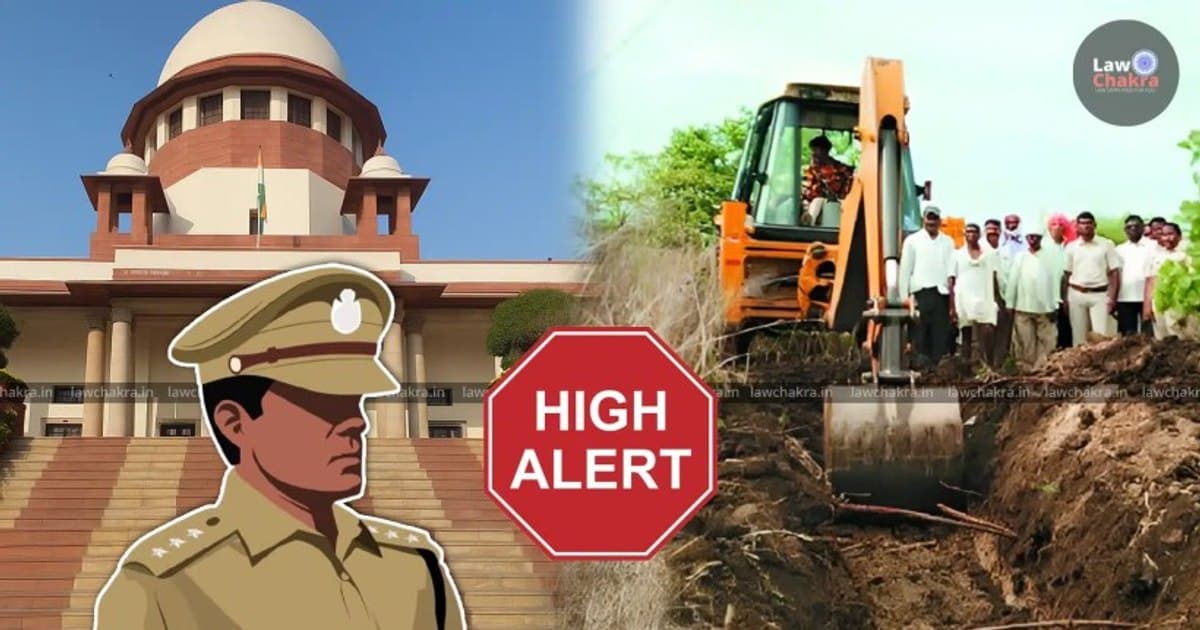
Haldwani on High Alert Ahead of Supreme Court Railway Land Verdict
Uttarakhand police fortify Haldwani's Banbhoolpura with sector-wise deployment ahead of Supreme Court hearing on railway land dispute.
Ahead of the Supreme Court's hearing on the long-running railway land dispute, authorities in Uttarakhand have placed the Banbhoolpura area of Haldwani under a comprehensive security blanket. The deployment, described as specialised, divides the densely populated locality into sectors, zones, and super zones to manage any potential fallout from the verdict.
Senior Superintendent of Police Manjunath TC said additional forces have been drawn from the state police headquarters and the Kumaon Range. Multiple companies of the Provincial Armed Constabulary (PAC) are already on the ground. The security apparatus includes tear-gas and anti-riot squads, armed units, and drone surveillance teams. Fire department personnel, traffic police, and wireless communication teams have also been mobilised, along with the Local Intelligence Unit to monitor ground-level developments.
The sensitivity stems from the scale of the settlement. Over 50,000 people live on the disputed land, which also houses three government schools, 11 private schools, ten mosques, 12 madrassas, a public health centre, and a temple. The case revolves around land near Haldwani railway station, covering Gafoor Basti, Dholak Basti, and Indira Nagar. The Railways claims ownership, citing a 1959 notification, 1971 revenue records, and a 2016-17 joint survey that identified 4,365 structures as encroachments.
The dispute originated in Uttarakhand High Court proceedings over illegal sand mining in the nearby Gaula river, with the encroachment issue later becoming part of the litigation. In December 2022, the High Court ordered residents to vacate within a week, authorising force if necessary. Following protests, the Supreme Court stayed that eviction order in January 2023, expressing concern over the displacement of thousands.
Residents argue that many families have lived there for generations, citing documents including a 1907 record they claim shows the land was nazul land—government land historically available for settlement. The High Court rejected this interpretation. The Railways maintains the land is needed for infrastructure expansion, including additional lines, platforms, and maintenance facilities.
In July 2024, the Supreme Court directed authorities to identify the land actually required and work out a rehabilitation plan. A February 2026 order held that occupants cannot claim an indefinite legal right to stay, but directed assessment of affected families for rehabilitation, clarifying that residents cannot insist on being resettled on the same site.