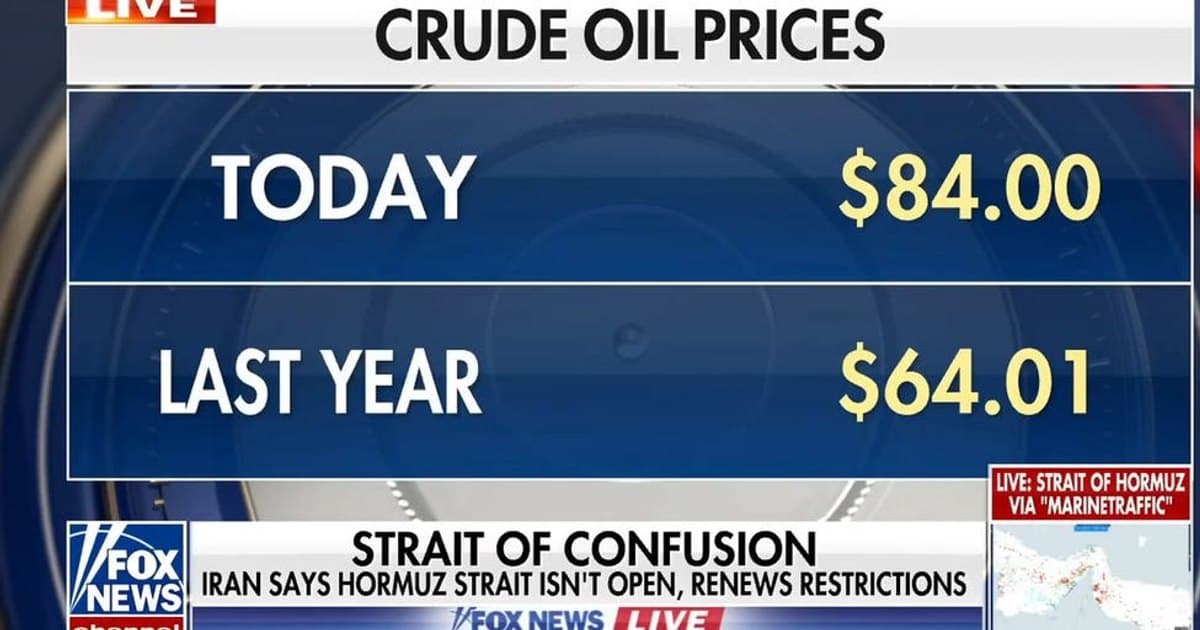
Hormuz oil flow data murky as war clouds pricing outlook
Traders and analysts are struggling to measure oil flows through the Strait of Hormuz amid dark crossings and conflicting data, keeping a risk premium in prices.
The exact volume of crude moving through the Strait of Hormuz has become a matter of intense dispute, with traders, executives and officials unable to agree on even a rough daily figure. This uncertainty is now a persistent factor in oil pricing, adding a risk premium that could remain for months.
Brent crude neared $100 a barrel on Tuesday, its highest since late July, following fresh attacks on Saudi energy sites by Iran-backed Houthi forces and Tehran's threat of "economic warfare" against the United States. The strait, a narrow passage between Iran and Oman, has become the central flashpoint in a conflict that began in February.
Before the war, roughly 20 million barrels per day—about a fifth of global consumption—were assumed to transit Hormuz. That consensus has collapsed. A surge in "dark crossings," where tankers switch off tracking systems, has made satellite imagery and vessel data unreliable. A U.S. request to delay commercial satellite imagery from the Gulf has further obscured the picture.
Conflicting official statements highlight the confusion. U.S. Energy Secretary Chris Wright said on September 2 that over 17 million barrels crossed the strait on August 31 under Navy supervision—a record for the war. Ship-tracking firm Kpler, using satellite and transponder data, estimated that day's flow at perhaps only 6 million barrels. Kpler's August average was around 4.3 million barrels per day, rising to nearly 5 million in early September.
One possible explanation for the discrepancy is that Washington's figure includes exports from the UAE's Fujairah terminal, which sits outside the strait and is fed by a bypass pipeline. Wright later said flows were averaging more than 9 million barrels per day, without specifying a period—a figure closer to Kpler's when alternative routes are included.
Tankers can remain dark for weeks, meaning actual volumes may be higher than current estimates. The core problem is that for perhaps the first time in modern market history, participants cannot accurately measure flows through the world's most important energy artery. Uncertainty itself has become a fundamental factor in pricing.
Clarity is unlikely until the U.S.-Iran standoff is resolved. Iran's economy is under severe strain from sanctions and a blockade imposed in July, but Tehran retains the capacity to disrupt shipping. Iran-linked forces have targeted 27 vessels since early July, and Tehran has vowed to announce a new restricted zone in the Gulf. Until then, the market is left with a question: if a tanker crosses Hormuz and no one can see it, does it affect global supply? The answer remains unclear.