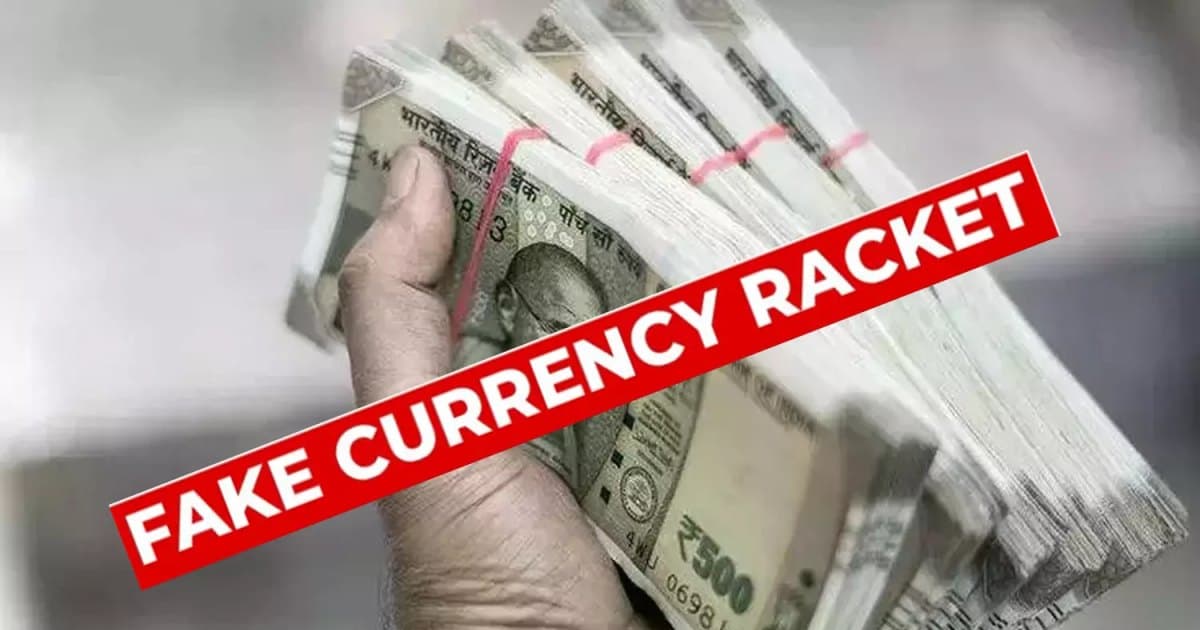
Hyderabad Police Bust Fake Currency Racket, Seize ₹2.91 Lakh in Duplicate Notes
Hyderabad police arrested three men for printing and circulating counterfeit currency. ₹2.91 lakh in fake notes and printing equipment were seized.
Hyderabad police have dismantled a counterfeit currency operation running out of a residential area, arresting three men and seizing fake notes with a face value of ₹2.91 lakh. The arrests were made by a joint team from the Commissioner’s Task Force (Shamshabad Zone) and Balapur police.
The accused have been identified as Ramavath Ramu alias Mohammed (36), a food delivery worker; his relative Ramavath Mothilal (35), a bike taxi rider; and Ramavath Gandhi (19), an autorickshaw driver. All three are residents of Chinthal Thanda in Vaddipatla. Police are also on the lookout for a fourth suspect, Sudheer John Chela alias Vamshi of Nagole, who is absconding.
Investigators said the men learned the technique of forging currency by watching tutorials on YouTube and Instagram. Mothilal reportedly came across a video that led him to a contact who explained the required materials, including a colour printer, scanner, and bond paper. Acting on that guidance, the group purchased the equipment and began producing fake notes, even attempting to replicate the watermark found on genuine currency.
The counterfeit notes were allegedly pushed into circulation in small amounts at wine shops and vegetable markets, mostly under the cover of darkness. Police suspect Gandhi was used to distribute the fake currency in these markets.
During the raid, authorities recovered 437 counterfeit ₹500 notes, 648 counterfeit ₹100 notes, and 39 counterfeit ₹200 notes, totalling ₹2,91,100. They also seized four genuine ₹500 notes and four genuine ₹100 notes, which the accused allegedly kept as reference samples for photocopying.
The accused and the seized material have been handed over to Balapur police for further investigation. Police noted that Ramu was previously booked in a 2022 case at the Nalgonda Women’s Police Station under the IPC and Dowry Prohibition Act.