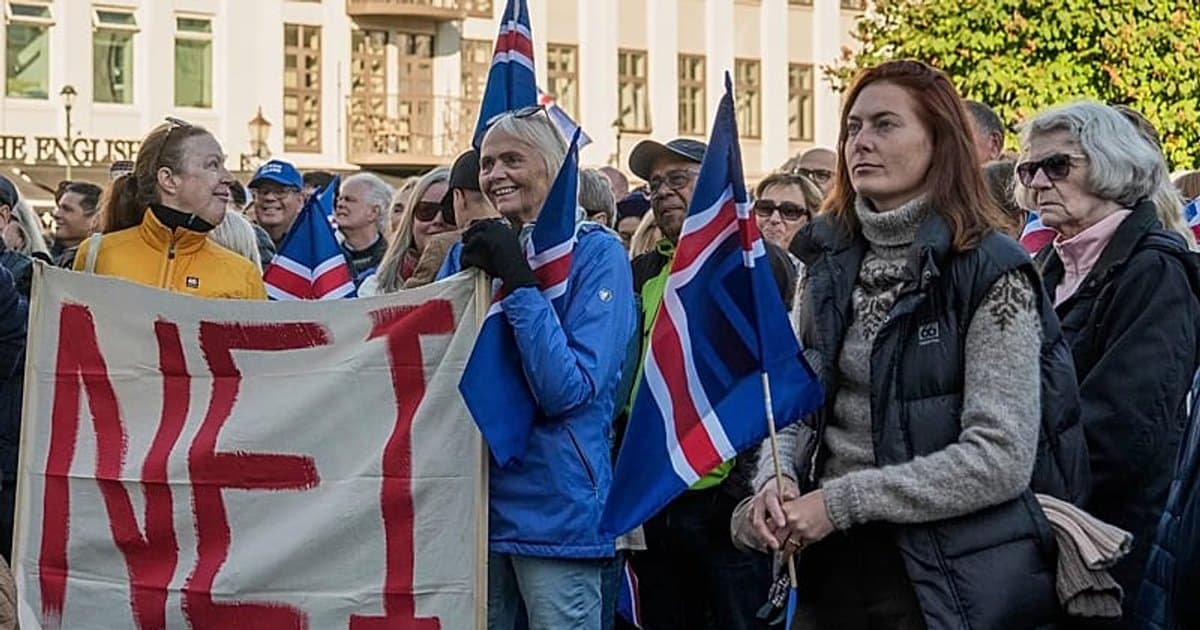
Iceland votes no to EU accession talks in close referendum
Icelandic voters rejected EU accession talks in a referendum, a setback for Brussels and a win for fishing and sovereignty advocates.
Icelanders have voted against opening European Union membership talks, according to final referendum results announced on Sunday. The outcome is a clear defeat for the government's proposal and a significant setback for Brussels, which had hoped a positive vote would bolster the bloc's strategic position in the Arctic.
The final count showed 52.8% of voters opposed the plan to begin negotiations, while 47.2% supported it. Turnout was high, with 82.5% of eligible voters casting ballots. Support for the "yes" side was concentrated in the two central Reykjavik constituencies, while rural areas and the capital's suburbs voted decisively against.
Prime Minister Kristrun Frostadottir acknowledged the result, stating that the government would now focus on strengthening existing ties with the EU through the European Economic Area (EEA) agreement, which Iceland shares with Norway and Liechtenstein. She noted that a key takeaway was that the public is content with the current arrangement.
The referendum was framed by the government as a "now or never" moment, with membership presented as a shield against trade wars and Arctic rivalry. However, for many voters, the fate of Iceland's fishing industry was the dominant concern. The sector accounts for roughly 15% of GDP and about 40% of export revenue.
An EU diplomat described the result as a clear setback for Brussels, noting that fishing and independence were decisive issues. The European Commission said it respected the choice of the Icelandic people and reiterated that Iceland remains a close partner.
The debate over EU membership is decades old. Iceland first applied in 2009 after a financial crisis, but a eurosceptic government halted talks in 2013. While high inflation and an 8% central bank interest rate were factors in the campaign, analysts suggest that strong salaries have mitigated economic pressure, reducing the perceived urgency to join.
Opposition leader Gudrun Hafsteinsdottir, who led the "no" campaign, argued that the economic case for membership was overstated and that Iceland's problems must be solved by its own politicians. She also expressed skepticism about EU promises of flexibility on fishing quotas, saying such assurances would not last.